

1 pfennig – Brunswick-Lüneburg-Calenberg-Hannover
Add to wishlist
Germany
Context
Material
References
KM: #
Numista: #33146
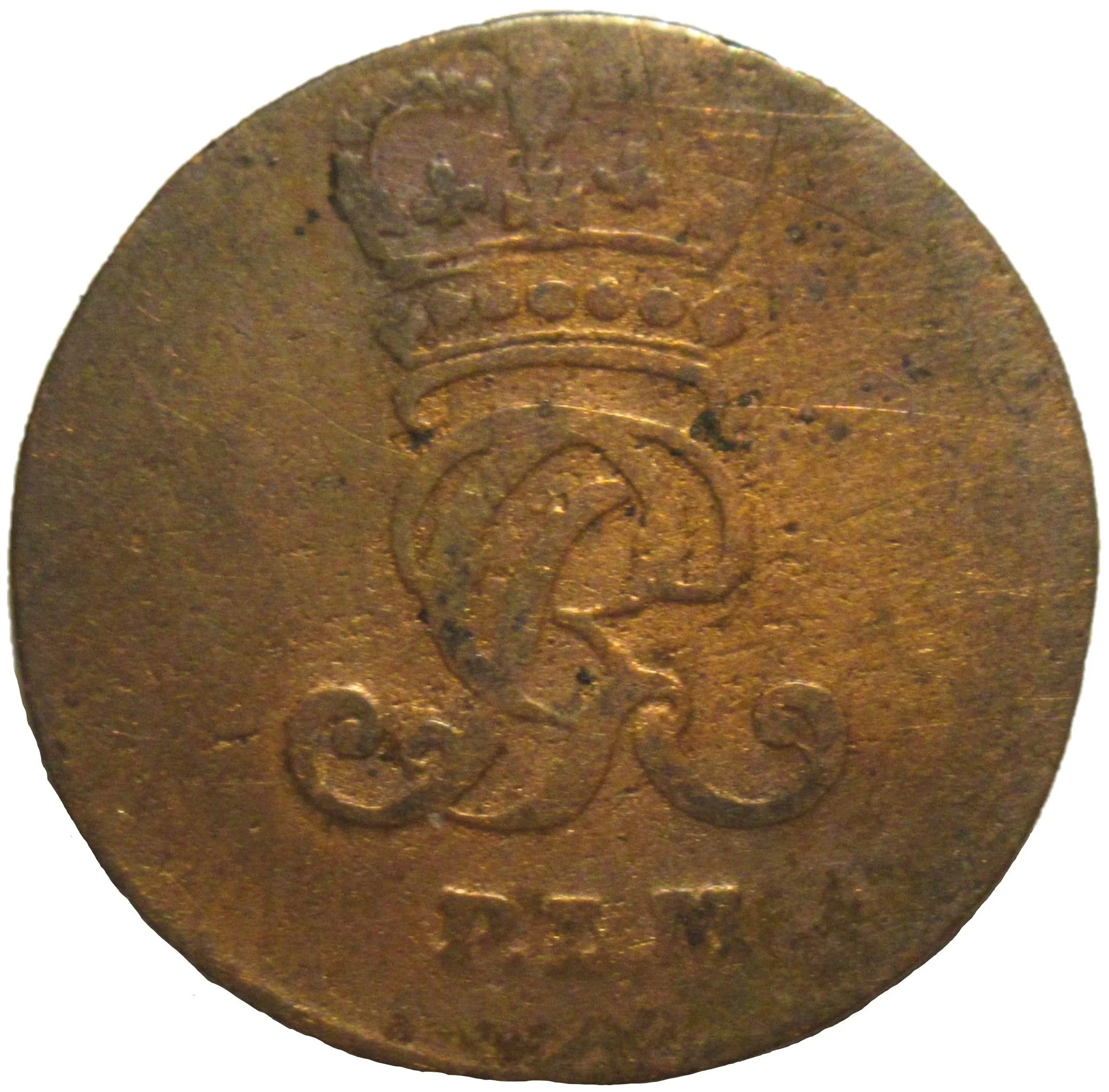
Obverse
Description:
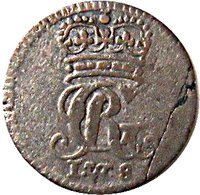
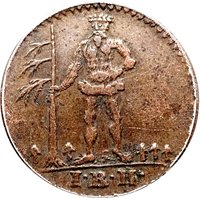
GR monogram with crown
Inscription:
GR
P.L.M.
P.L.M.
Script: Latin
Engraver: Philipp Ludwig Magius
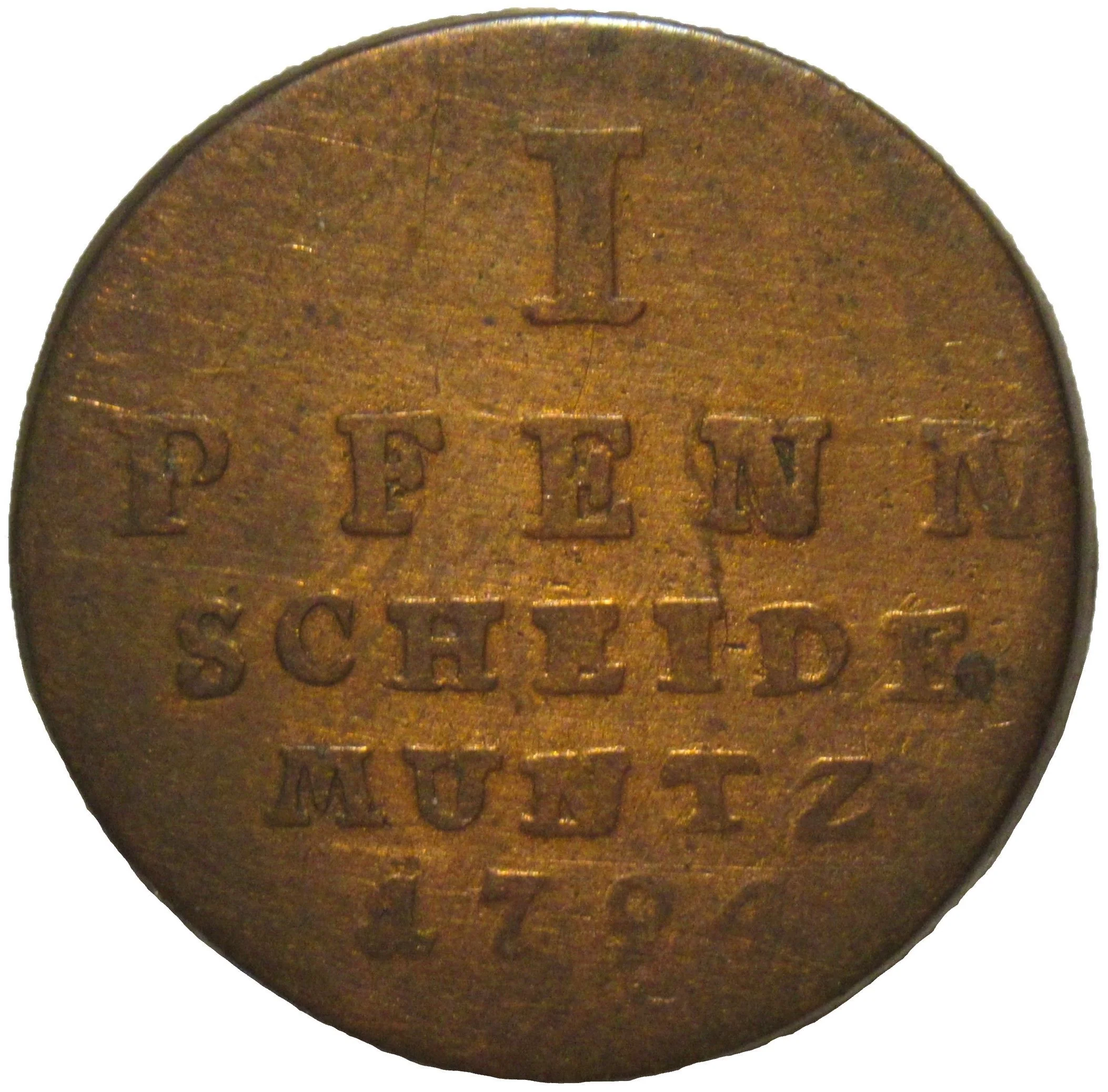
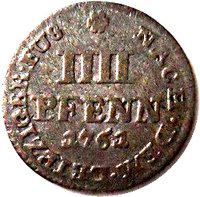
Reverse
Edge
Plain
Mints
| Name | Mark |
|---|---|
| Clausthal | — |
Mintings
| Year | Mint Mark | Mintage | Quality | Collection |
|---|---|---|---|---|
| 1761 | — | — | ||
| 1762 | — | — | ||
| 1763 | — | — | ||
| 1764 | — | — | ||
| 1765 | — | — | ||
| 1767 | — | — | ||
| 1768 | — | — | ||
| 1769 | — | — | ||
| 1770 | — | — | ||
| 1771 | — | — | ||
| 1772 | — | — | ||
| 1773 | — | — | ||
| 1774 | — | — | ||
| 1775 | — | — | ||
| 1776 | — | — | ||
| 1777 | — | — | ||
| 1778 | — | — | ||
| 1779 | — | — | ||
| 1780 | — | — | ||
| 1781 | — | — | ||
| 1782 | — | — | ||
| 1783 | — | — | ||
| 1784 | — | — | ||
| 1785 | — | — | ||
| 1786 | — | — | ||
| 1787 | — | — | ||
| 1788 | — | — | ||
| 1789 | — | — | ||
| 1790 | — | — | ||
| 1790 | .C. | — | ||
| 1791 | .C. | — | ||
| 1792 | .C. | — | ||
| 1793 | PLM | — | ||
| 1794 | PLM | — | ||
| 1795 | PLM | — | ||
| 1796 | PLM | — | ||
| 1797 | PLM | — | ||
| 1798 | PLM | — | ||
| 1799 | PLM | — | ||
| 1800 | PLM | — | ||
| 1801 | .C. | — | ||
| 1802 | — | — | ||
| 1802 | .C. | — | ||
| 1803 | — | — | ||
| 1804 | — | — | ||
| 1806 | — | — |
Historical background
In 1761, the currency situation in the Duchy of Brunswick-Lüneburg, specifically the Principality of Calenberg (with its capital in Hanover), was defined by profound instability and complexity, a direct consequence of the Seven Years' War (1756-1763). The Hanoverian territories, under the personal union of King George II of Great Britain, were a central theatre of conflict, occupied by French forces for much of the period. To finance massive war expenditures, the state resorted to the debasement of coinage, issuing inferior Reichsthaler and smaller denominations with reduced silver content. This practice, combined with the forced circulation of French occupation currency and the widespread use of emergency paper notes issued by military authorities, led to a severe loss of public confidence and rampant inflation.
The monetary landscape was a chaotic patchwork. Alongside the debased official coinage, older, full-value pre-war coins were hoarded, disappearing from circulation (Gresham's Law in action). A multitude of foreign currencies, including French louis d'or and écus, as well as coins from neighbouring German states, circulated at fluctuating and arbitrary exchange rates. This fragmentation crippled trade and daily commerce, as the value of money was uncertain and constantly in flux, imposing a heavy burden on the civilian population already suffering from requisitions and the war's devastation.
This crisis set the essential context for the major monetary reform that would follow shortly after the war's end. Upon the withdrawal of French troops in 1763, the Hanoverian government, under the new Elector George III, faced the urgent task of restoring monetary order. The experience of 1761 directly paved the way for the decisive Konventionsfuß reform of 1764, which re-established a stable silver standard by aligning Hanover's currency with the imperial monetary convention, finally retiring the debased war coinage and restoring a unified and trustworthy currency system.
The monetary landscape was a chaotic patchwork. Alongside the debased official coinage, older, full-value pre-war coins were hoarded, disappearing from circulation (Gresham's Law in action). A multitude of foreign currencies, including French louis d'or and écus, as well as coins from neighbouring German states, circulated at fluctuating and arbitrary exchange rates. This fragmentation crippled trade and daily commerce, as the value of money was uncertain and constantly in flux, imposing a heavy burden on the civilian population already suffering from requisitions and the war's devastation.
This crisis set the essential context for the major monetary reform that would follow shortly after the war's end. Upon the withdrawal of French troops in 1763, the Hanoverian government, under the new Elector George III, faced the urgent task of restoring monetary order. The experience of 1761 directly paved the way for the decisive Konventionsfuß reform of 1764, which re-established a stable silver standard by aligning Hanover's currency with the imperial monetary convention, finally retiring the debased war coinage and restoring a unified and trustworthy currency system.
🌟 Uncommon