

12 deniers – New France
Add to wishlist
Canada
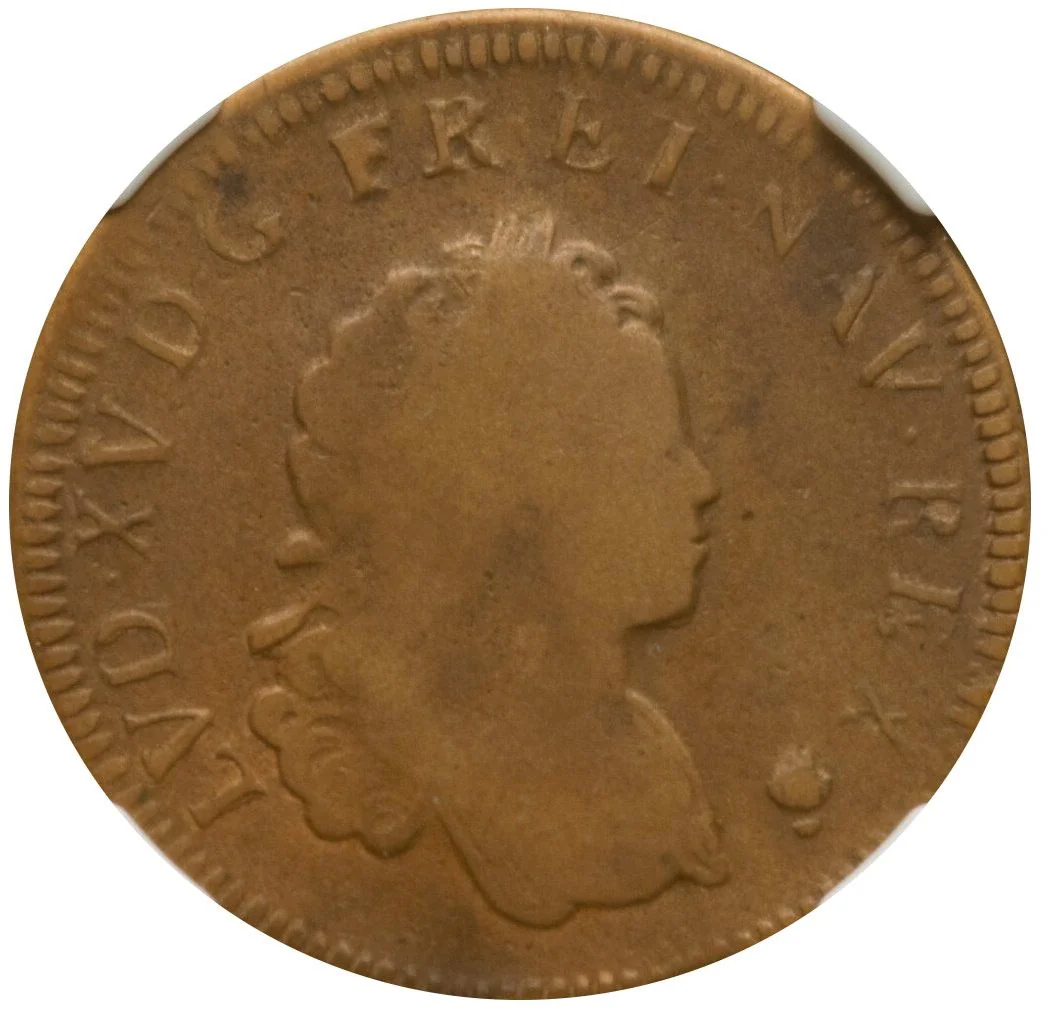
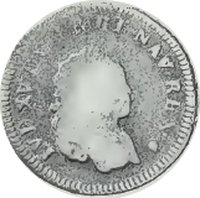
Obverse
Description:
Bust of a young Louis XV in profile.
Inscription:
LUD. XV. D.G. FR. ET NAV. REX
Script: Latin
Engraver: Norbert Roettiers
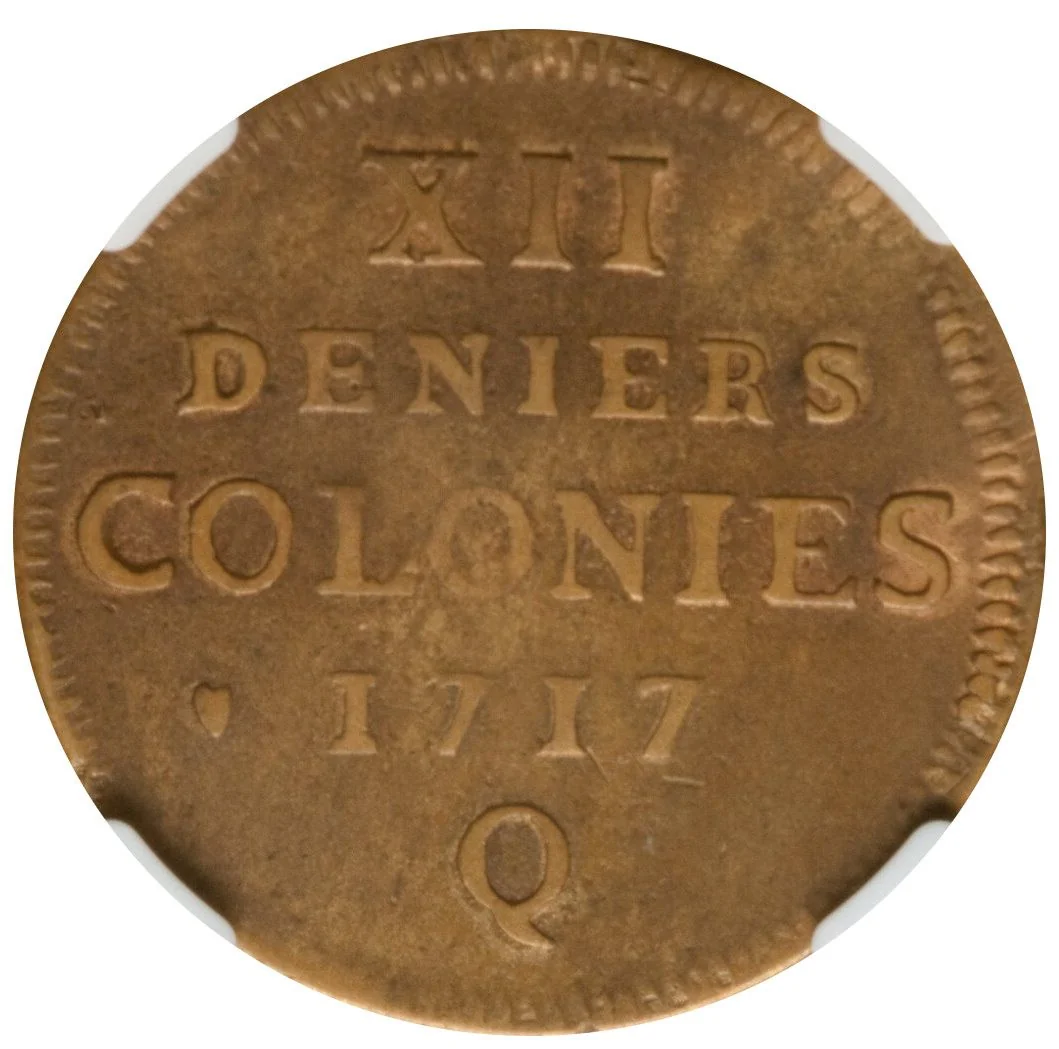
Reverse
Description:
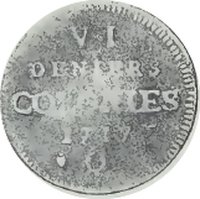
Value and date in a dotted circle.
Inscription:
XII
DENIERS
COLONIES
1717
Q
DENIERS
COLONIES
1717
Q
Script: Latin
Engraver: Norbert Roettiers
Edge
Plain
Mints
| Name | Mark |
|---|---|
| Perpignan | Q |
Mintings
| Year | Mint Mark | Mintage | Quality | Collection |
|---|---|---|---|---|
| 1717 | Q | — |
Historical background
In 1717, the economy of New France was mired in a profound and chronic currency crisis. The colony operated on a purely nominal currency system, as actual French coinage was scarce and constantly drained away to pay for imports from France and the West Indies. The primary medium of exchange was the livre tournois, a unit of account, but its physical representation was a jumble of undervalued French coins, Spanish and Portuguese pieces of eight (piastres), and, most problematically, a massive over-issue of playing card money. This card money, introduced originally as a temporary military payroll, had become permanent and was subject to drastic depreciation and frequent devaluations by royal decree, creating severe instability.
The core of the problem was a persistent and overwhelming trade deficit with the mother country. New France exported furs, but the value of these shipments was far eclipsed by the cost of essential manufactured goods, weapons, and luxury items imported from France. This imbalance caused a perpetual drain of specie (gold and silver coin), leaving the colony with insufficient hard currency to back its paper money. Consequently, card money traded at a steep discount against specie, and prices were inflated. Attempts by the French government to manage the value of card money through periodic ordonnances that reset its official value only created confusion, eroded public trust, and punished creditors.
By 1717, authorities in both Versailles and Quebec recognized the system was untenable. This year marked a critical turning point, as the French Crown, under the regency of Philippe d’Orléans, initiated a major monetary reform. A royal edict was issued to recall and demonetize the discredited card money, replacing it with a new issue of treasury notes (ordonnances). More importantly, the edict aimed to reintroduce standardized French coinage into the colony. While this reform was a decisive attempt to impose order, its implementation would be slow and fraught with difficulty, as the underlying structural issue—the colony’s unfavorable balance of trade—remained unresolved. Thus, 1717 stands as a year of attempted remedy, but not yet resolution, for New France's deep-seated monetary woes.
The core of the problem was a persistent and overwhelming trade deficit with the mother country. New France exported furs, but the value of these shipments was far eclipsed by the cost of essential manufactured goods, weapons, and luxury items imported from France. This imbalance caused a perpetual drain of specie (gold and silver coin), leaving the colony with insufficient hard currency to back its paper money. Consequently, card money traded at a steep discount against specie, and prices were inflated. Attempts by the French government to manage the value of card money through periodic ordonnances that reset its official value only created confusion, eroded public trust, and punished creditors.
By 1717, authorities in both Versailles and Quebec recognized the system was untenable. This year marked a critical turning point, as the French Crown, under the regency of Philippe d’Orléans, initiated a major monetary reform. A royal edict was issued to recall and demonetize the discredited card money, replacing it with a new issue of treasury notes (ordonnances). More importantly, the edict aimed to reintroduce standardized French coinage into the colony. While this reform was a decisive attempt to impose order, its implementation would be slow and fraught with difficulty, as the underlying structural issue—the colony’s unfavorable balance of trade—remained unresolved. Thus, 1717 stands as a year of attempted remedy, but not yet resolution, for New France's deep-seated monetary woes.
✨ Legendary