

1000 Escudos – Portugal
Portugal
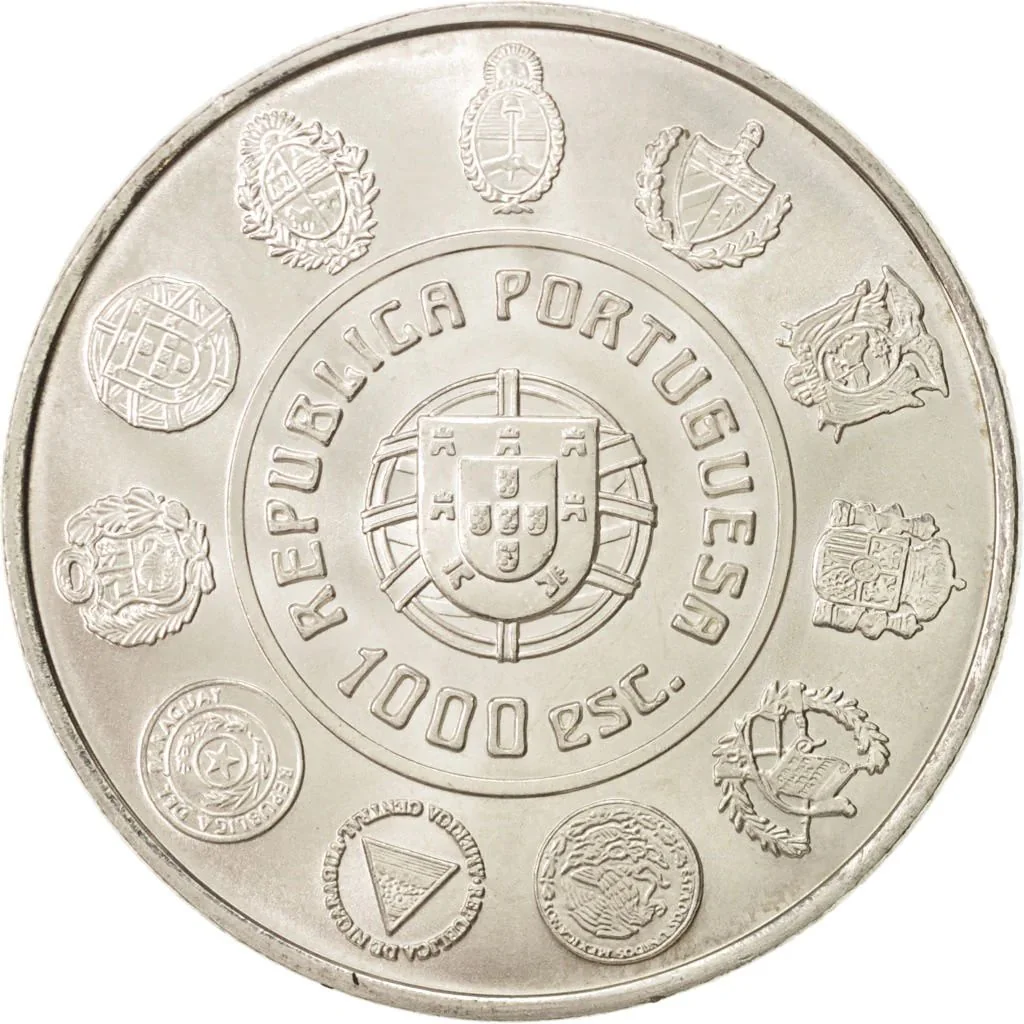
Obverse
Description:
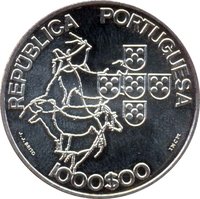
Shield among shields.
Inscription:
REPUBLICA PORTUGUESA
1000 esc.
1000 esc.
Translation:
Portuguese Republic
1000 escudos.
1000 escudos.
Script: Latin
Language: Portuguese
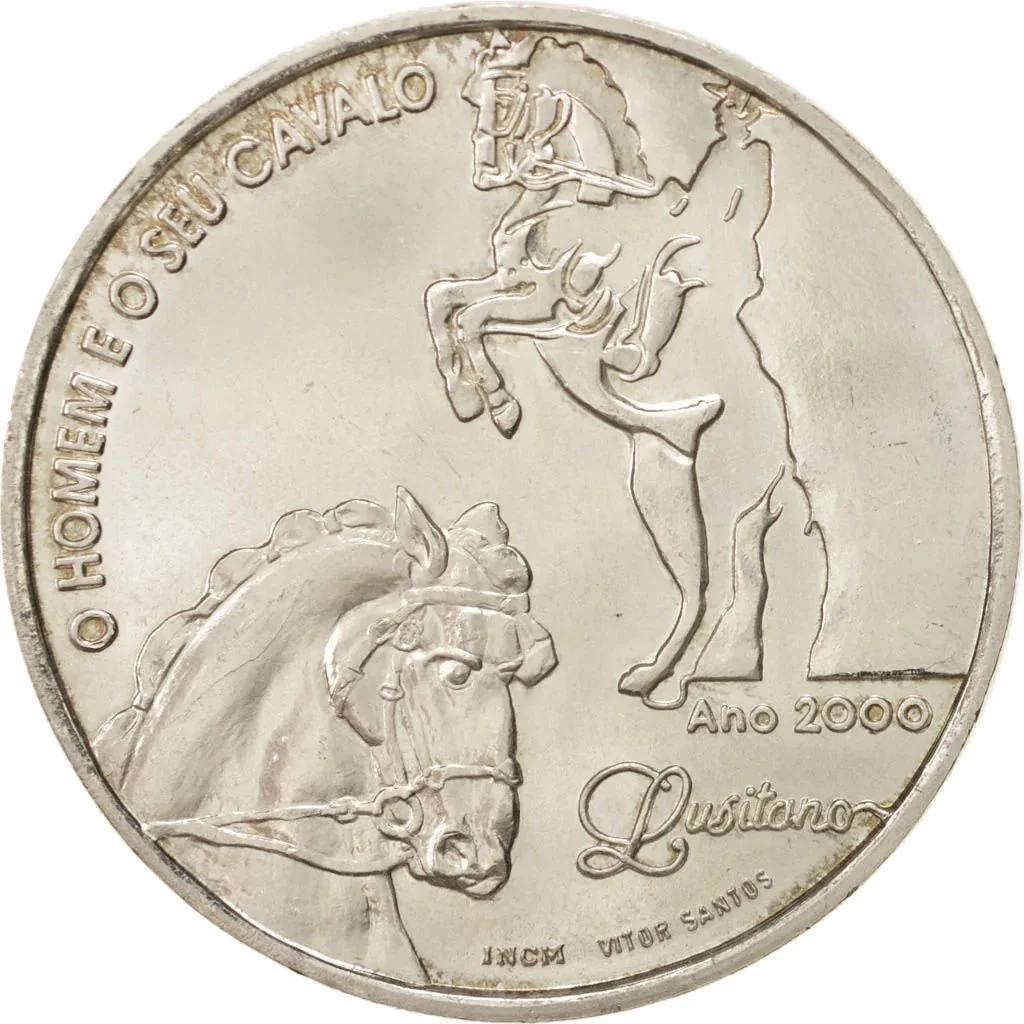
Reverse
Description:
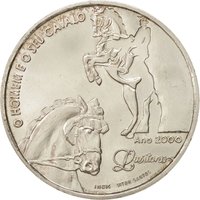
Lusitano and rider.
Inscription:
O HOMEM E O SEU CAVALO
INCM VITOR SANTOS
Ano 2000 Lusitano
INCM VITOR SANTOS
Ano 2000 Lusitano
Script: Latin
Engraver: Vitor Santos
Edge
Reeded
Categories
| Animal> Horse |
| Symbols> Coat of Arms |
Mints
| Name | Mark |
|---|---|
| Imprensa Nacional - Casa da Moeda | INCM |
Mintings
| Year | Mint Mark | Mintage | Quality | Collection |
|---|---|---|---|---|
| 2000 | INCM | 450,000 |
Historical background
In 2000, Portugal's currency situation was defined by its final, deliberate steps toward adopting the euro. As a committed member of the European Union's Economic and Monetary Union (EMU), Portugal had successfully met the Maastricht Treaty convergence criteria, including low inflation, sound public finances, and stable exchange rates. The Portuguese escudo (PTE) had been a participant in the European Exchange Rate Mechanism (ERM II) since 1992, which pegged it within a narrow band against other European currencies, primarily the Deutsche Mark, ensuring stability in the years leading up to the euro changeover.
The year itself was part of a three-year transitional period (1999-2001) where the euro existed as a "virtual currency" for electronic payments and financial markets, while escudo banknotes and coins remained in daily circulation. The irrevocable conversion rate had been set on January 1, 1999, at 200.482 escudos to one euro. This meant that in 2000, all financial transactions, including government debt and stock market listings, were effectively conducted in euros, with amounts legally converted at this fixed rate, even though physical euros were not yet introduced.
Therefore, the currency situation in 2000 was one of dual display and anticipation. Prices were increasingly shown in both escudos and euros to familiarize the public, and businesses and banks were preparing intensively for the imminent "cash changeover" scheduled for January 1, 2002. The escudo's fate was sealed, and the year was marked by logistical and educational campaigns to ensure a smooth transition, symbolizing Portugal's full integration into the core European project and its departure from a national currency with centuries of history.
The year itself was part of a three-year transitional period (1999-2001) where the euro existed as a "virtual currency" for electronic payments and financial markets, while escudo banknotes and coins remained in daily circulation. The irrevocable conversion rate had been set on January 1, 1999, at 200.482 escudos to one euro. This meant that in 2000, all financial transactions, including government debt and stock market listings, were effectively conducted in euros, with amounts legally converted at this fixed rate, even though physical euros were not yet introduced.
Therefore, the currency situation in 2000 was one of dual display and anticipation. Prices were increasingly shown in both escudos and euros to familiarize the public, and businesses and banks were preparing intensively for the imminent "cash changeover" scheduled for January 1, 2002. The escudo's fate was sealed, and the year was marked by logistical and educational campaigns to ensure a smooth transition, symbolizing Portugal's full integration into the core European project and its departure from a national currency with centuries of history.
Series: System 1981-2001
🌱 Common