

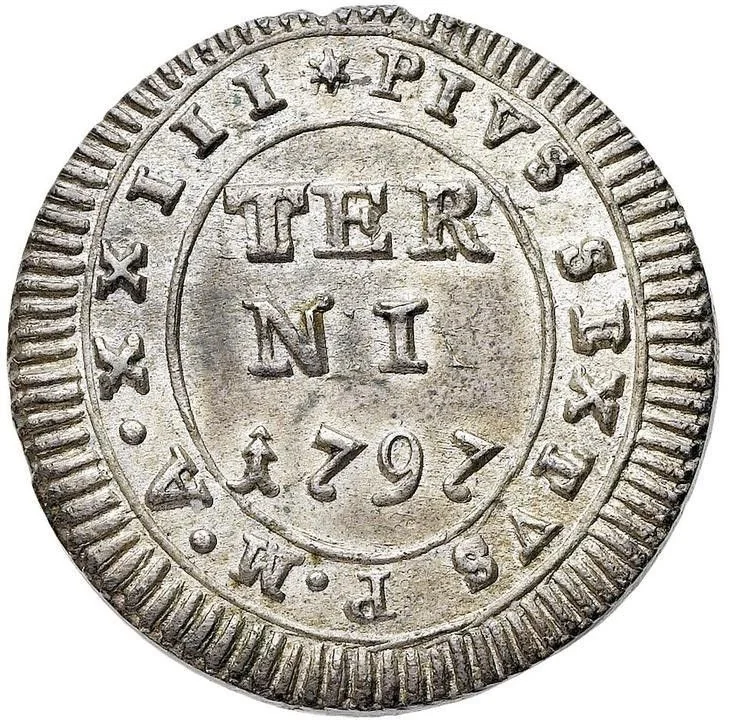
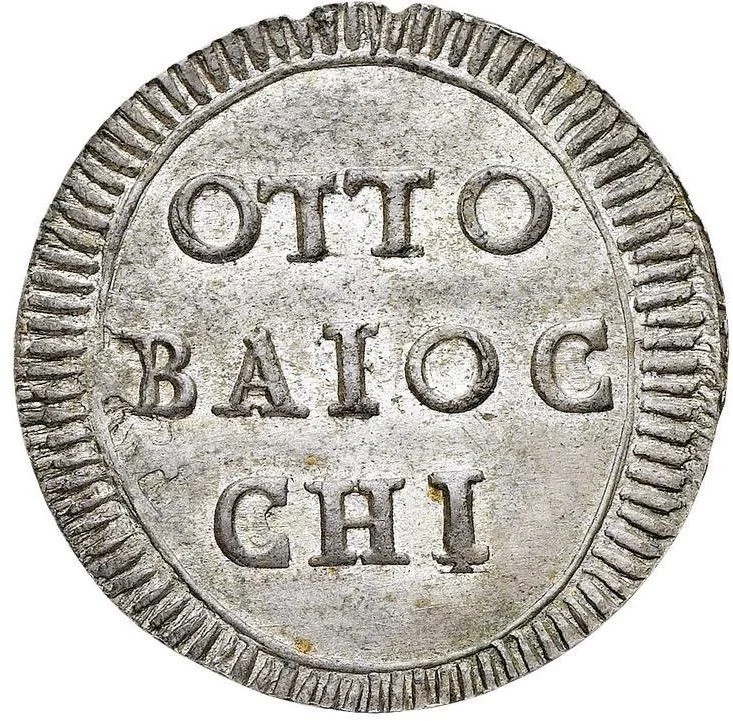
8 baiocchi – Terni
Add to wishlist
Italy
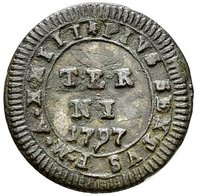
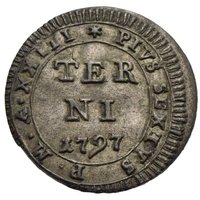
Obverse
Description:
City, date in center.
Legend encircles.
Legend encircles.
Inscription:
🟌 PIVS SEXTUS P · M · A · XXIII
TER
NI
1797
TER
NI
1797
Script: Latin
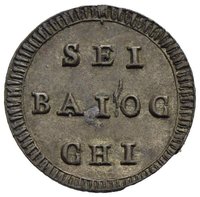
Reverse
Edge
Mints
| Name | Mark |
|---|---|
| Terni | — |
Mintings
| Year | Mint Mark | Mintage | Quality | Collection |
|---|---|---|---|---|
| 1797 | — | — |
Historical background
In 1797, Terni, like much of the Papal States, was caught in a severe monetary crisis exacerbated by the political upheavals of the French Revolutionary Wars. The French invasion of Italy in 1796-97, culminating in the Treaty of Tolentino in February 1797, imposed heavy war indemnities on the Papacy and led to widespread looting of precious metals and church treasures. This drained the region of bullion, which was the foundational backing for currency, causing a sharp contraction in the money supply and crippling local commerce.
The circulating medium became chaotic and unreliable. While official Papal scudi and baiocchi remained nominal units of account, their physical scarcity was acute. This vacuum was filled by a flood of low-quality foreign coins, particularly French republican currency and hastily minted local imitations, along with older, debased coins from various Italian states. The value of these coins was highly unstable, leading to rampant inflation for goods priced in the scarce stable currency and confusing exchange rates that changed daily, harming both merchants and the populace.
Furthermore, the political authority itself was in flux. The establishment of the short-lived Roman Republic in early 1798, a French client state, formally replaced Papal currency with new republican coinage. Although this change post-dates 1797, the anticipation and instability leading to it defined Terni's economic reality that year. Ultimately, the people of Terni endured a period of monetary anarchy, characterized by a lack of trustworthy coin, soaring prices, and a breakdown of traditional economic life under the shadow of foreign occupation and the collapse of Papal financial authority.
The circulating medium became chaotic and unreliable. While official Papal scudi and baiocchi remained nominal units of account, their physical scarcity was acute. This vacuum was filled by a flood of low-quality foreign coins, particularly French republican currency and hastily minted local imitations, along with older, debased coins from various Italian states. The value of these coins was highly unstable, leading to rampant inflation for goods priced in the scarce stable currency and confusing exchange rates that changed daily, harming both merchants and the populace.
Furthermore, the political authority itself was in flux. The establishment of the short-lived Roman Republic in early 1798, a French client state, formally replaced Papal currency with new republican coinage. Although this change post-dates 1797, the anticipation and instability leading to it defined Terni's economic reality that year. Ultimately, the people of Terni endured a period of monetary anarchy, characterized by a lack of trustworthy coin, soaring prices, and a breakdown of traditional economic life under the shadow of foreign occupation and the collapse of Papal financial authority.
Series: 1797 Terni circulation coins
✨ Legendary