

100 mon – Kubota Domain
Add to wishlist
Japan
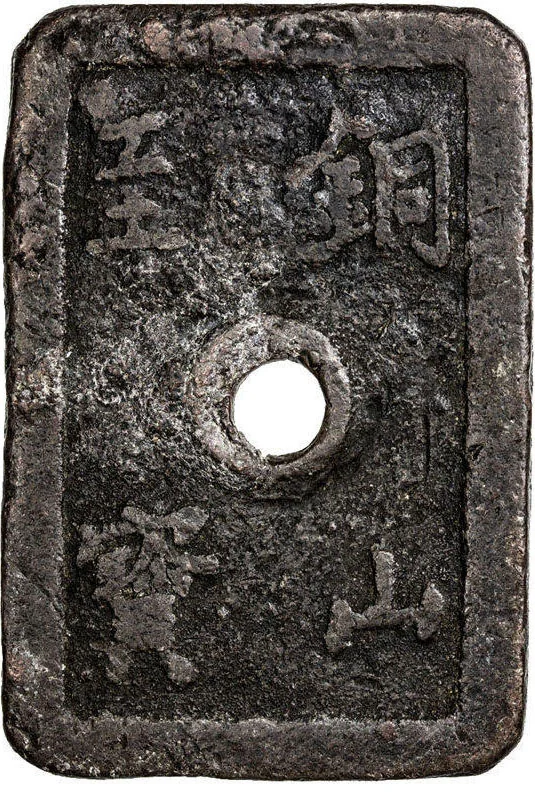
Obverse
Description:
銅山至宝 (Dōzanshihō)
Inscription:
至 銅
寶 山
寶 山
Translation:
Supreme Copper Treasure Mountain
Language: Classical Chinese
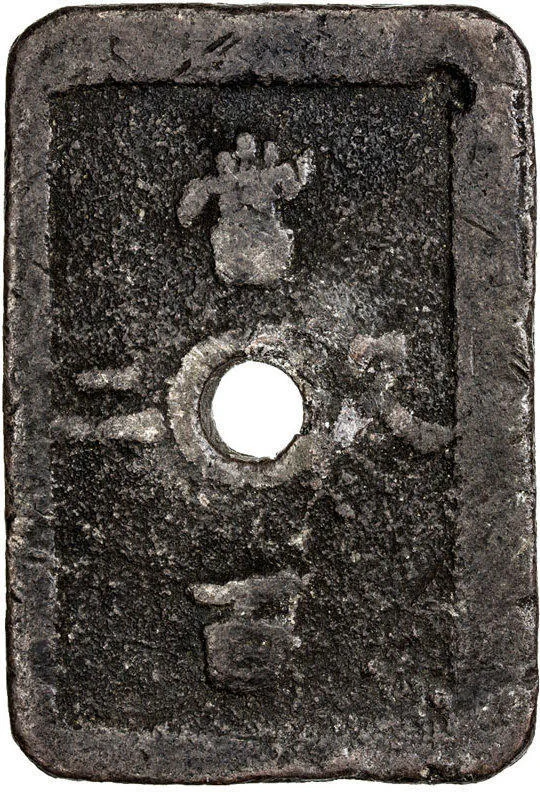
Reverse
Description:
Carved words.
Inscription:
當
二 久
百
二 久
百
Translation:
When two hundred lasts.
Language: Chinese
Edge
Mintings
| Year | Mint Mark | Mintage | Quality | Collection |
|---|---|---|---|---|
| 1866 | — | — |
Historical background
In 1866, the Kubota Domain (also known as the Akita Domain) faced a severe and complex currency crisis typical of the late Edo period's economic unraveling. Like all domains, Kubota operated under the Tokugawa shogunate's monetary system but was heavily reliant on its own clan notes, or hansatsu, for local exchange. These notes were theoretically convertible to gold, silver, or copper coinage from the central mint, but years of domainal debt, crop failures, and the immense financial burden of national defense mandates had severely depleted its specie reserves. By the mid-1860s, the domain's paper currency was dangerously over-issued and rapidly depreciating, causing inflation and eroding public trust.
The situation was acutely worsened by the domain's strategic position and political turmoil. As a key northern ally of the Tokugawa shogunate, Kubota was compelled to contribute substantial funds and men to coastal defenses against Western ships and, increasingly, to the looming civil war against imperial loyalist forces. This military expenditure further strained finances, forcing the domain to print even more hansatsu without backing, creating a vicious cycle of devaluation. Merchants and peasants began to hoard commodity goods and specie, leading to market instability and hardship for samurai on fixed stipends paid in the depreciating paper.
In response, the domain government attempted several reforms, including currency swaps and forced exchange rates, but these measures provided only temporary relief and often sparked public discontent. The fundamental issue was the collapse of the centralized Tokugawa economic order and the domain's insolvency. By 1866, Kubota's currency situation was not merely a financial problem but a symptom of its failing political authority, mirroring the broader crisis of the shogunate itself. This economic distress would weaken the domain's capacity to navigate the impending Boshin War (1868–1869), ultimately pushing its leadership toward a pragmatic surrender to the Imperial forces to ensure survival and a managed transition into the new Meiji monetary system.
The situation was acutely worsened by the domain's strategic position and political turmoil. As a key northern ally of the Tokugawa shogunate, Kubota was compelled to contribute substantial funds and men to coastal defenses against Western ships and, increasingly, to the looming civil war against imperial loyalist forces. This military expenditure further strained finances, forcing the domain to print even more hansatsu without backing, creating a vicious cycle of devaluation. Merchants and peasants began to hoard commodity goods and specie, leading to market instability and hardship for samurai on fixed stipends paid in the depreciating paper.
In response, the domain government attempted several reforms, including currency swaps and forced exchange rates, but these measures provided only temporary relief and often sparked public discontent. The fundamental issue was the collapse of the centralized Tokugawa economic order and the domain's insolvency. By 1866, Kubota's currency situation was not merely a financial problem but a symptom of its failing political authority, mirroring the broader crisis of the shogunate itself. This economic distress would weaken the domain's capacity to navigate the impending Boshin War (1868–1869), ultimately pushing its leadership toward a pragmatic surrender to the Imperial forces to ensure survival and a managed transition into the new Meiji monetary system.

✨ Legendary