

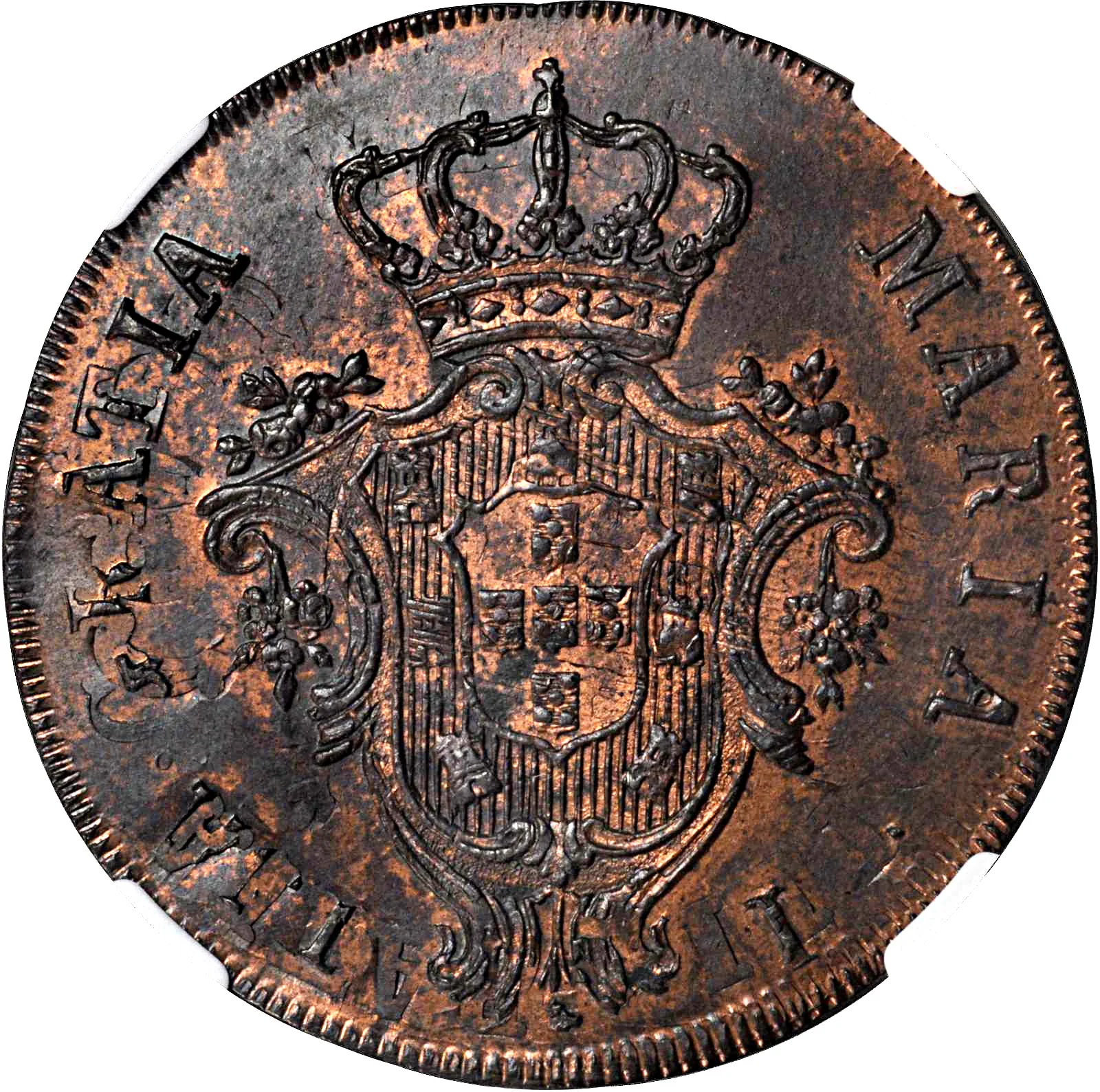
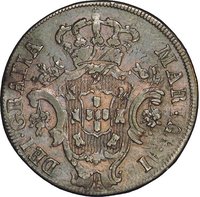
Obverse
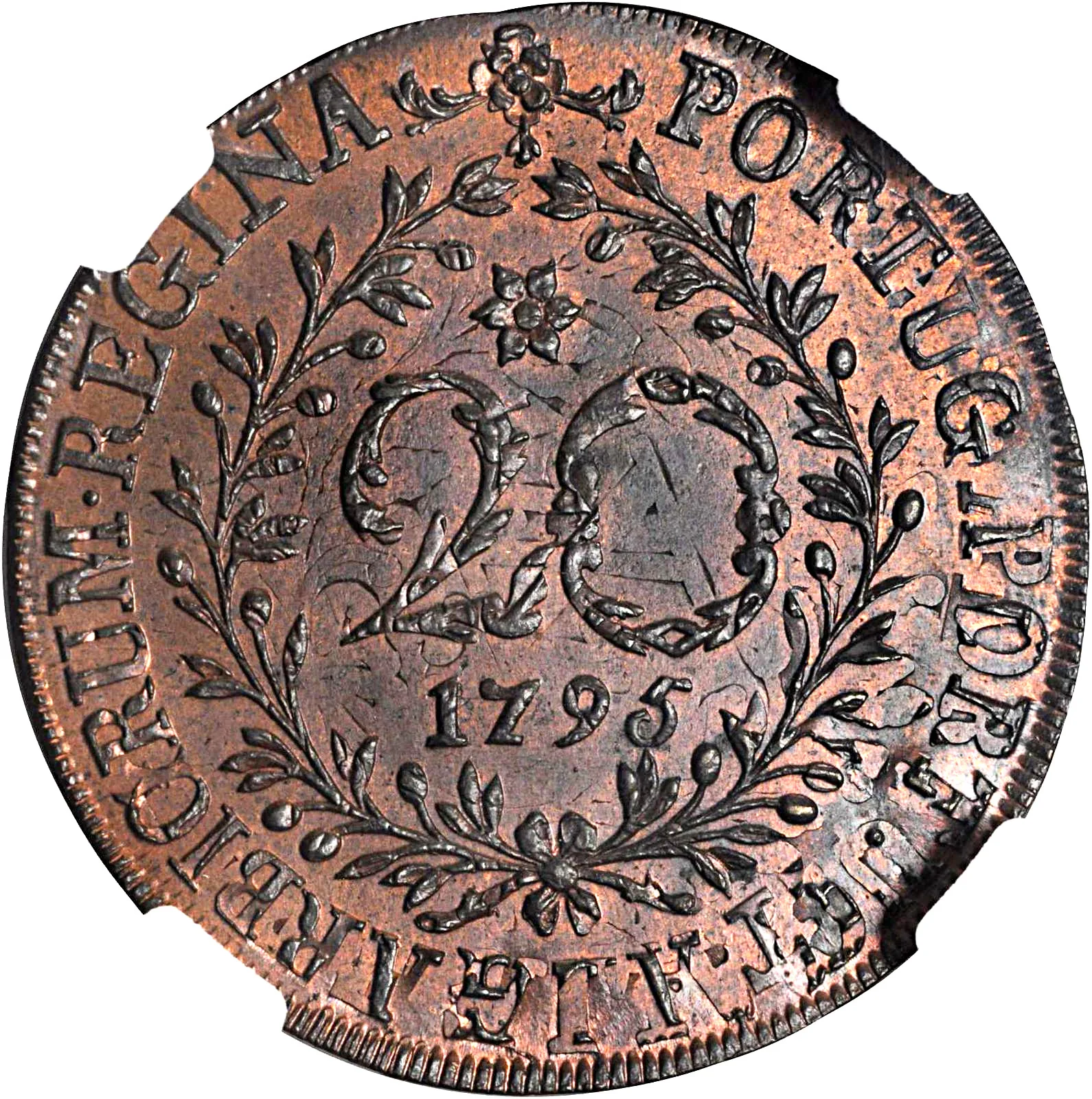
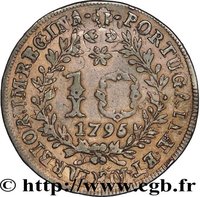
Reverse
Description:
Dated 20 within a wreath, encircled by an inscription.
Inscription:
PORTUGALIÆ . ALGARBIORUM REGINA
20
1795
20
1795
Script: Latin
Edge
Plain
Mintings
| Year | Mint Mark | Mintage | Quality | Collection |
|---|---|---|---|---|
| 1790 | — | 137,000 | ||
| 1795 | — | — | ||
| 1796 | — | — | ||
| 1798 | — | — |
Historical background
In the late 18th century, the Azores archipelago, as an integral part of the Kingdom of Portugal, operated within a complex and often chaotic monetary system. The official currency was the Portuguese real (plural: réis), but the islands' economy was characterized by a severe shortage of official coinage. This scarcity was a chronic problem stemming from Portugal's own economic difficulties, its trade imbalances, and the physical distance of the Azores from the mainland, which complicated the regular supply of currency. Consequently, daily commerce relied heavily on a mix of worn, clipped, and underweight Portuguese coins, alongside a significant influx of foreign currency, primarily Spanish and Spanish-American silver reales (pieces of eight), which circulated freely out of necessity.
This monetary environment created significant challenges for local governance and trade. The value of coins was not always based on their face value but on their weight and metal content, leading to confusion and frequent disputes. To bring order, local authorities periodically issued taxas (official valuation tables) that fixed the exchange rates for the myriad of coins in circulation. However, these measures were often reactive and struggled to keep pace with fluctuating values and new inflows of foreign coin. The situation was further complicated by the use of fiduciary money, such as vales (promissory notes) issued by municipal councils and even wealthy individuals, to facilitate transactions when hard currency was unavailable.
By 1790, this system was under strain from broader Atlantic economic pressures. The growth of the whaling industry and transatlantic trade, particularly with North America and Brazil, integrated the Azores more deeply into a global economy that ran on silver. While this trade brought prosperity to some, it also intensified the reliance on foreign coin and highlighted the Crown's inability to provide a stable, uniform currency. The persistent monetary instability of the 1790s would eventually contribute to calls for reform, foreshadowing the more centralized policies implemented by the Marquis of Pombal and later rulers in the early 19th century.
This monetary environment created significant challenges for local governance and trade. The value of coins was not always based on their face value but on their weight and metal content, leading to confusion and frequent disputes. To bring order, local authorities periodically issued taxas (official valuation tables) that fixed the exchange rates for the myriad of coins in circulation. However, these measures were often reactive and struggled to keep pace with fluctuating values and new inflows of foreign coin. The situation was further complicated by the use of fiduciary money, such as vales (promissory notes) issued by municipal councils and even wealthy individuals, to facilitate transactions when hard currency was unavailable.
By 1790, this system was under strain from broader Atlantic economic pressures. The growth of the whaling industry and transatlantic trade, particularly with North America and Brazil, integrated the Azores more deeply into a global economy that ran on silver. While this trade brought prosperity to some, it also intensified the reliance on foreign coin and highlighted the Crown's inability to provide a stable, uniform currency. The persistent monetary instability of the 1790s would eventually contribute to calls for reform, foreshadowing the more centralized policies implemented by the Marquis of Pombal and later rulers in the early 19th century.
🌟 Uncommon