

1 skilling – Denmark
Add to wishlist
Denmark
Context
Material
References
KM: #
Numista: #326488
Obverse
Description:
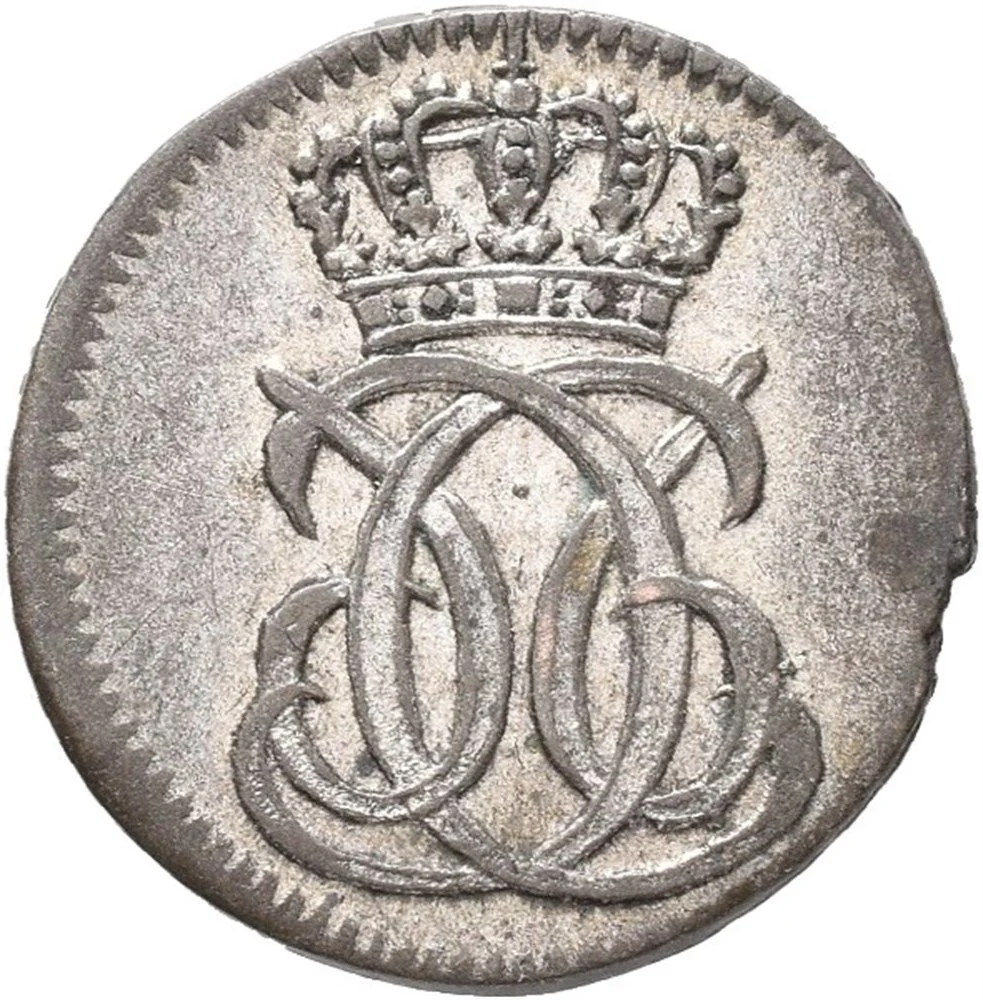
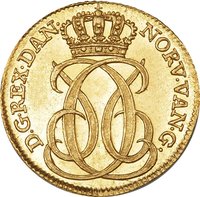
Christian VI's crowned double monogram.
Inscription:
6CC6
Reverse
Description:
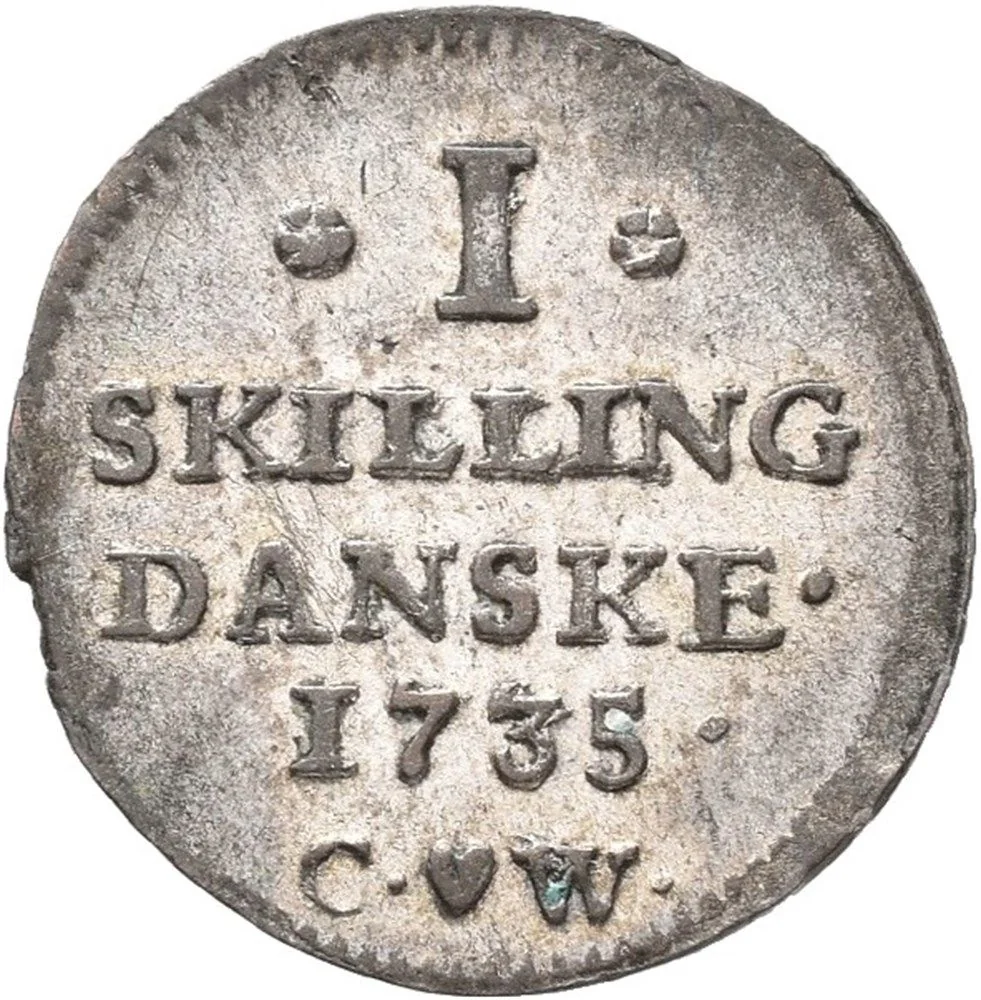
Value and date on four lines.
Below, a mintmark with a heart center.
Below, a mintmark with a heart center.
Inscription:
* I *
SKILLING
DANSKE •
1735 •
C • ♥ W •
SKILLING
DANSKE •
1735 •
C • ♥ W •
Edge
Mints
| Name | Mark |
|---|---|
| Copenhagen | ♥ |
| Royal Danish Mint | ♥ |
Mintings
| Year | Mint Mark | Mintage | Quality | Collection |
|---|---|---|---|---|
| 1735 | CW | — | ||
| 1746 | CW | — |
Historical background
In 1735, Denmark operated under a silver standard, with the primary currency being the rigsdaler specie. However, the monetary system was complex and fragmented. Coins in circulation included not only Danish issues but also a multitude of older, clipped, and foreign coins—particularly German and Dutch—which created chronic confusion in trade and daily transactions. The state's frequent debasements of subsidiary coinage (like the skilling) to generate seigniorage revenue had further eroded public trust, leading to a disparity between the official face value of coins and their intrinsic metal content.
This unstable environment was exacerbated by a severe shortage of small-change coins, which crippled everyday commerce for the common people. To address this, the Danish government introduced a significant reform in 1735: the issuance of credit paper money in the form of kreditosedler. These were not true banknotes as we understand them today but were interest-bearing treasury bonds, issued in denominations as low as one rigsdaler, designed to circulate as currency. This made Denmark a European pioneer in the use of state-issued paper currency.
The immediate goal was pragmatic: to provide a reliable medium of exchange and to fund state activities, particularly amidst the costly ambitions of the absolutist monarchy. However, the 1735 paper money experiment was cautious and initially limited in scope. It laid the foundational idea for a credit-based currency, which would later be expanded and institutionalized with the establishment of the Kurantbanken in 1736. This set Denmark on a path toward a dual system of metal and paper money, a necessary but sometimes precarious step in modernizing its economy.
This unstable environment was exacerbated by a severe shortage of small-change coins, which crippled everyday commerce for the common people. To address this, the Danish government introduced a significant reform in 1735: the issuance of credit paper money in the form of kreditosedler. These were not true banknotes as we understand them today but were interest-bearing treasury bonds, issued in denominations as low as one rigsdaler, designed to circulate as currency. This made Denmark a European pioneer in the use of state-issued paper currency.
The immediate goal was pragmatic: to provide a reliable medium of exchange and to fund state activities, particularly amidst the costly ambitions of the absolutist monarchy. However, the 1735 paper money experiment was cautious and initially limited in scope. It laid the foundational idea for a credit-based currency, which would later be expanded and institutionalized with the establishment of the Kurantbanken in 1736. This set Denmark on a path toward a dual system of metal and paper money, a necessary but sometimes precarious step in modernizing its economy.
💎 Extremely Rare