

1 Teston – Papal States
Vatican City
Context
Years: 1642–1643
Year: 1642
Country: Vatican City 
Issuer: Papal States
Ruler: Urban VIII
Currency:
(1534—1835)
Demonetized: Yes
Material
References
KM: #Click to copy to clipboard218
Numista: #325072
Value
Bullion value: $21.42
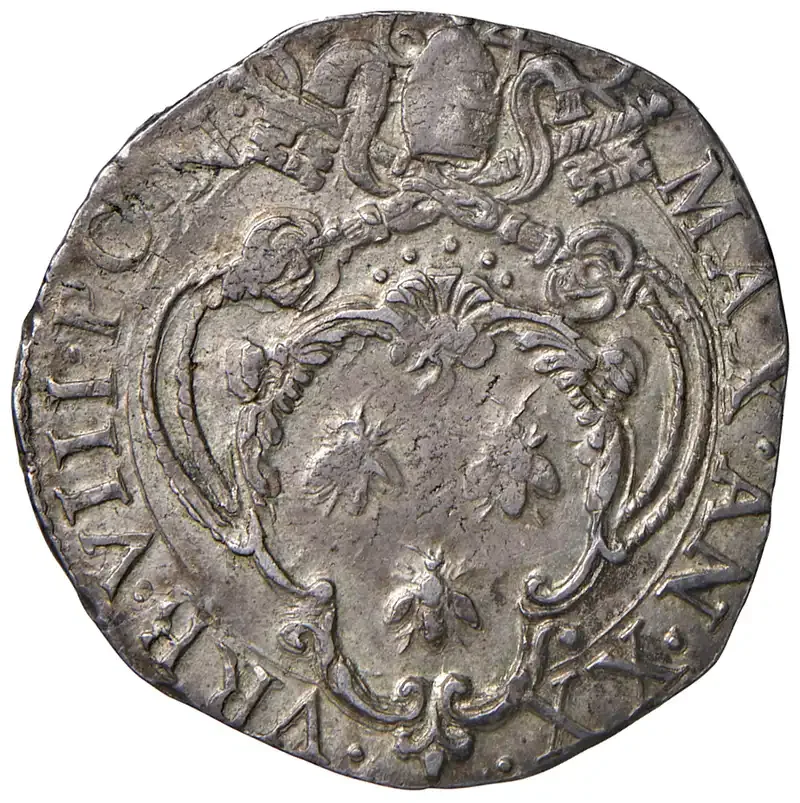
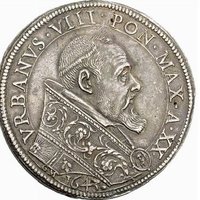
Obverse
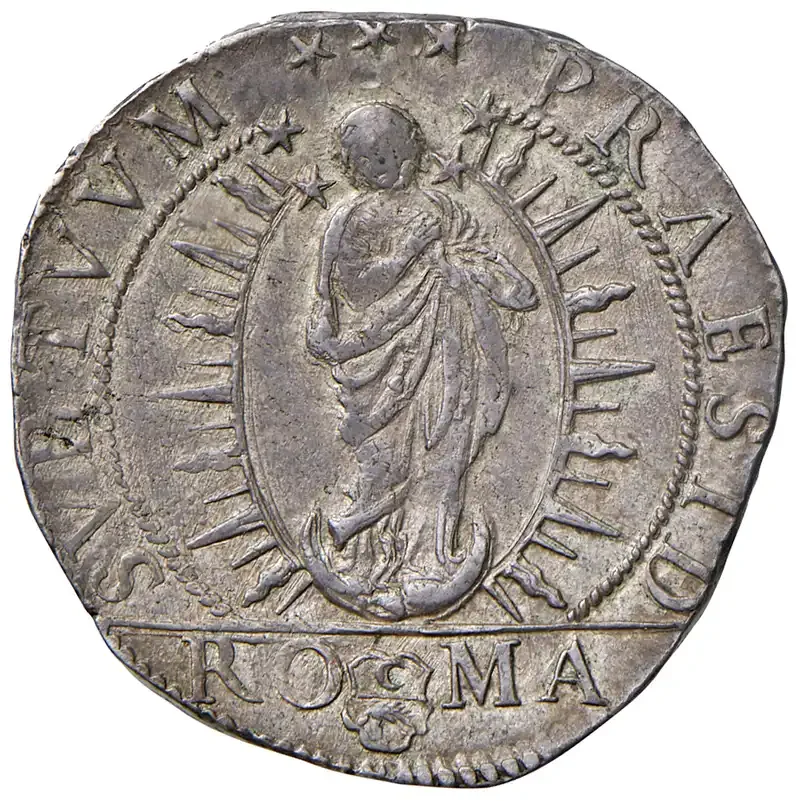
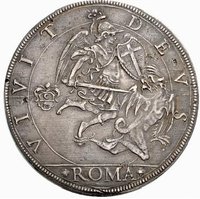
Reverse
Description:
Virgin Mary standing on a crescent moon, radiant.
Inscription:
SVB TVVM PRAESID
RO MA
RO MA
Script: Latin
Edge
Mints
| Name | Mark |
|---|---|
| Rome | — |
Mintings
| Year | Mint Mark | Mintage | Quality | Collection |
|---|---|---|---|---|
| 1642 | — | — | ||
| 1643 | — | — |
Historical background
In 1642, the Papal States, a mosaic of central Italian territories under the direct temporal rule of the Pope, operated within a complex and strained monetary system. The primary unit was the scudo, a silver coin, which existed alongside a bewildering array of subsidiary copper and billon (debased silver) coins like baiochi and quattrini. This system was not unified; different cities within the Papal States, such as Bologna and Ancona, often minted their own local variations, leading to a fragmented and often confusing currency landscape across the territories.
The period was marked by significant financial pressure, largely due to the enormous costs of the Thirty Years' War (1618-1648). Pope Urban VIII Barberini (reigned 1623-1644) was deeply involved, spending vast sums on fortifications, mercenaries, and subsidies to Catholic allies. To raise revenue, the Papacy heavily increased taxation and resorted to the common but damaging practice of currency debasement. This involved reducing the precious metal content in coins, especially the copper issues, allowing the mint to produce more coins from the same amount of metal, thereby creating short-term profit at the cost of long-term stability.
Consequently, the currency situation in 1642 was one of inflation and eroding public trust. The proliferation of debased small change caused prices to rise, harming the poor and causing market disputes. The disparity between the "good" silver scudo and the increasingly worthless petty coins created a two-tiered system, where merchants were wary of transactions. This monetary instability reflected the broader fiscal crisis of the Papal States, as the financial demands of war and papal ambition strained the economic foundations of the temporal power to its limits.
The period was marked by significant financial pressure, largely due to the enormous costs of the Thirty Years' War (1618-1648). Pope Urban VIII Barberini (reigned 1623-1644) was deeply involved, spending vast sums on fortifications, mercenaries, and subsidies to Catholic allies. To raise revenue, the Papacy heavily increased taxation and resorted to the common but damaging practice of currency debasement. This involved reducing the precious metal content in coins, especially the copper issues, allowing the mint to produce more coins from the same amount of metal, thereby creating short-term profit at the cost of long-term stability.
Consequently, the currency situation in 1642 was one of inflation and eroding public trust. The proliferation of debased small change caused prices to rise, harming the poor and causing market disputes. The disparity between the "good" silver scudo and the increasingly worthless petty coins created a two-tiered system, where merchants were wary of transactions. This monetary instability reflected the broader fiscal crisis of the Papal States, as the financial demands of war and papal ambition strained the economic foundations of the temporal power to its limits.
✨ Legendary