

4 reales – Spain
Add to wishlist
Spain
Context
Material
Diameter: 30 mm
Weight: 13 g
Silver Weight:: 12.10 g
Thickness: 2 mm
Shape: Round
Composition: 93.1% Silver
Magnetic: No
Technique: Roller milled
References
KM: #
Numista: #111685
Value
Bullion value: $30.17
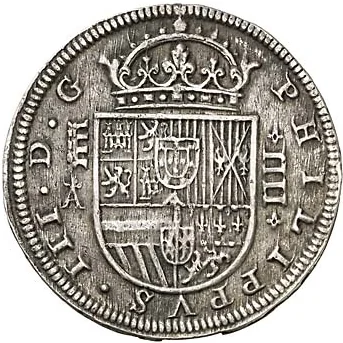
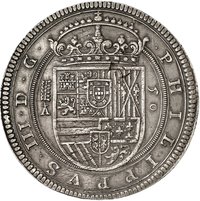
Obverse
Description:
Spanish coat of arms with Portuguese arms.
Inscription:
PHILIPPVS · III · D · G
A
✤ IIII ✤
A
✤ IIII ✤
Script: Latin
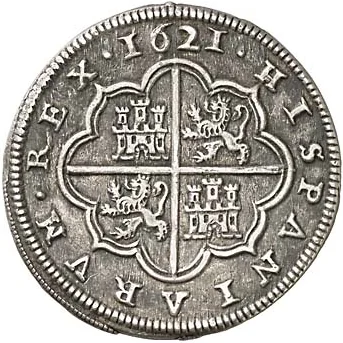
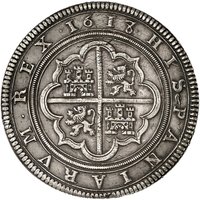
Reverse
Description:
Castile and León's coat of arms in an octolobe.
Inscription:
· 1621 · HISPANIARVM · REX
Script: Latin
Edge
Categories
| Symbols> Coat of Arms |
Mints
| Name | Mark |
|---|---|
| Royal Mint of Segovia | — |
Mintings
| Year | Mint Mark | Mintage | Quality | Collection |
|---|---|---|---|---|
| 1614 | AR | — | ||
| 1616 | A | — | ||
| 1617 | A | — | ||
| 1620 | A | — | ||
| 1621 | A | — |
Historical background
In 1614, the Spanish monarchy under Philip III was grappling with the severe and chronic consequences of the "Price Revolution" and a deep monetary crisis. A primary cause was the massive influx of silver from American mines, particularly Potosí, which, over the preceding decades, had led to rampant inflation and a drastic devaluation of the foundational silver real. The crown's relentless spending on European wars and its vast imperial commitments had also led to repeated bankruptcies (the latest in 1607), forcing the state to borrow against future silver shipments and debase the coinage to meet its obligations. This created a complex and unstable monetary system where the intrinsic value of coins often fell below their face value.
The domestic economy suffered from a severe shortage of small-denomination vellón (copper) coinage for everyday transactions, while an overabundance of increasingly debased billon (copper with a little silver) coins fueled inflation. In response, the crown had implemented drastic measures just a few years prior, including the controversial 1608 decree that temporarily halved the face value of all pure copper vellón currency—a move that caused widespread confusion and economic distress. By 1614, the monetary system was a confusing patchwork of older, purer coins hoarded by the public, newer debased coins in circulation, and a general loss of confidence in the medium of exchange.
This chaotic currency situation stifled commerce, created social unrest, and undermined the Spanish economy's productivity at a time when it was becoming increasingly dependent on imports from Northern Europe. The crisis was symptomatic of the broader "Decline of Spain," where immense colonial wealth was squandered on military ambitions and failed to stimulate domestic industry. The monetary policies of 1614, therefore, were less about innovation and more about desperate management of a deteriorating system that would continue to plague the Habsburg monarchy for decades to come.
The domestic economy suffered from a severe shortage of small-denomination vellón (copper) coinage for everyday transactions, while an overabundance of increasingly debased billon (copper with a little silver) coins fueled inflation. In response, the crown had implemented drastic measures just a few years prior, including the controversial 1608 decree that temporarily halved the face value of all pure copper vellón currency—a move that caused widespread confusion and economic distress. By 1614, the monetary system was a confusing patchwork of older, purer coins hoarded by the public, newer debased coins in circulation, and a general loss of confidence in the medium of exchange.
This chaotic currency situation stifled commerce, created social unrest, and undermined the Spanish economy's productivity at a time when it was becoming increasingly dependent on imports from Northern Europe. The crisis was symptomatic of the broader "Decline of Spain," where immense colonial wealth was squandered on military ambitions and failed to stimulate domestic industry. The monetary policies of 1614, therefore, were less about innovation and more about desperate management of a deteriorating system that would continue to plague the Habsburg monarchy for decades to come.
✨ Legendary