

2 reales – Spain
Add to wishlist
Spain
Context
Material
Diameter: 26 mm
Weight: 5.4 g
Silver Weight:: 5.03 g
Thickness: 1 mm
Shape: Round
Composition: 93.1% Silver
Magnetic: No
Technique: Roller milled
References
KM: #
Numista: #111681
Value
Bullion value: $12.20
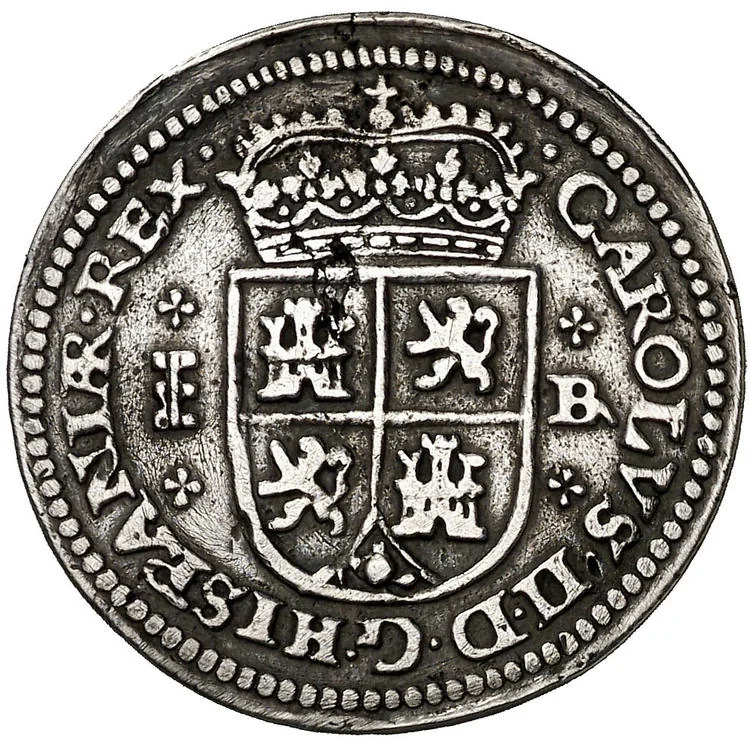
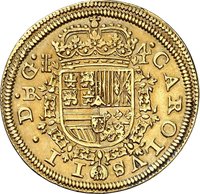
Obverse
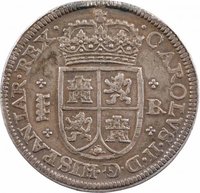
Description:
Royal arms of Spain.
Inscription:
CAROLVS · II · D · G · HISPANIAR · REX
BR
BR
Script: Latin
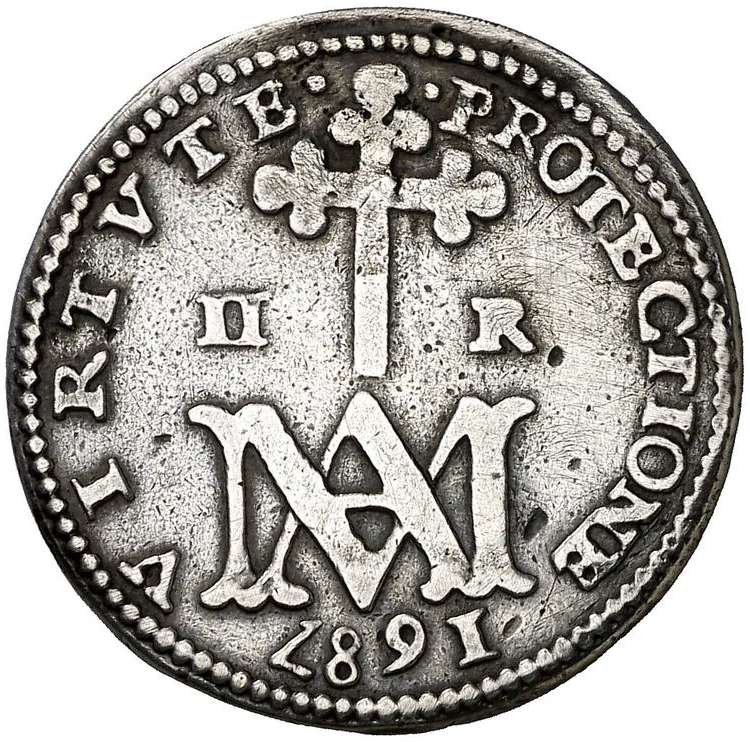
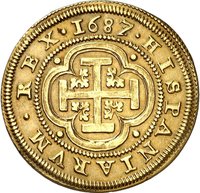
Reverse
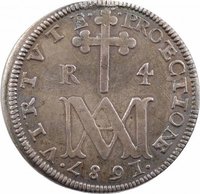
Description:
MA monogram with trilobed cross above.
Inscription:
VIRTVTE · · PROTECTIONE
1687
II R
MA
1687
II R
MA
Script: Latin
Edge
Mints
| Name | Mark |
|---|---|
| Royal Mint of Segovia | — |
Mintings
| Year | Mint Mark | Mintage | Quality | Collection |
|---|---|---|---|---|
| 1687 | BR | — |
Historical background
In 1687, Spain was in the midst of a prolonged monetary crisis rooted in the policies of the Habsburg dynasty. The primary currency was the silver real, with the escudo as the gold coin, but the system was fundamentally debased. For over a century, the Crown had repeatedly resorted to issuing vellón—a cheap copper or billon (low-grade silver) coin—to finance its endless military campaigns in the Thirty Years' War and other conflicts. By flooding the economy with this nearly worthless intrinsic coinage, the government triggered severe inflation, price instability, and a flight of high-quality silver and gold to other European markets, a phenomenon described by the economic principle of Gresham's Law ("bad money drives out good").
The situation was exacerbated by the chaotic state of the coinage itself. Multiple devaluations and re-coinings had created a confusing mix of old and new vellón in circulation, with their official face value far exceeding their metallic worth. This led to widespread hoarding of silver, rampant counterfeiting, and a deep loss of public confidence in the currency. Local authorities and merchants often set their own exchange rates, further disrupting commerce. The economy, already strained by demographic decline, agricultural failures, and the loss of productive sectors, suffered from this monetary unpredictability, which hampered trade and investment.
King Charles II, physically and politically weak, presided over this turmoil with a government lacking the fiscal discipline to enact a lasting solution. While some attempts at reform were made, such as the failed efforts to withdraw vellón from circulation, they were typically short-lived and undermined by the immediate need to fund state expenses. Thus, in 1687, Spain's currency was not merely an economic tool but a symbol of imperial overreach and administrative decay, a deteriorating system that would continue to cripple the Spanish economy until the more decisive Bourbon reforms of the following century.
The situation was exacerbated by the chaotic state of the coinage itself. Multiple devaluations and re-coinings had created a confusing mix of old and new vellón in circulation, with their official face value far exceeding their metallic worth. This led to widespread hoarding of silver, rampant counterfeiting, and a deep loss of public confidence in the currency. Local authorities and merchants often set their own exchange rates, further disrupting commerce. The economy, already strained by demographic decline, agricultural failures, and the loss of productive sectors, suffered from this monetary unpredictability, which hampered trade and investment.
King Charles II, physically and politically weak, presided over this turmoil with a government lacking the fiscal discipline to enact a lasting solution. While some attempts at reform were made, such as the failed efforts to withdraw vellón from circulation, they were typically short-lived and undermined by the immediate need to fund state expenses. Thus, in 1687, Spain's currency was not merely an economic tool but a symbol of imperial overreach and administrative decay, a deteriorating system that would continue to cripple the Spanish economy until the more decisive Bourbon reforms of the following century.
✨ Legendary