

1 real – Spain
Add to wishlist
Spain
Context
Material
Diameter: 21 mm
Weight: 2.7 g
Silver Weight:: 2.51 g
Thickness: 0.8 mm
Shape: Round
Composition: 93.1% Silver
Magnetic: No
Technique: Roller milled
References
KM: #
Numista: #111668
Value
Bullion value: $6.21
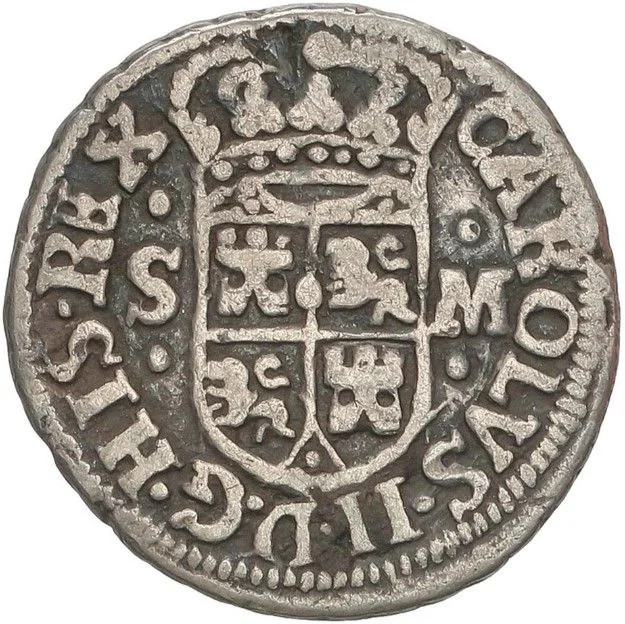
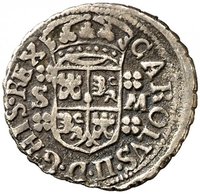
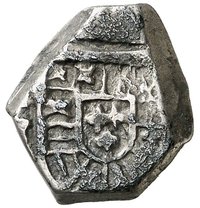
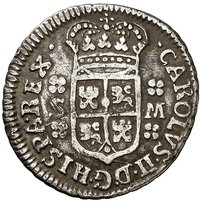
Obverse
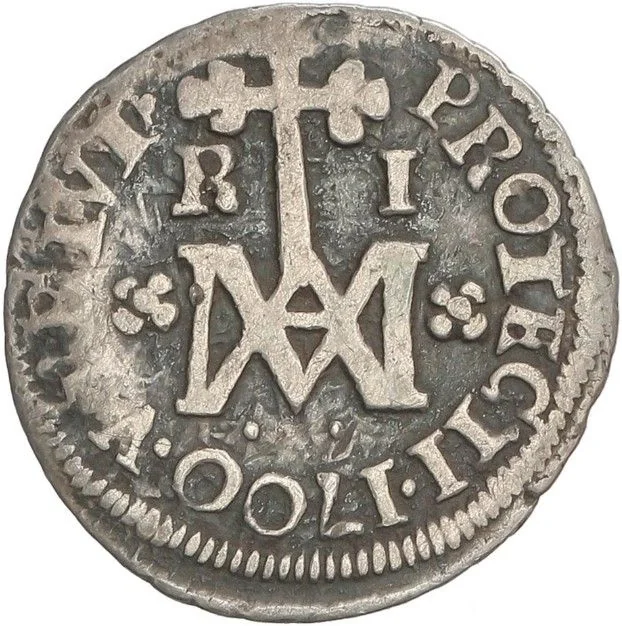
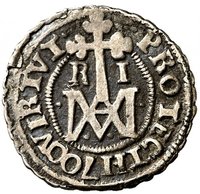
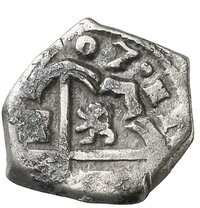
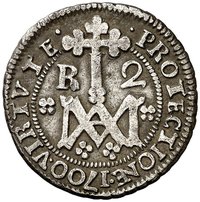
Reverse
Description:
Trilobed cross over MA monogram, no inner circle.
Inscription:
VIRTVT · PROTECTI · 1700 ·
R I
MA
R I
MA
Script: Latin
Edge
Mints
| Name | Mark |
|---|---|
| Royal Mint of Seville | S |
Mintings
| Year | Mint Mark | Mintage | Quality | Collection |
|---|---|---|---|---|
| 1700 | SM | — |
Historical background
In 1700, Spain's currency system was a complex and debased mess, a direct reflection of the empire's profound economic and political decline. The primary coin was the silver real, with the escudo as the gold unit. However, decades of financial mismanagement, particularly under the later Habsburg kings, had led to severe inflation and repeated debasements. To fund endless wars, the crown had consistently reduced the silver content in its coinage while maintaining its face value, eroding public trust and causing widespread monetary confusion. The situation was further complicated by the circulation of a vast array of older, clipped, and foreign coins, making commerce difficult and undermining both domestic and international trade.
This monetary instability was symptomatic of deeper structural issues. The influx of American silver and gold during the 16th century had initially fueled Spain's power but ultimately caused price revolutions and discouraged domestic production. By 1700, this bullion flow had diminished significantly, yet the crown's expenditures remained cripplingly high. The treasury was bankrupt, and the state relied on short-term loans and further currency manipulations to meet its obligations. The monetary chaos contributed to a stagnant economy, with high taxes on a weakened peasantry and a privileged nobility largely exempt from fiscal burdens.
The death of the childless King Charles II in 1700 and the subsequent outbreak of the War of the Spanish Succession (1701-1714) intensified the crisis. The competing claimants, the Bourbon Philip V and the Habsburg Archduke Charles, both needed to finance their military campaigns, leading to further emergency coinage and fiscal expedients. The eventual victory of Philip V and the Bourbon dynasty would prove to be a turning point. One of his new administration's first major tasks would be a comprehensive monetary reform, culminating in the 1718 ordinance that introduced stable, milled coinage and began to unify Spain's disparate financial systems, laying a foundation for 18th-century recovery.
This monetary instability was symptomatic of deeper structural issues. The influx of American silver and gold during the 16th century had initially fueled Spain's power but ultimately caused price revolutions and discouraged domestic production. By 1700, this bullion flow had diminished significantly, yet the crown's expenditures remained cripplingly high. The treasury was bankrupt, and the state relied on short-term loans and further currency manipulations to meet its obligations. The monetary chaos contributed to a stagnant economy, with high taxes on a weakened peasantry and a privileged nobility largely exempt from fiscal burdens.
The death of the childless King Charles II in 1700 and the subsequent outbreak of the War of the Spanish Succession (1701-1714) intensified the crisis. The competing claimants, the Bourbon Philip V and the Habsburg Archduke Charles, both needed to finance their military campaigns, leading to further emergency coinage and fiscal expedients. The eventual victory of Philip V and the Bourbon dynasty would prove to be a turning point. One of his new administration's first major tasks would be a comprehensive monetary reform, culminating in the 1718 ordinance that introduced stable, milled coinage and began to unify Spain's disparate financial systems, laying a foundation for 18th-century recovery.
✨ Legendary