

1 real – Spain
Add to wishlist
Spain
Context
Material
Diameter: 22 mm
Weight: 3.4 g
Silver Weight:: 3.17 g
Thickness: 1 mm
Shape: Round
Composition: 93.1% Silver
Magnetic: No
Technique: Roller milled
References
KM: #
Numista: #111664
Value
Bullion value: $7.68
Obverse
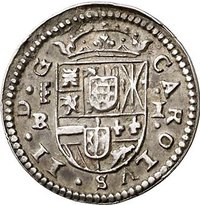
Description:
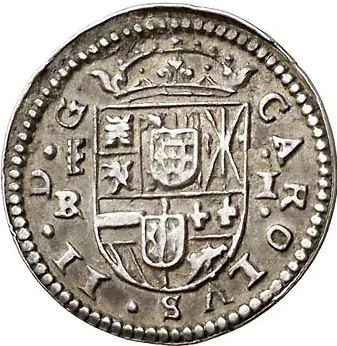
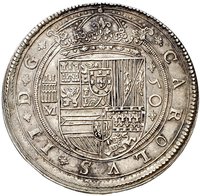
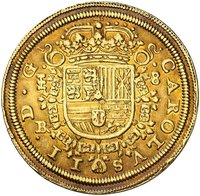
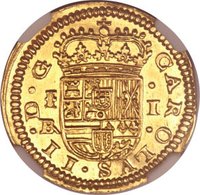
Spanish coat of arms with Portuguese arms.
Inscription:
CAROLVS · II · D · G
BR
· I ·
BR
· I ·
Script: Latin
Reverse
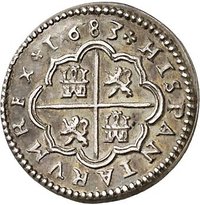
Description:
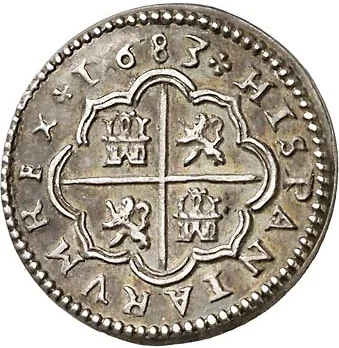
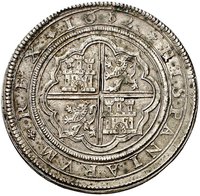
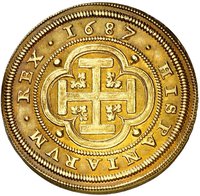
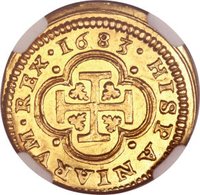
Castile and León's coat of arms in an octolobe.
Inscription:
✤ HISPANIARVM REX ✤ 1683
Script: Latin
Edge
Categories
| Symbols> Coat of Arms |
Mints
| Name | Mark |
|---|---|
| Royal Mint of Segovia | — |
Mintings
| Year | Mint Mark | Mintage | Quality | Collection |
|---|---|---|---|---|
| 1682 | M | — | ||
| 1683 | BR | — |
Historical background
In 1682, Spain's currency situation was a reflection of the broader Habsburg economic crisis, characterized by severe inflation, rampant debasement, and monetary confusion. The primary unit, the silver real, had been steadily eroded in value and silver content over the preceding century due to the Crown's relentless need to finance its military campaigns and imperial deficits. The most common circulating coin was the vellón, a coin made of billon (a base metal with a small silver content), whose face value was artificially maintained by royal decree far above its intrinsic metal worth. This practice created a fragile, two-tier monetary system where good silver coins were hoarded or exported, while inflated vellón flooded the domestic economy, distorting prices and trade.
The situation was directly managed by the Council of Finance and the Casa de la Moneda (the mint), which frequently resorted to emergency measures. These included sudden announcements to devalue the vellón currency or calls to remint existing coins with even lower metal content, a process known as "debasement." Such actions were short-term fiscal fixes that further destroyed public confidence in the currency. The economy suffered from price instability, as merchants adjusted prices to account for the unpredictable value of the coinage, and international commerce was hampered because foreign traders demanded payment in scarce silver reales de a ocho (pieces of eight) or gold escudos, not in suspect vellón.
Ultimately, the monetary chaos of 1682 was a symptom of the Spanish Empire's structural problems: declining American silver shipments, persistent budget shortfalls, and the immense cost of maintaining its European territories. While attempts at reform were discussed, meaningful stabilization would not occur until the Bourbon succession in the next century. Thus, the currency remained a daily symbol of imperial decline, complicating every transaction and contributing to a prolonged period of economic stagnation within the peninsula.
The situation was directly managed by the Council of Finance and the Casa de la Moneda (the mint), which frequently resorted to emergency measures. These included sudden announcements to devalue the vellón currency or calls to remint existing coins with even lower metal content, a process known as "debasement." Such actions were short-term fiscal fixes that further destroyed public confidence in the currency. The economy suffered from price instability, as merchants adjusted prices to account for the unpredictable value of the coinage, and international commerce was hampered because foreign traders demanded payment in scarce silver reales de a ocho (pieces of eight) or gold escudos, not in suspect vellón.
Ultimately, the monetary chaos of 1682 was a symptom of the Spanish Empire's structural problems: declining American silver shipments, persistent budget shortfalls, and the immense cost of maintaining its European territories. While attempts at reform were discussed, meaningful stabilization would not occur until the Bourbon succession in the next century. Thus, the currency remained a daily symbol of imperial decline, complicating every transaction and contributing to a prolonged period of economic stagnation within the peninsula.
Series: 1682 Spain circulation coins
✨ Legendary