

1 Speciedaler – Norway
Norway
Context
Years: 1667–1669
Issuer: Norway 
Ruler: Frederick III
Currency:
(1523—1746)
Demonetized: Yes
Total mintage: 57,000
Material
References
KM: #Click to copy to clipboard83
Numista: #111387
Value
Bullion value: $71.59
Obverse
Description:
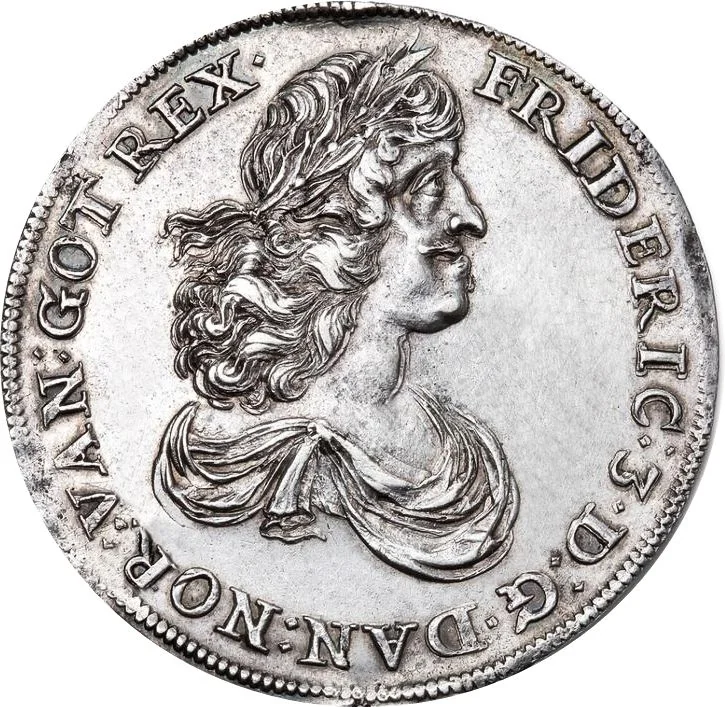
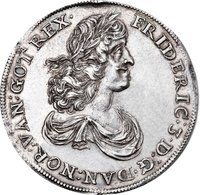
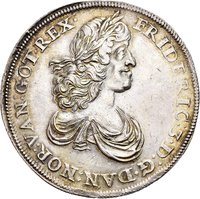
Bust of Frederik III with laurel wreath, facing right, within inscription and beaded rim.
Inscription:
FRIDERIC:3·D:G·DAN:NOR:VAN:GOT·REX·
Script: Latin
Reverse
Description:
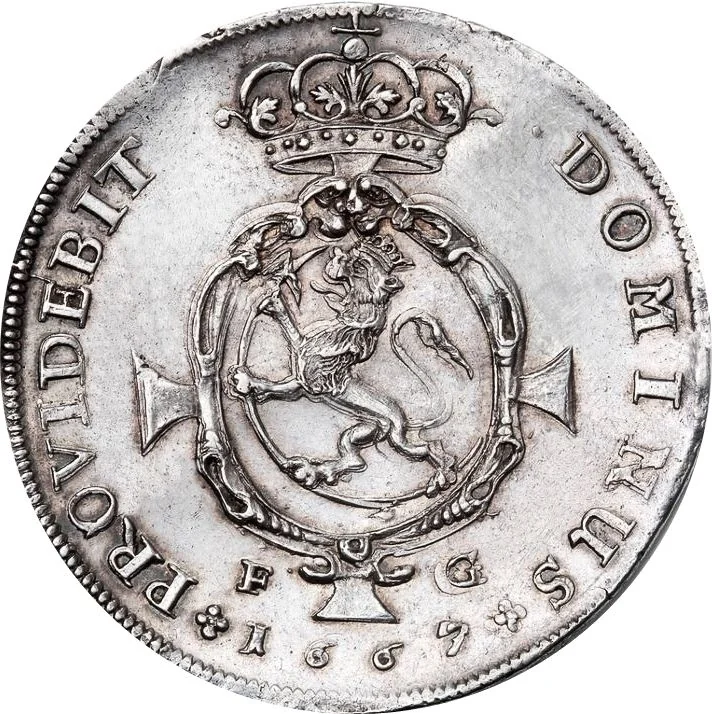
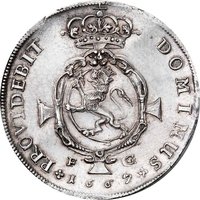
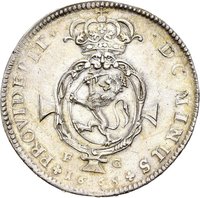
Norwegian lion with axe in crowned oval shield on a cross, flanked by initials, with date and inscription. Beaded rim.
Inscription:
·DOMINUS PROVIDEBIT·
F G
✤1667✤
F G
✤1667✤
Script: Latin
Edge
Plain.
Categories
| Person> Monarch |
| Symbol> Crown |
| Symbol> Cross |
| Object> Cold weapons |
| Animal |
| Symbols> Coat of Arms |
Mints
| Name | Mark |
|---|---|
| Christiania | — |
Mintings
| Year | Mint Mark | Mintage | Quality | Collection |
|---|---|---|---|---|
| 1667 | — | 32,000 | ||
| 1668 | — | 12,000 | ||
| 1669 | — | 13,000 |
Historical background
In 1667, Norway found itself in a precarious monetary situation, deeply entangled with its political union with Denmark. As part of the dual monarchy of Denmark-Norway, Norway did not control its own currency; monetary policy was dictated from Copenhagen. The primary circulating coin was the Danish skilling, but the system was plagued by severe debasement. To finance costly wars, particularly the recent conflicts with Sweden, the Danish crown had repeatedly reduced the silver content in its coinage, leading to inflation and a loss of public trust in the currency's value.
This period was characterized by a chronic shortage of reliable specie, especially higher-value silver coins. The debased and lightweight coins in circulation created significant problems for trade, both internally and with foreign merchants. Norwegian exporters, particularly of vital goods like timber and fish, often demanded payment in stable foreign currencies or in kind, further complicating the domestic economy. The situation was exacerbated by the widespread use of physical goods as a medium of exchange in rural areas, highlighting the monetary system's failure to serve the entire kingdom effectively.
Consequently, 1667 fell within a long era of monetary instability that would persist for decades. While no single reform was enacted that year, the ongoing crisis underscored the structural weaknesses of a shared currency managed for the crown's fiscal needs rather than economic stability. This experience laid the groundwork for future, though still limited, attempts at improvement, such as the establishment of a Norwegian silver bank (Norges Banks Sølvbeholdning) in 1686, aimed at securing a stable currency reserve, a direct response to the vulnerabilities so starkly exposed in this period.
This period was characterized by a chronic shortage of reliable specie, especially higher-value silver coins. The debased and lightweight coins in circulation created significant problems for trade, both internally and with foreign merchants. Norwegian exporters, particularly of vital goods like timber and fish, often demanded payment in stable foreign currencies or in kind, further complicating the domestic economy. The situation was exacerbated by the widespread use of physical goods as a medium of exchange in rural areas, highlighting the monetary system's failure to serve the entire kingdom effectively.
Consequently, 1667 fell within a long era of monetary instability that would persist for decades. While no single reform was enacted that year, the ongoing crisis underscored the structural weaknesses of a shared currency managed for the crown's fiscal needs rather than economic stability. This experience laid the groundwork for future, though still limited, attempts at improvement, such as the establishment of a Norwegian silver bank (Norges Banks Sølvbeholdning) in 1686, aimed at securing a stable currency reserve, a direct response to the vulnerabilities so starkly exposed in this period.
Series: 1667 Norway circulation coins
✨ Legendary