

1 Giulio – Papal States
Vatican City
Context
Year: 1686
Country: Vatican City 
Issuer: Papal States
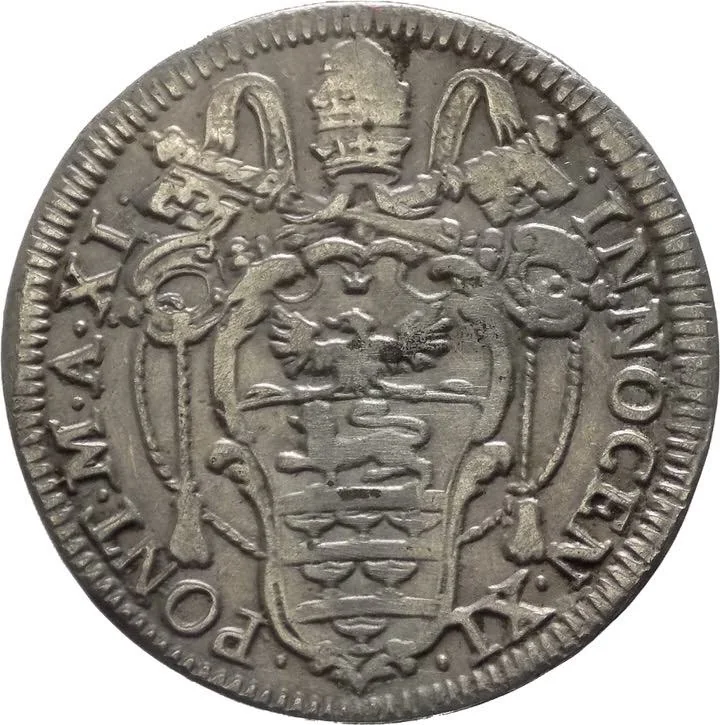
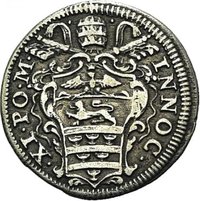
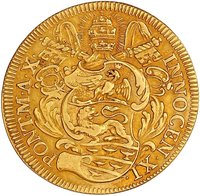
Ruler: Innocent XI
Currency:
(1534—1835)
Demonetized: Yes
Material
References
KM: #Click to copy to clipboard432
Numista: #324426
Value
Bullion value: $7.98
Obverse
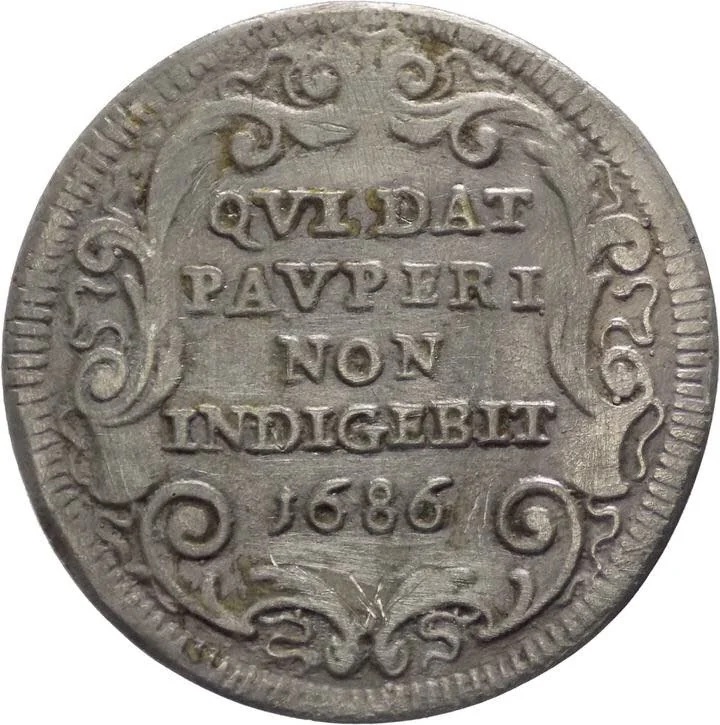
Reverse
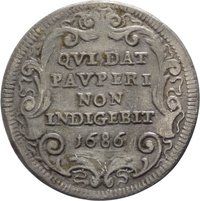
Description:
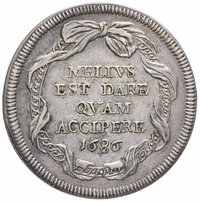
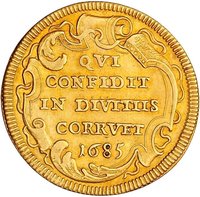
Dated inscription in cartouche.
Inscription:
QVI DAT
PAVPERI
NON
INDIGEBIT
1686
PAVPERI
NON
INDIGEBIT
1686
Script: Latin
Edge
Plain
Categories
| Symbol> Crown |
| Symbols> Coat of Arms |
Mints
| Name | Mark |
|---|---|
| Rome | — |
Mintings
| Year | Mint Mark | Mintage | Quality | Collection |
|---|---|---|---|---|
| 1686 | — | — |
Historical background
In 1686, the Papal States operated under a complex and often chaotic monetary system, typical of many Italian states before unification. The primary unit of account was the scudo, a silver coin, but the actual circulating medium was a bewildering array of physical coins from both domestic and foreign mints. Alongside papal issues, Spanish reales, Florentine fiorini, and Venetian ducats all circulated freely, their values fluctuating based on metal content and market confidence. This created a persistent challenge for commerce, as merchants and officials constantly had to refer to published tavole di valutazione (valuation tables) to determine exchange rates.
The financial demands of Pope Innocent XI’s reign (1676-1689) heavily influenced the currency situation. A fiscally conservative and reform-minded pontiff, Innocent was deeply engaged in funding the military defense of Christendom against the Ottoman Empire, most notably supporting the victorious Holy League in the Great Turkish War, which culminated at the Battle of Vienna in 1683. While he avoided the extreme debasement practiced by some predecessors, the pressure to fund these campaigns and maintain the Papal States' infrastructure likely strained the treasury. The mint in Rome, the Zecca, faced the constant task of trying to maintain the standard of its coinage to ensure stability while managing the inflow of foreign bullion and coin.
Consequently, the 1686 monetary environment was one of fragile equilibrium. The widespread use of foreign coinage and the authority of valuation tables indicate a system where the state’s control over its currency was incomplete, relying on managed acceptance rather than absolute decree. For ordinary citizens, this meant daily transactions were subject to the intricacies of coin assessment and potential loss from worn or clipped coins. Thus, while not in a state of acute crisis, the Papal States' currency in 1686 reflected the broader European challenges of pre-modern finance, where sovereign political power struggled to fully govern economic reality.
The financial demands of Pope Innocent XI’s reign (1676-1689) heavily influenced the currency situation. A fiscally conservative and reform-minded pontiff, Innocent was deeply engaged in funding the military defense of Christendom against the Ottoman Empire, most notably supporting the victorious Holy League in the Great Turkish War, which culminated at the Battle of Vienna in 1683. While he avoided the extreme debasement practiced by some predecessors, the pressure to fund these campaigns and maintain the Papal States' infrastructure likely strained the treasury. The mint in Rome, the Zecca, faced the constant task of trying to maintain the standard of its coinage to ensure stability while managing the inflow of foreign bullion and coin.
Consequently, the 1686 monetary environment was one of fragile equilibrium. The widespread use of foreign coinage and the authority of valuation tables indicate a system where the state’s control over its currency was incomplete, relying on managed acceptance rather than absolute decree. For ordinary citizens, this meant daily transactions were subject to the intricacies of coin assessment and potential loss from worn or clipped coins. Thus, while not in a state of acute crisis, the Papal States' currency in 1686 reflected the broader European challenges of pre-modern finance, where sovereign political power struggled to fully govern economic reality.
✨ Legendary