

5 Thalers – Brunswick-Lüneburg-Celle
Germany
Context
Year: 1650
Country: Germany 
Issuer: Brunswick-Lüneburg-Celle
Ruler: Christian Louis
Currency:
Demonetized: Yes
Material
References
KM: #Click to copy to clipboard224.1
Numista: #321842
Value
Bullion value: $417.37
Obverse
Description:
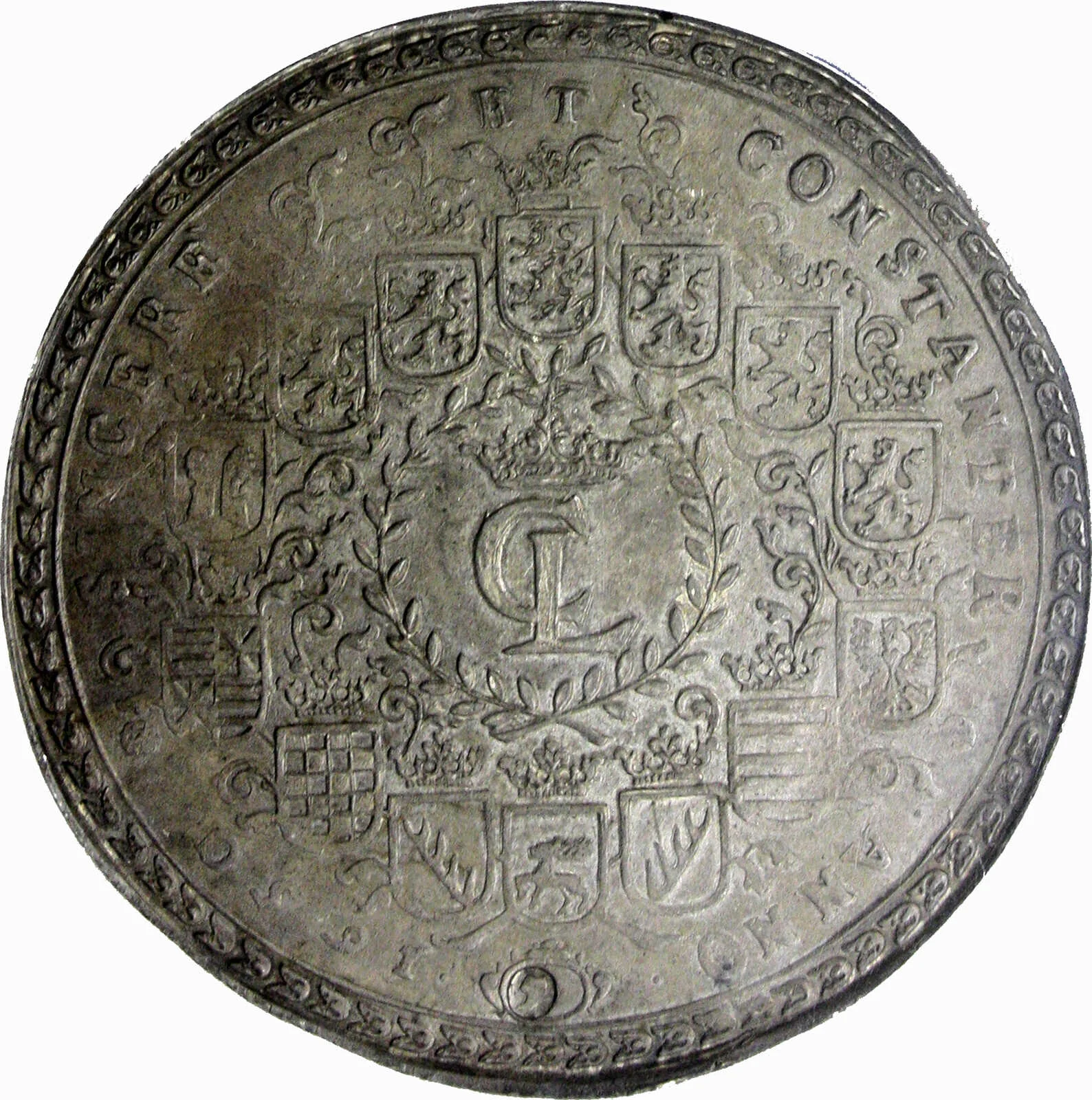
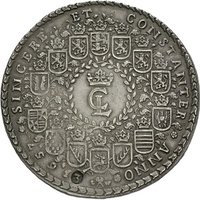
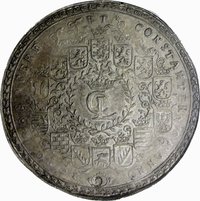
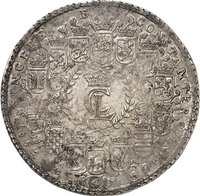
Monogram in wreath, fourteen crowned arms around. Date and denomination in legend.
Inscription:
SINCERE ET CONSTANTER ANNO 1650
CL
5
CL
5
Script: Latin
Reverse
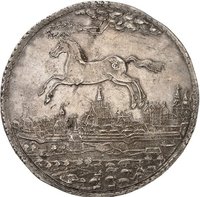
Description:
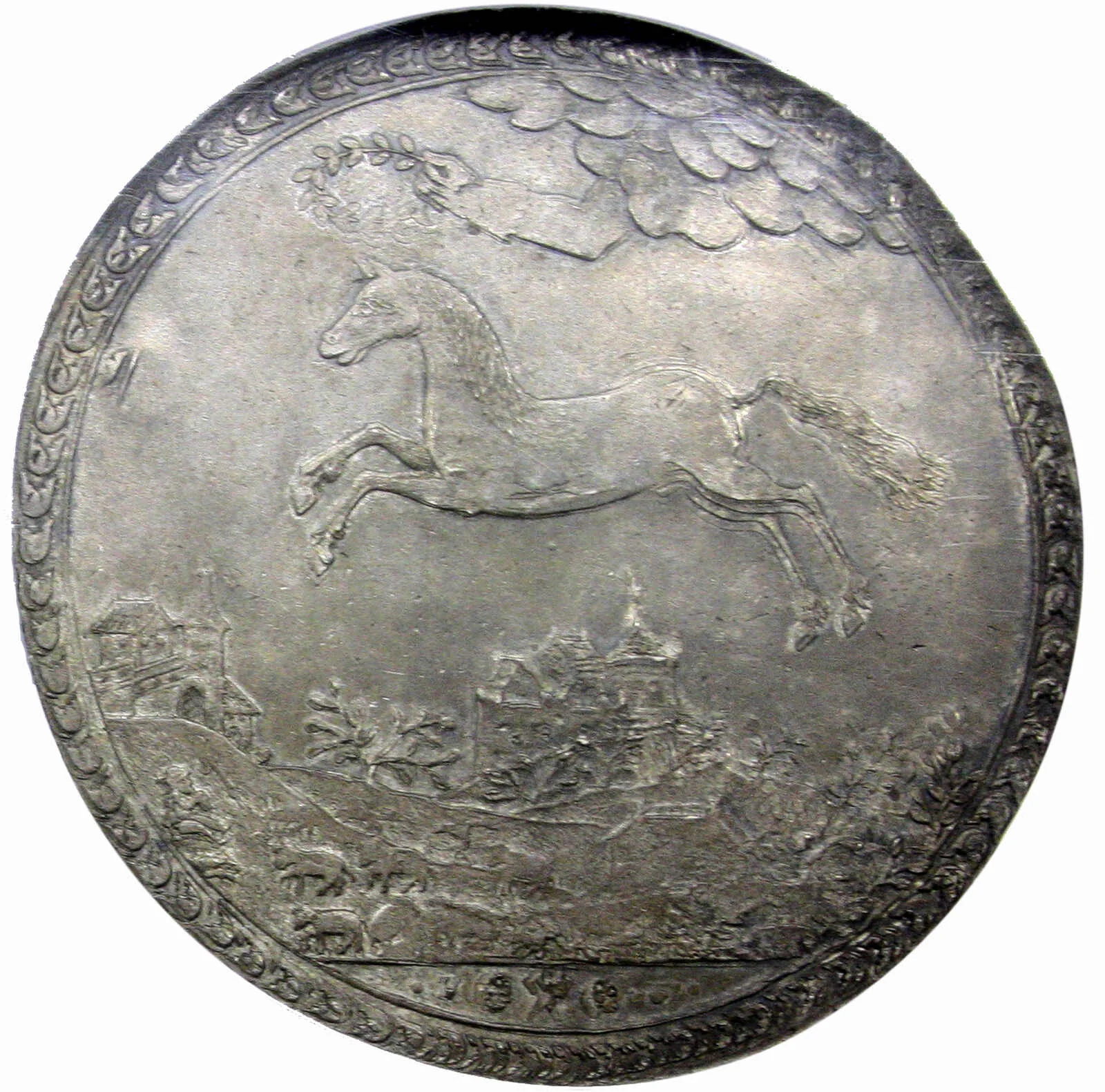
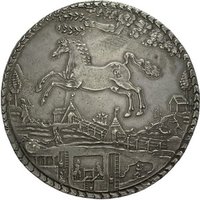
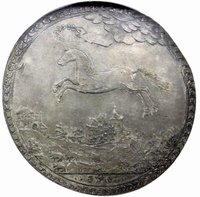
A horse facing left receives a laurel wreath from a hand emerging from clouds, above a mining scene.
Inscription:
L W
Script: Latin
Edge
Mints
| Name | Mark |
|---|---|
| Clausthal | — |
Mintings
| Year | Mint Mark | Mintage | Quality | Collection |
|---|---|---|---|---|
| 1650 | — | — |
Historical background
In 1650, the Duchy of Brunswick-Lüneburg, specifically the Principality of Celle under Duke Christian Louis, was grappling with a severe and chaotic monetary crisis rooted in the Thirty Years' War. The conflict had devastated the region's economy, leading to massive debts for the ducal treasury and a severe shortage of high-value silver coinage. This vacuum was filled by a flood of debased and foreign coins, particularly the infamous Kipper- und Wipper money from neighboring states, which contained less precious metal than their face value proclaimed. The result was a catastrophic loss of public trust in the currency, rampant inflation, and a breakdown in both local commerce and long-distance trade.
Duke Christian Louis attempted to address this through monetary ordinances, notably the Münzedikt of 1650. This decree aimed to standardize the coinage by establishing a fixed minting standard (Fuß) that defined the silver content for newly struck coins, such as Taler and Groschen. The goal was to drive out the bad money by introducing a stable, authoritative currency and to centralize minting control, thereby restoring the prince's seigniorage rights and fiscal authority. However, these reforms faced immense practical challenges, including the continued circulation of old coins, the difficulty of enforcing standards across a fragmented Holy Roman Empire, and the persistent temptation for the duchy itself to occasionally debase its coinage to meet pressing short-term financial needs.
Consequently, the currency situation in 1650 was one of transitional instability. While the ducal government recognized the necessity of a uniform and reliable monetary system for economic recovery, the legacy of war, competing currencies from over 60 imperial mints, and the weak central authority of the Empire made a swift resolution impossible. The monetary ordinances laid a foundational framework, but the duchy's economy would continue to suffer from the coexistence of multiple coinages and fluctuating values for years to come, reflecting the broader struggle of German territories to achieve monetary stability in the war's aftermath.
Duke Christian Louis attempted to address this through monetary ordinances, notably the Münzedikt of 1650. This decree aimed to standardize the coinage by establishing a fixed minting standard (Fuß) that defined the silver content for newly struck coins, such as Taler and Groschen. The goal was to drive out the bad money by introducing a stable, authoritative currency and to centralize minting control, thereby restoring the prince's seigniorage rights and fiscal authority. However, these reforms faced immense practical challenges, including the continued circulation of old coins, the difficulty of enforcing standards across a fragmented Holy Roman Empire, and the persistent temptation for the duchy itself to occasionally debase its coinage to meet pressing short-term financial needs.
Consequently, the currency situation in 1650 was one of transitional instability. While the ducal government recognized the necessity of a uniform and reliable monetary system for economic recovery, the legacy of war, competing currencies from over 60 imperial mints, and the weak central authority of the Empire made a swift resolution impossible. The monetary ordinances laid a foundational framework, but the duchy's economy would continue to suffer from the coexistence of multiple coinages and fluctuating values for years to come, reflecting the broader struggle of German territories to achieve monetary stability in the war's aftermath.

✨ Legendary