

1 Rupee – Mughal Empire
India
Context
Years: 1640–1645
Country: India 
Issuer: Mughal Empire
Ruler: Shah Jahan
Currency:
(1540—1842)
Demonetized: Yes
Material
References
KM: #Click to copy to clipboard235.12
Numista: #321618
Value
Bullion value: $32.75
Obverse
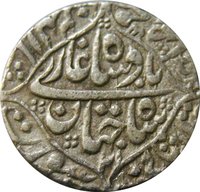
Description:
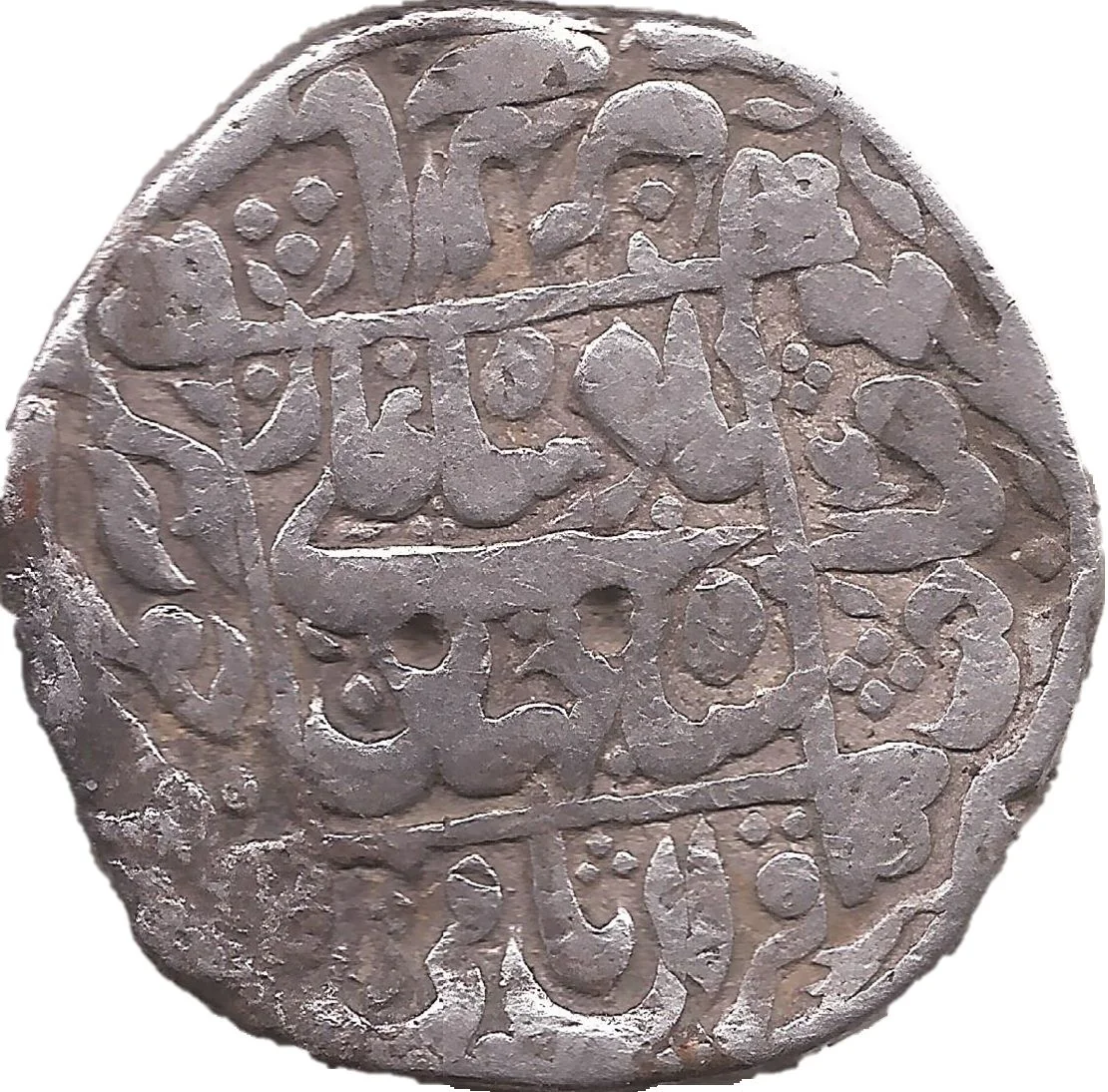
Emperor in square, knots at ends. Mint name.
Inscription:
Shah Jahan
Zarb Junagadh
RY 14
Zarb Junagadh
RY 14
Reverse
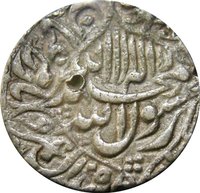
Description:
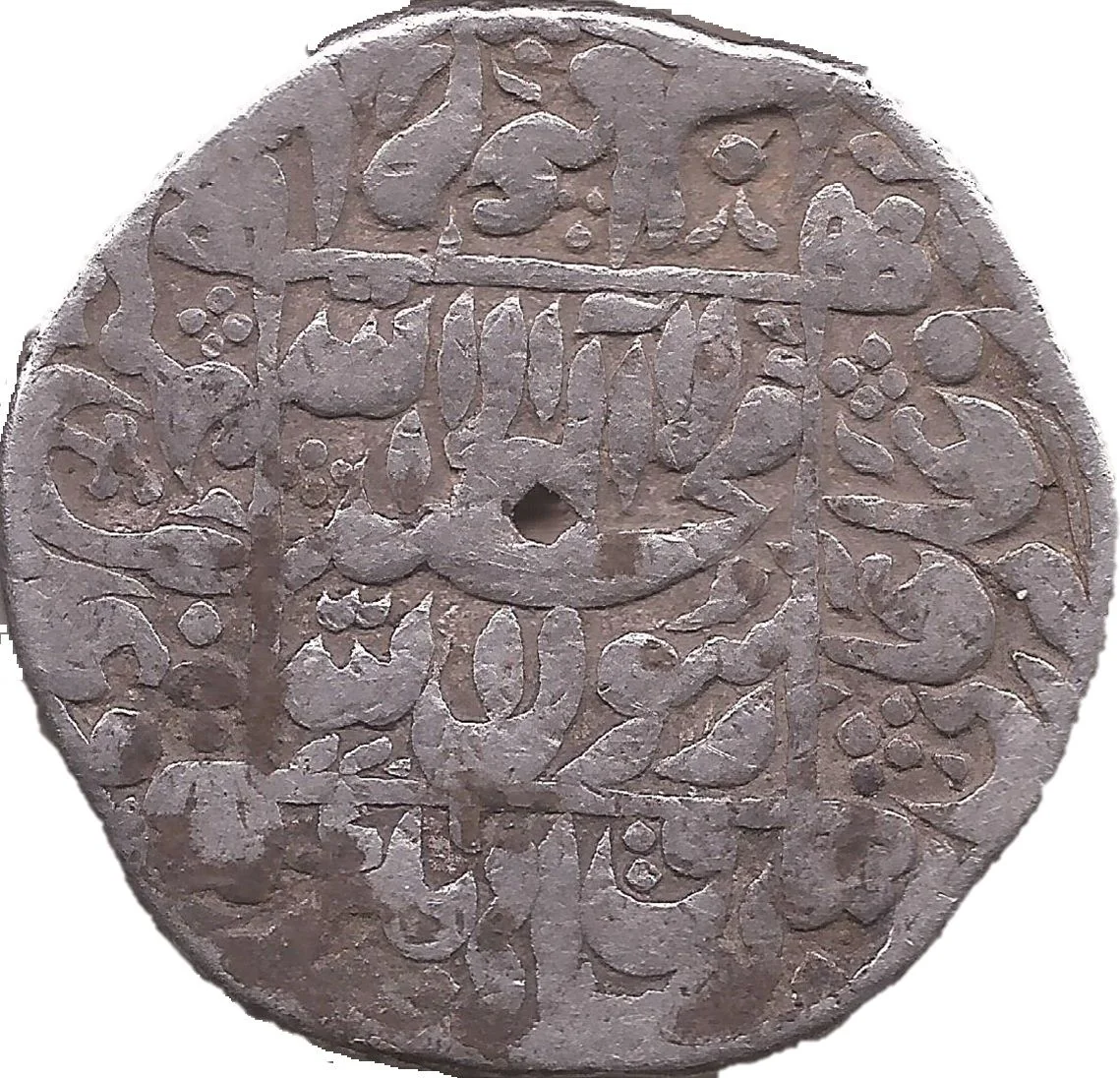
Kalima on a square with knotted ends. Dated AH 1050.
Edge
Plain with few punch marks
Mintings
| Year | Mint Mark | Mintage | Quality | Collection |
|---|---|---|---|---|
| 1640 | — | — | ||
| 1641 | — | — | ||
| 1642 | — | — | ||
| 1643 | — | — | ||
| 1644 | — | — | ||
| 1645 | — | — |
Historical background
By 1640, the Mughal Empire under Shah Jahan enjoyed a remarkably stable and sophisticated monetary system, a legacy solidified by his grandfather, Akbar. The empire operated on a trimetallic standard, with coins minted from gold (mohur), silver (rupiya), and copper (dam). These were not mere tokens but high-purity, full-bodied coins, their value intrinsically tied to their precious metal content. The silver rupiya, of consistent weight (approximately 11.5 grams) and purity, had become the primary unit for revenue assessment, large-scale trade, and state transactions, establishing a de facto silver standard across much of the subcontinent.
This currency system was underpinned by a vast and efficient network of imperial mints (dar-ul-zarb), which strictly controlled production to maintain uniformity. The coins themselves were hand-struck and featured elegant calligraphy, typically bearing the ruler's name, titles, and the mint city, serving as tools of imperial propaganda. Crucially, the three metals existed in a flexible but managed relationship, with the copper dam (valued at 1/40th of a rupiya) facilitating everyday local markets, while gold coins were often used for hoarding, prestigious gifts, and certain long-distance trades.
The period around 1640 represents a high point of monetary stability before later 17th-century strains. A steady influx of New World silver, primarily from Spanish America via European trade, was entering the economy through Mughal ports like Surat, helping to monetize the economy and fuel commercial expansion without causing severe inflation at this time. However, this very influx created a growing dependence on external bullion sources. Furthermore, the system's integrity relied heavily on strong central authority to police mints and prevent debasement—a vulnerability that would become apparent later as imperial control weakened.
This currency system was underpinned by a vast and efficient network of imperial mints (dar-ul-zarb), which strictly controlled production to maintain uniformity. The coins themselves were hand-struck and featured elegant calligraphy, typically bearing the ruler's name, titles, and the mint city, serving as tools of imperial propaganda. Crucially, the three metals existed in a flexible but managed relationship, with the copper dam (valued at 1/40th of a rupiya) facilitating everyday local markets, while gold coins were often used for hoarding, prestigious gifts, and certain long-distance trades.
The period around 1640 represents a high point of monetary stability before later 17th-century strains. A steady influx of New World silver, primarily from Spanish America via European trade, was entering the economy through Mughal ports like Surat, helping to monetize the economy and fuel commercial expansion without causing severe inflation at this time. However, this very influx created a growing dependence on external bullion sources. Furthermore, the system's integrity relied heavily on strong central authority to police mints and prevent debasement—a vulnerability that would become apparent later as imperial control weakened.
✨ Legendary