

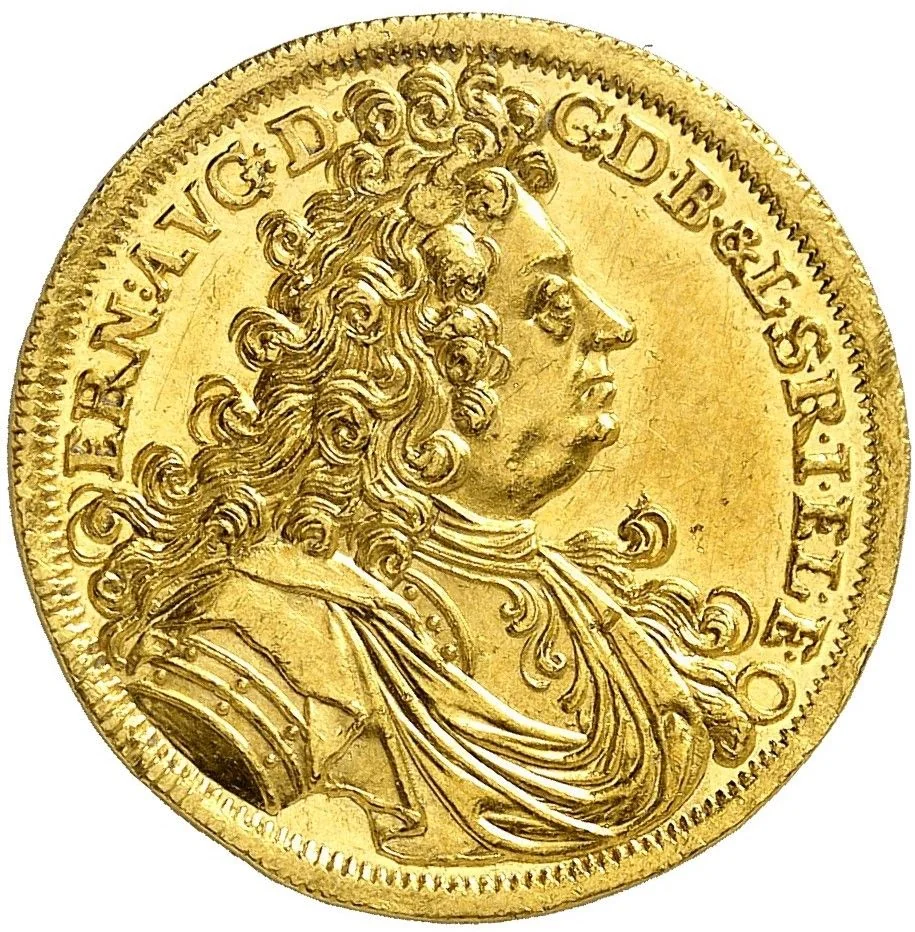
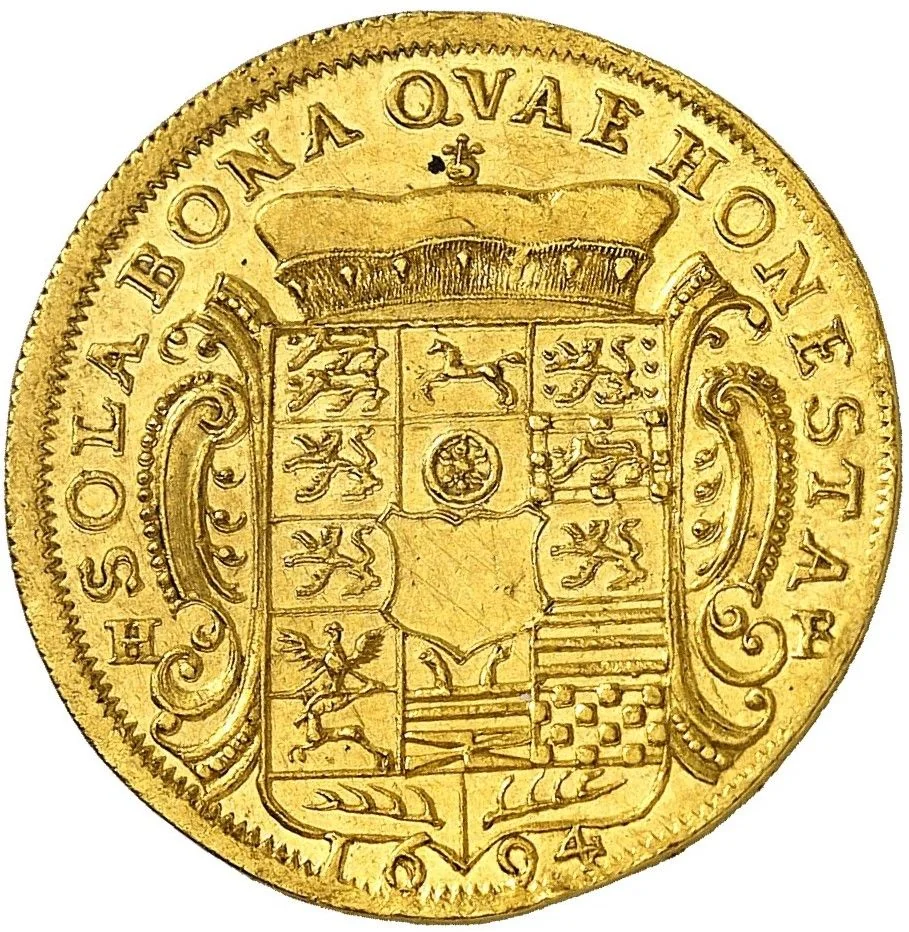
2 Ducats – Brunswick-Lüneburg-Calenberg
Germany
Context
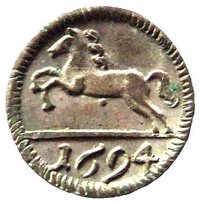
Year: 1694
Country: Germany 
Issuer: Brunswick-Lüneburg-Calenberg
Ruler: Ernest Augustus
Currency:
Demonetized: Yes
Material
References
KM: #Click to copy to clipboard390
Numista: #320535
Value
Bullion value: $1153.10
Obverse
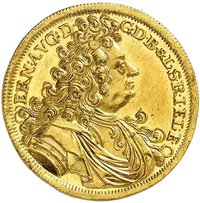
Description:
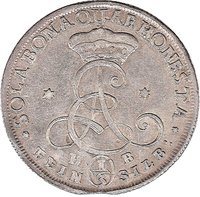
Get in. Let's go.
Inscription:
ERN : AVG : D • - G • D • B • & L • S • R • I • EL • E • O
Script: Latin
Reverse
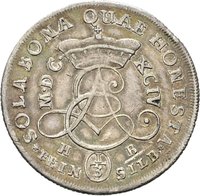
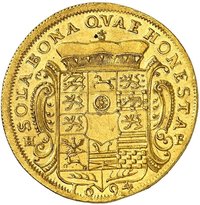
Description:
Crowned arms, 15-fold, dated below.
Inscription:
SOLA BONA QVAE HONESTA
H B
1694
H B
1694
Script: Latin
Edge
Mints
| Name | Mark |
|---|---|
| Clausthal | — |
Mintings
| Year | Mint Mark | Mintage | Quality | Collection |
|---|---|---|---|---|
| 1694 | — | — |
Historical background
In 1694, the Duchy of Brunswick-Lüneburg, specifically the Principality of Calenberg under Duke Ernst August, was grappling with a severe monetary crisis typical of the Holy Roman Empire's Kleinstaaterei. The region was flooded with debased coinage, a problem stemming from the widespread practice of Kipper- und Wipperzeit manipulations earlier in the century and ongoing competitive devaluations by numerous neighboring states. This resulted in a chaotic system where the intrinsic silver value of coins was often far below their face value, undermining public trust, disrupting trade, and causing inflation. The problem was exacerbated by the financial pressures of maintaining a court aspiring to electoral dignity and the broader costs of Baroque state-building.
Duke Ernst August's primary response was the issuance of a landmark Münzedikt (coin edict) in December 1694. This decree aimed to standardize the currency by introducing the Calenbergscher Speziesthaler as a stable, high-quality silver coin aligned with the Reichsthaler standard. The edict strictly regulated the weight and fineness of coins and sought to withdraw inferior money from circulation. This reform was not merely an economic measure but a political one, intended to assert princely authority, stabilize state finances, and facilitate smoother taxation and commerce within the principality and beyond.
The 1694 reform achieved limited success. While it established a more reliable standard for official transactions and demonstrated centralizing authority, it could not fully insulate Calenberg from the monetary chaos of the Empire. The circulation of foreign and debased coins remained a persistent challenge. Nevertheless, the edict marked a significant step toward monetary sovereignty and was part of a broader trend among German territories seeking to create orderly fiscal systems, a necessary foundation for the emerging modern state of Hanover, which would soon be elevated to an Electorate.
Duke Ernst August's primary response was the issuance of a landmark Münzedikt (coin edict) in December 1694. This decree aimed to standardize the currency by introducing the Calenbergscher Speziesthaler as a stable, high-quality silver coin aligned with the Reichsthaler standard. The edict strictly regulated the weight and fineness of coins and sought to withdraw inferior money from circulation. This reform was not merely an economic measure but a political one, intended to assert princely authority, stabilize state finances, and facilitate smoother taxation and commerce within the principality and beyond.
The 1694 reform achieved limited success. While it established a more reliable standard for official transactions and demonstrated centralizing authority, it could not fully insulate Calenberg from the monetary chaos of the Empire. The circulation of foreign and debased coins remained a persistent challenge. Nevertheless, the edict marked a significant step toward monetary sovereignty and was part of a broader trend among German territories seeking to create orderly fiscal systems, a necessary foundation for the emerging modern state of Hanover, which would soon be elevated to an Electorate.

✨ Legendary