

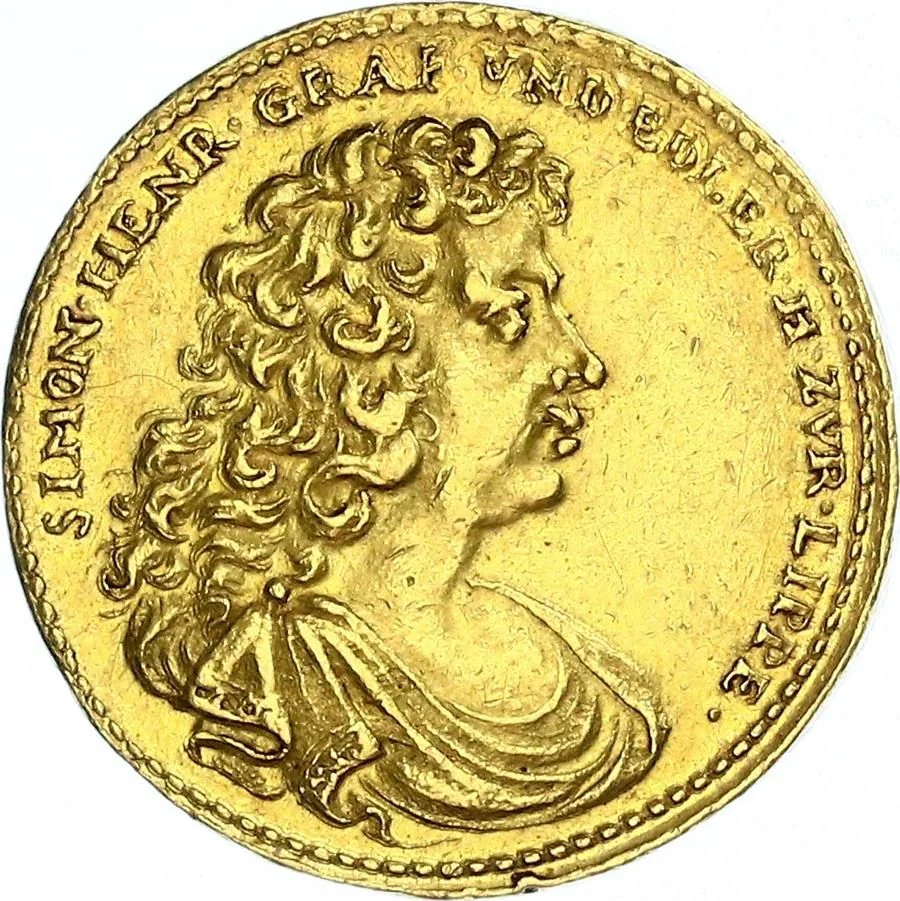
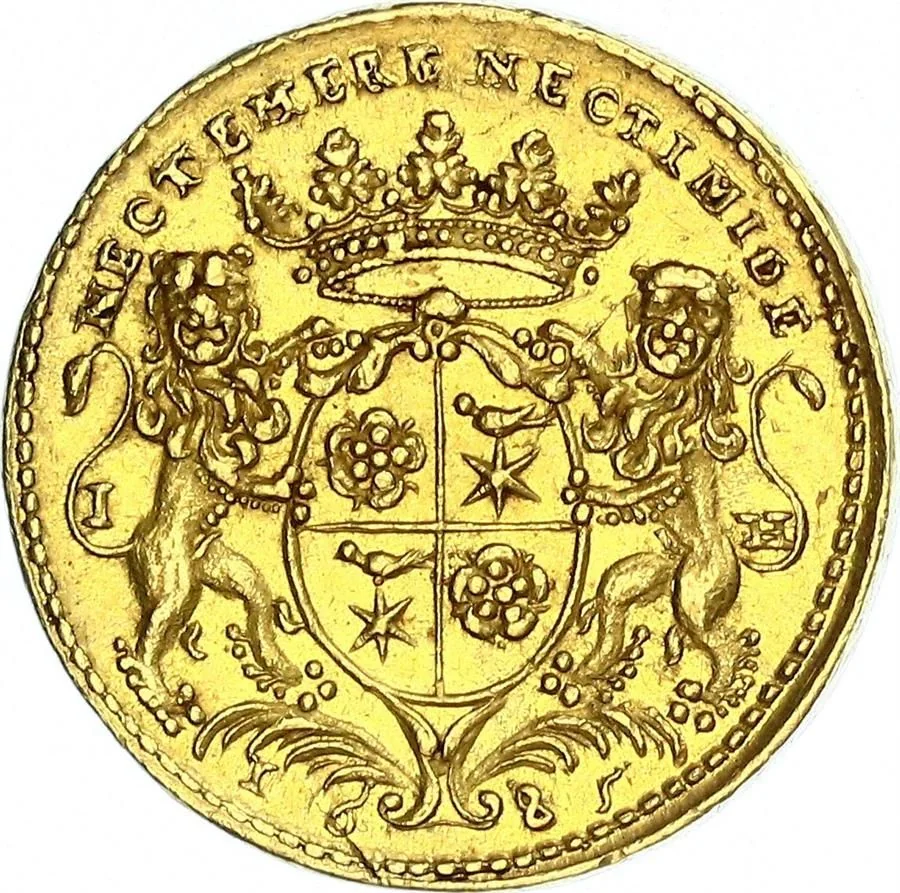
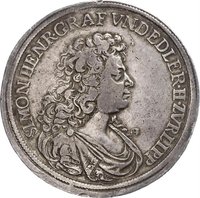
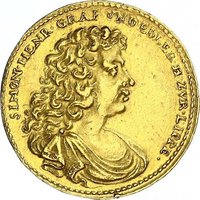
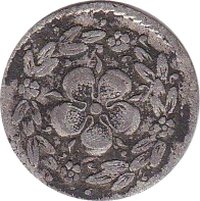
Obverse
Description:
Get in. Let's go.
Inscription:
SIMON. HEINR. GRAF UND EDI. ER. H. ZVR. LIPPE
Script: Latin
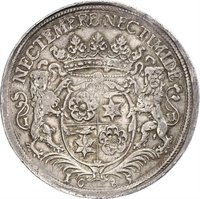
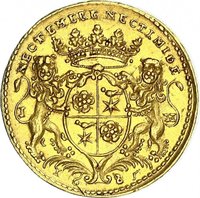
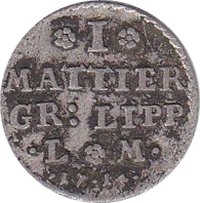
Reverse
Edge
Mints
| Name | Mark |
|---|---|
| Detmold | — |
Mintings
| Year | Mint Mark | Mintage | Quality | Collection |
|---|---|---|---|---|
| 1685 | — | — |
Historical background
In 1685, the County of Lippe-Detmold, a small German territory within the Holy Roman Empire, operated within a complex and fragmented monetary system. Like most principalities of the era, it did not possess exclusive rights to mint its own coinage; that privilege was reserved for the Emperor and higher-ranking electors. Consequently, the circulating currency was a heterogeneous mix of foreign and domestic coins. The most important local issues were the Thaler and its subdivisions (Groschen, Pfennige), but these circulated alongside a plethora of coins from neighboring states like Brunswick, Cologne, and Hesse, as well as imperial Reichsthalers. This diversity created constant challenges for trade and administration.
The monetary situation was further complicated by the Thirty Years' War (1618-1648), which had severely debased coinage across Germany. While recovery was underway by 1685, the legacy of "bad money" and fluctuating metal values persisted. Count Simon Henry, ruling from 1666 to 1697, faced the ongoing task of stabilizing the currency's value and regulating its use within his borders. His administration would have been concerned with setting official exchange rates (Kuranttaler vs. Reichsthaler), combating the circulation of clipped or counterfeit coins, and ensuring that taxes and official payments were made in acceptable specie.
Ultimately, Lippe-Detmold's currency in 1685 reflected the broader political fragmentation of the Empire. The county lacked sovereign monetary control and was subject to the inflationary pressures and speculative practices common in a region with hundreds of different circulating coins. Economic stability depended less on a unified monetary policy and more on the Count's ability to enforce ordinances that defined legal tender for local transactions and to maintain the credibility of any coins issued under his limited minting rights, all while navigating the intricate web of imperial monetary treaties.
The monetary situation was further complicated by the Thirty Years' War (1618-1648), which had severely debased coinage across Germany. While recovery was underway by 1685, the legacy of "bad money" and fluctuating metal values persisted. Count Simon Henry, ruling from 1666 to 1697, faced the ongoing task of stabilizing the currency's value and regulating its use within his borders. His administration would have been concerned with setting official exchange rates (Kuranttaler vs. Reichsthaler), combating the circulation of clipped or counterfeit coins, and ensuring that taxes and official payments were made in acceptable specie.
Ultimately, Lippe-Detmold's currency in 1685 reflected the broader political fragmentation of the Empire. The county lacked sovereign monetary control and was subject to the inflationary pressures and speculative practices common in a region with hundreds of different circulating coins. Economic stability depended less on a unified monetary policy and more on the Count's ability to enforce ordinances that defined legal tender for local transactions and to maintain the credibility of any coins issued under his limited minting rights, all while navigating the intricate web of imperial monetary treaties.
✨ Legendary