

3 kepings – Sumatra
Add to wishlist
Context
Years: 1786–1788
Country: British East Indies
Issuer: Sumatra
Currency:
(1783—1824)
Demonetized: Yes
Material
References
KM: #
Numista: #320044
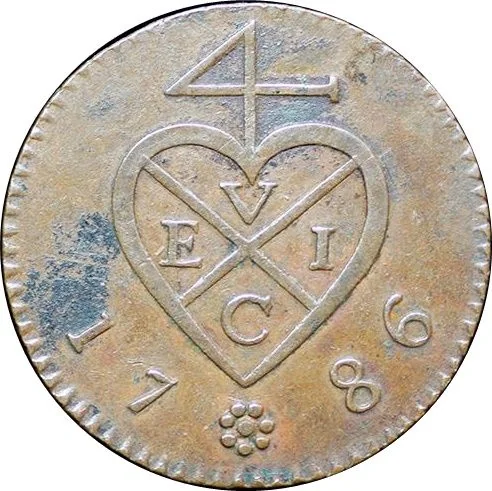
Obverse
Description:
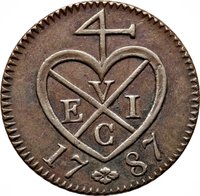
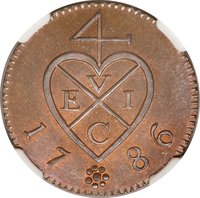
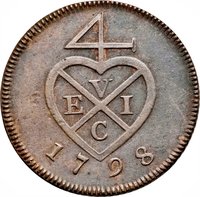
Balemark: Scottish Mason's 'Sign of Four' above a heart containing the company initials; date flanking a rosette below.
Inscription:
V E I C
17 ✿ 86
17 ✿ 86
Script: Latin
Engraver: Jean-Pierre Droz
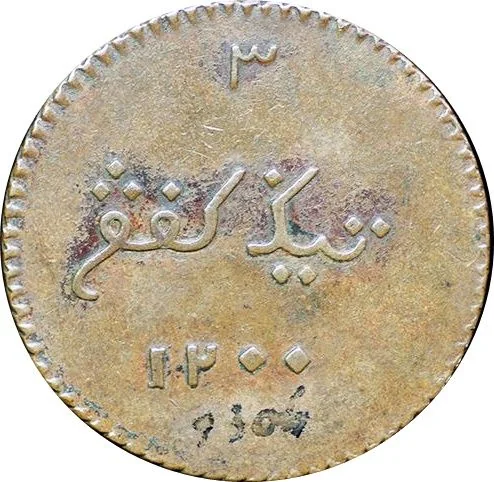
Reverse
Description:
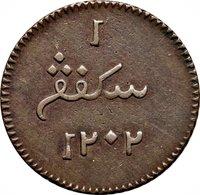
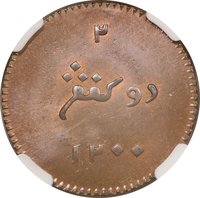
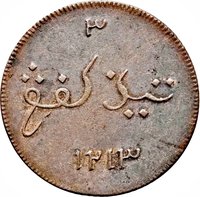
Arabic numerals and Jawi script.
Inscription:
۳
تيݢ كفڠ
١٢٠٠
تيݢ كفڠ
١٢٠٠
Script: Arabic
Engraver: Jean-Pierre Droz
Edge
Reeding slanted right
Mintings
| Year | Mint Mark | Mintage | Quality | Collection |
|---|---|---|---|---|
| 1786 | — | — | ||
| 1788 | — | — |
Historical background
In 1786, the currency situation in Sumatra was a complex tapestry of indigenous, regional, and international monies, reflecting the island's position within vibrant trade networks. The interior highland Minangkabau regions and the pepper-producing coastal sultanates like Aceh, Jambi, and Palembang operated with a mix of commodity money and low-value coinage. Locally minted tin pitis coins and gold mas coins served for smaller, everyday transactions, while Spanish silver dollars—the ubiquitous "pieces of eight"—acted as the dominant high-value currency for external trade and large-scale commerce. This created a multi-tiered system where the value and acceptance of currency varied significantly from port to hinterland.
The year 1786 itself was a pivotal moment, as it saw the British East India Company establish a foothold on Penang, just north of Sumatra. While not on Sumatran soil, this new entrepôt immediately began to alter the financial ecology of the Strait of Malacca. It intensified the circulation of Spanish dollars and other silver coinage like Indian rupees, drawing trade away from traditional Acehnese and Dutch-controlled ports. Consequently, the British presence increased competitive pressure on the Dutch East India Company (VOC), which held sway in parts of western Sumatra, further complicating the monetary landscape through rival European commercial interests.
Underlying this fluid system was a chronic shortage of reliable small change, leading to the widespread practice of cutting silver coins into fractional pieces. The VOC, while influential, did not impose a unified currency, and indigenous polities lacked the central authority to do so. Therefore, the monetary environment was essentially decentralized and pragmatic, defined by the weight and purity of precious metals rather than a single sovereign guarantee. This fragmentation would persist until the 19th century, when colonial consolidation gradually imposed more standardized currency regimes across the island.
The year 1786 itself was a pivotal moment, as it saw the British East India Company establish a foothold on Penang, just north of Sumatra. While not on Sumatran soil, this new entrepôt immediately began to alter the financial ecology of the Strait of Malacca. It intensified the circulation of Spanish dollars and other silver coinage like Indian rupees, drawing trade away from traditional Acehnese and Dutch-controlled ports. Consequently, the British presence increased competitive pressure on the Dutch East India Company (VOC), which held sway in parts of western Sumatra, further complicating the monetary landscape through rival European commercial interests.
Underlying this fluid system was a chronic shortage of reliable small change, leading to the widespread practice of cutting silver coins into fractional pieces. The VOC, while influential, did not impose a unified currency, and indigenous polities lacked the central authority to do so. Therefore, the monetary environment was essentially decentralized and pragmatic, defined by the weight and purity of precious metals rather than a single sovereign guarantee. This fragmentation would persist until the 19th century, when colonial consolidation gradually imposed more standardized currency regimes across the island.
✨ Legendary