

20 kreuzers – Hungary
Add to wishlist
Hungary
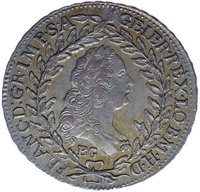
Obverse
Description:
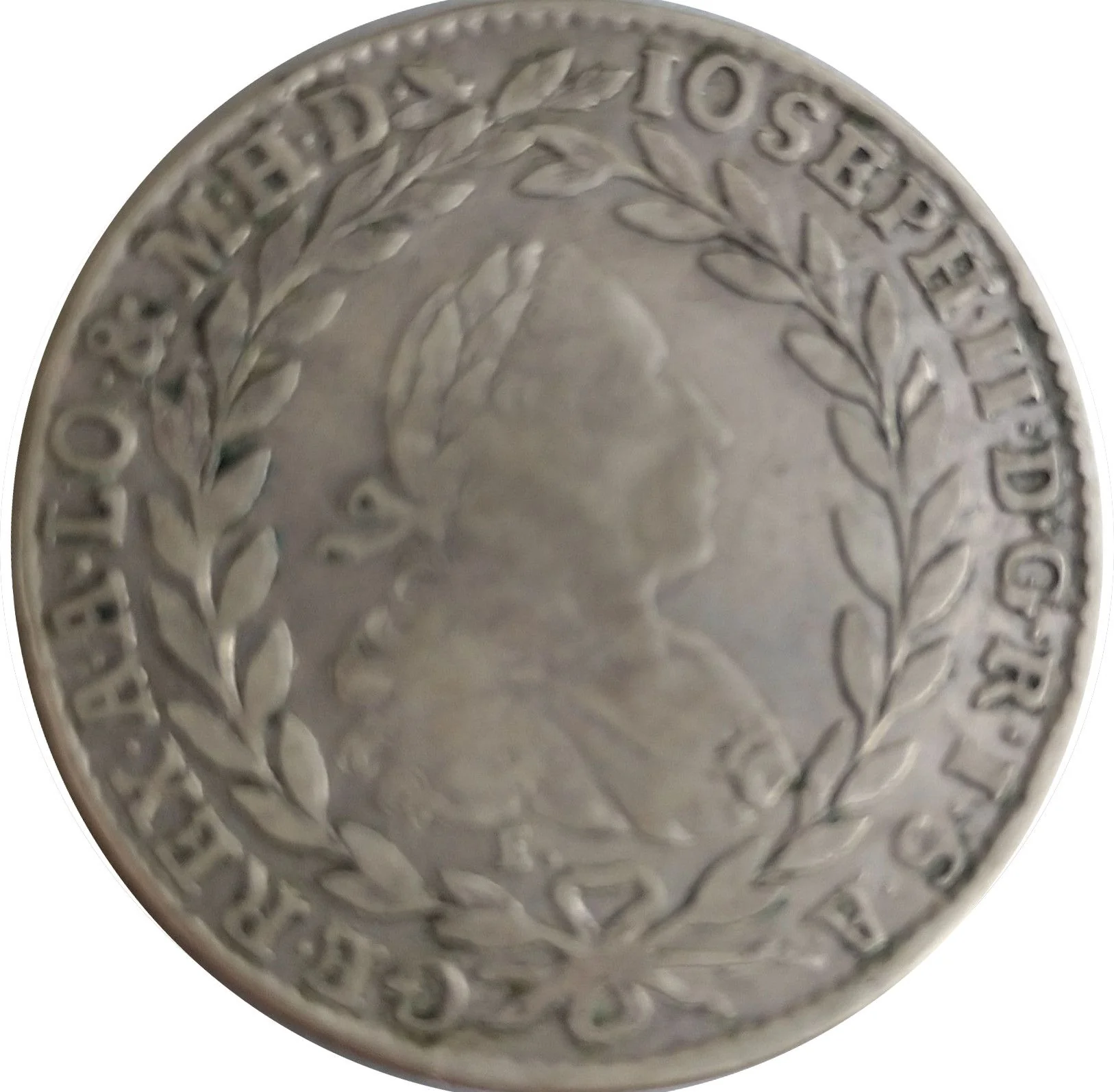
Laureate bust right in wreath, lion on shoulder. Mintmark below. Legend begins at 1 o'clock.
Inscription:
IOSEPH · II · D · G · R · I · S · A · GE · REX · A · A · LO & M · H · D ·
Script: Latin
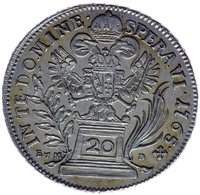
Reverse
Description:
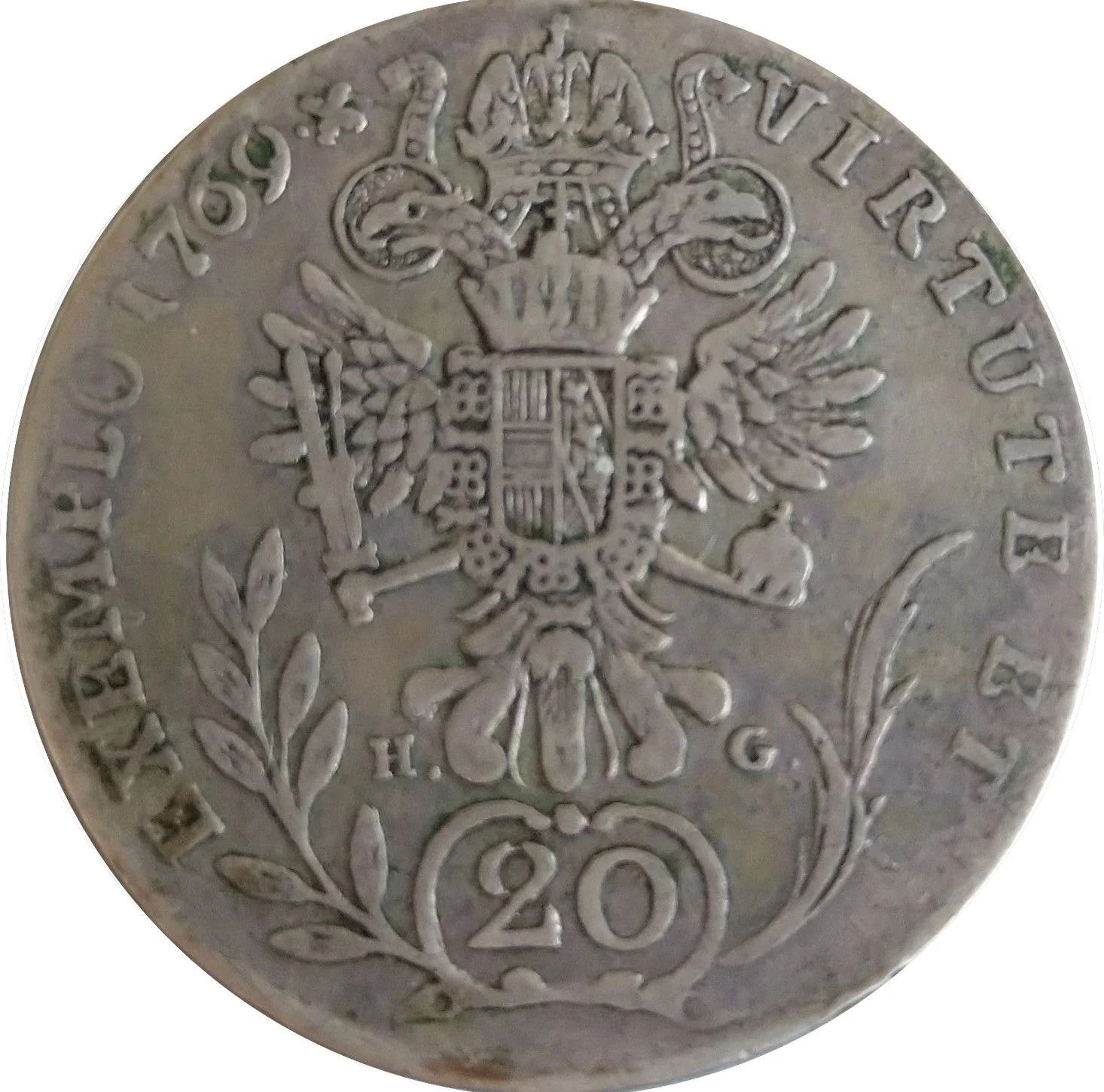
Imperial double-headed eagle with Austrian and Lorraine arms. Value in framed laurel and palms below. Mintmark split by tail feathers.
Inscription:
VIRTUTE ET EXEMPLO · 1768 X
H. G.
20
H. G.
20
Script: Latin
Edge
Mints
| Name | Mark |
|---|---|
| Alba Iulia | E |
Mintings
Historical background
In 1765, the currency situation in the Habsburg Monarchy, which included Hungary, was characterized by a complex and unstable system managed from Vienna. The primary circulating coins were silver thalers (or forints in Hungarian) and copper kreuzers, with a standard set by the 1753 monetary patent that established a fixed exchange rate. However, the state's chronic fiscal demands, driven by the costs of the Seven Years' War (1756-1763) and Maria Theresa's extensive reforms, led to repeated debasement. The government reduced the silver content in coins and increased the minting of lower-value copper currency to finance deficits, a practice that eroded public trust and sparked inflation.
This monetary instability created significant economic strain within Hungary. The proliferation of lightweight copper coins, known as krajcár, flooded the market and drove more valuable silver coins out of circulation, in line with Gresham's Law. This hit the Hungarian nobility and peasantry alike, as taxes and feudal dues were often stipulated in silver-based values, while everyday transactions were conducted in the depreciating copper currency. The resulting price increases and economic uncertainty fostered widespread discontent, contributing to social tensions.
The response from the Hungarian Diet was one of forceful protest. The estates saw Vienna's monetary policy as a unilateral infringement on their constitutional rights and a direct economic burden. In 1765, discussions on currency reform were therefore a point of serious contention between the Hungarian nobility and the central Habsburg government, emblematic of the broader struggle over autonomy and fiscal control. While a major reform would not materialize until the 1780s, the currency chaos of this period underscored the monarchy's fragile finances and the centrifugal forces within the empire.
This monetary instability created significant economic strain within Hungary. The proliferation of lightweight copper coins, known as krajcár, flooded the market and drove more valuable silver coins out of circulation, in line with Gresham's Law. This hit the Hungarian nobility and peasantry alike, as taxes and feudal dues were often stipulated in silver-based values, while everyday transactions were conducted in the depreciating copper currency. The resulting price increases and economic uncertainty fostered widespread discontent, contributing to social tensions.
The response from the Hungarian Diet was one of forceful protest. The estates saw Vienna's monetary policy as a unilateral infringement on their constitutional rights and a direct economic burden. In 1765, discussions on currency reform were therefore a point of serious contention between the Hungarian nobility and the central Habsburg government, emblematic of the broader struggle over autonomy and fiscal control. While a major reform would not materialize until the 1780s, the currency chaos of this period underscored the monarchy's fragile finances and the centrifugal forces within the empire.
✨ Legendary