

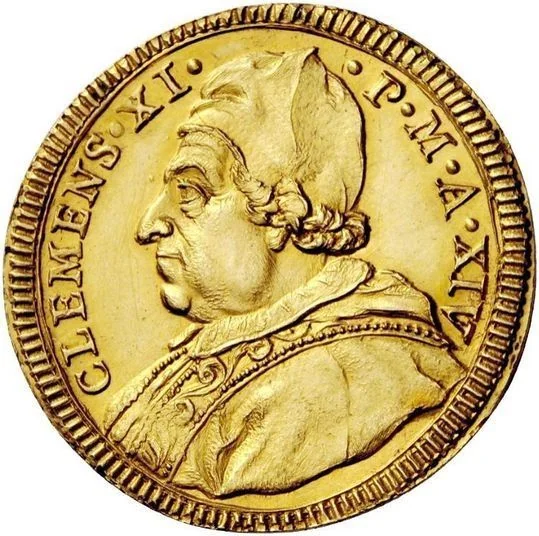
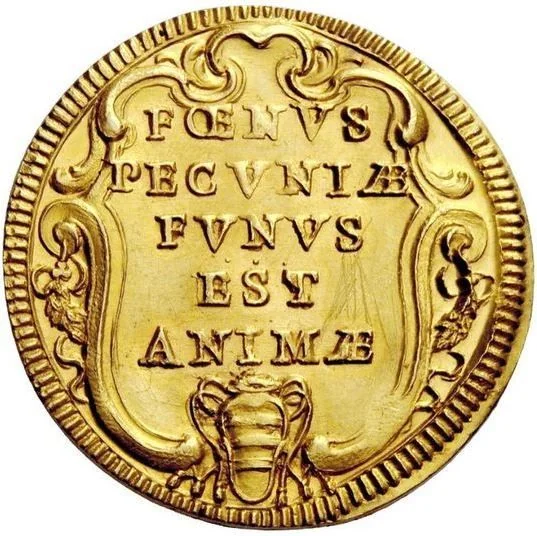
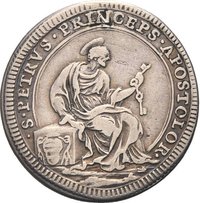
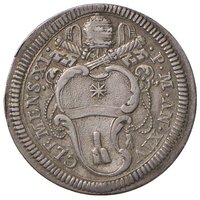
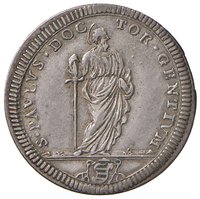
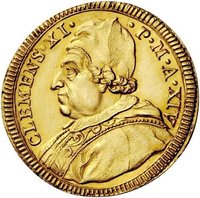
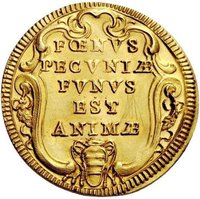
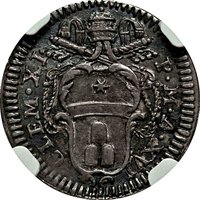
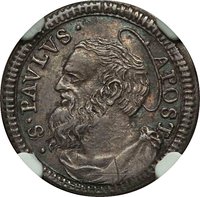
1 Doppia – Papal States
Vatican City
Context
Year: 1714
Country: Vatican City 
Issuer: Papal States
Ruler: Clement XI
Currency:
(1534—1835)
Demonetized: Yes
References
KM: #Click to copy to clipboard758
Numista: #317566
Value
Bullion value: $1150.77
Mints
| Name | Mark |
|---|---|
| Rome | — |
Mintings
| Year | Mint Mark | Mintage | Quality | Collection |
|---|---|---|---|---|
| 1714 | — | — |
Historical background
In 1714, the Papal States found themselves in a precarious and complex monetary situation, a legacy of prolonged financial strain. The treasury had been depleted by the costs of maintaining the court in Rome, extensive architectural and artistic patronage, and the military expenses of the War of the Spanish Succession (1701-1714). To meet these obligations, successive popes had resorted to debasing the coinage, particularly the low-denomination baiocco and grosso. This meant reducing the precious metal content in coins while keeping their face value the same, a form of hidden taxation that generated short-term revenue but eroded public trust and sparked inflation.
The monetary landscape was further complicated by extreme fragmentation and confusion. Alongside the debased papal issues, a multitude of foreign coins circulated freely, especially Spanish pieces of eight and silver scudi from other Italian states. This created a chaotic system where exchange rates fluctuated wildly, and the value of money was often determined more by its weight and metal content than its official denomination. The Papal Mint struggled to control this environment, leading to widespread counterfeiting and the practice of "clipping" precious metal from the edges of coins, which further degraded the currency in circulation.
Pope Clement XI (1700-1721), reigning in 1714, was acutely aware of the crisis and had attempted reforms. His most significant effort was the 1703 monetary edict, which aimed to standardize the coinage on a unified scudo system and restrict foreign currency. However, by 1714, these measures had largely failed. Economic hardship, resistance from vested interests, and a lack of decisive fiscal policy prevented a true stabilization. Consequently, the Papal States entered the second decade of the 18th century with an unstable, inflationary currency that hindered commerce and reflected the broader administrative and political challenges facing the temporal power of the papacy.
The monetary landscape was further complicated by extreme fragmentation and confusion. Alongside the debased papal issues, a multitude of foreign coins circulated freely, especially Spanish pieces of eight and silver scudi from other Italian states. This created a chaotic system where exchange rates fluctuated wildly, and the value of money was often determined more by its weight and metal content than its official denomination. The Papal Mint struggled to control this environment, leading to widespread counterfeiting and the practice of "clipping" precious metal from the edges of coins, which further degraded the currency in circulation.
Pope Clement XI (1700-1721), reigning in 1714, was acutely aware of the crisis and had attempted reforms. His most significant effort was the 1703 monetary edict, which aimed to standardize the coinage on a unified scudo system and restrict foreign currency. However, by 1714, these measures had largely failed. Economic hardship, resistance from vested interests, and a lack of decisive fiscal policy prevented a true stabilization. Consequently, the Papal States entered the second decade of the 18th century with an unstable, inflationary currency that hindered commerce and reflected the broader administrative and political challenges facing the temporal power of the papacy.
✨ Legendary