

1⁄24 thaler – Reuss-Untergreiz
Add to wishlist
Germany
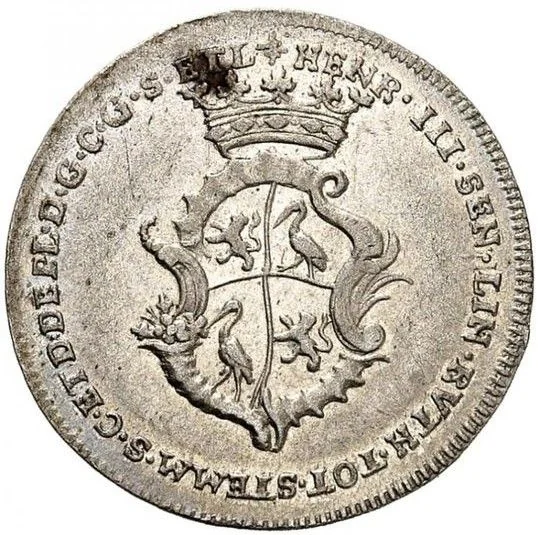
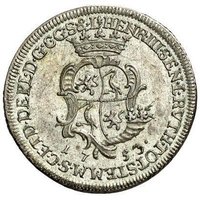
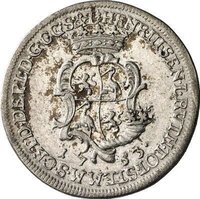
Obverse
Description:
Arms with a crown.
Inscription:
HENR • III • SEN • L • RVTH • TOT • STEMM • S • C • ETD • DEPL • D • G • C • G • S • & L
Script: Latin
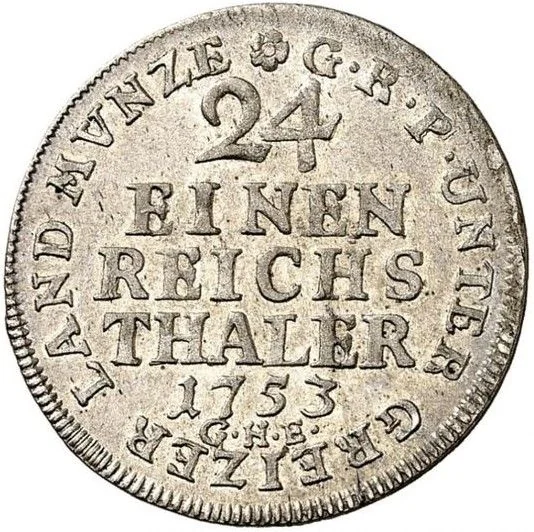
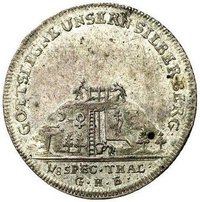
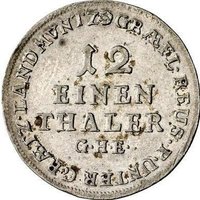
Reverse
Description:
Value, date
Inscription:
G R P UNTER GREITER LANDMVNZE
24
EINEN
REICHS
THALER
1753
G H E
24
EINEN
REICHS
THALER
1753
G H E
Script: Latin
Edge
Mints
| Name | Mark |
|---|---|
| Saalfeld | — |
Mintings
| Year | Mint Mark | Mintage | Quality | Collection |
|---|---|---|---|---|
| 1753 | — | — |
Historical background
In 1753, the small Thuringian principality of Reuss-Untergreiz, like many minor German states of the Holy Roman Empire, faced a complex and problematic currency situation. The core issue was the proliferation of various coinage systems in circulation, stemming from the region's political fragmentation. While Reuss-Untergreiz minted its own minor coinage, it operated within the monetary sphere of the larger Saxon Kreuzer and Gulden system, and also saw trade coins from neighboring Prussian and Bohemian territories. This created constant difficulties in exchange rates and valuation for daily commerce.
The specific problem was the chronic shortage of high-value, "good" specie (full-weight silver coins) due to Gresham's Law, where such coins were hoarded or exported, leaving the local economy flooded with debased and worn small change. This was exacerbated by the practice of "Kipper- und Wipperzeit" tactics, where states, including Reuss lines, might subtly reduce the silver content of their own coinage to generate seigniorage profit, further eroding trust. The result was inflationary pressure on prices and significant hardship for the populace, who were paid in poor coin but often had obligations denominated in stable currency.
Ultimately, the currency chaos of 1753 was a symptom of Reuss-Untergreiz's limited sovereignty. Without the power to enforce a uniform monetary standard, the principality was at the mercy of regional economic currents. This instability hampered trade and tax collection, constraining state revenues. While a definitive solution was impossible for such a small state, the situation underscored the pressing need for the larger monetary reforms that would eventually come with the Konventionsfuß agreements later in the century and, ultimately, the unification of German currency in the 1870s.
The specific problem was the chronic shortage of high-value, "good" specie (full-weight silver coins) due to Gresham's Law, where such coins were hoarded or exported, leaving the local economy flooded with debased and worn small change. This was exacerbated by the practice of "Kipper- und Wipperzeit" tactics, where states, including Reuss lines, might subtly reduce the silver content of their own coinage to generate seigniorage profit, further eroding trust. The result was inflationary pressure on prices and significant hardship for the populace, who were paid in poor coin but often had obligations denominated in stable currency.
Ultimately, the currency chaos of 1753 was a symptom of Reuss-Untergreiz's limited sovereignty. Without the power to enforce a uniform monetary standard, the principality was at the mercy of regional economic currents. This instability hampered trade and tax collection, constraining state revenues. While a definitive solution was impossible for such a small state, the situation underscored the pressing need for the larger monetary reforms that would eventually come with the Konventionsfuß agreements later in the century and, ultimately, the unification of German currency in the 1870s.
✨ Legendary