Logo Title
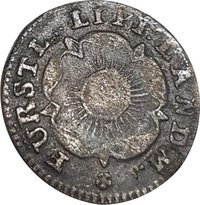
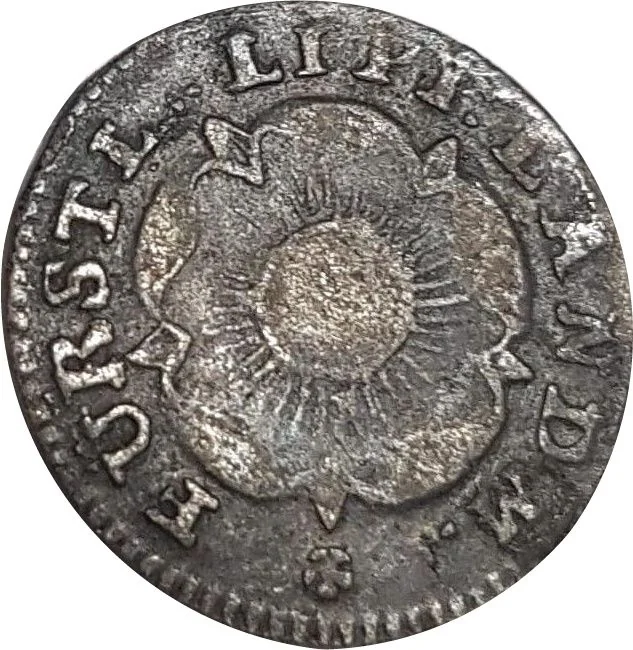
obverse
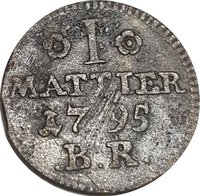
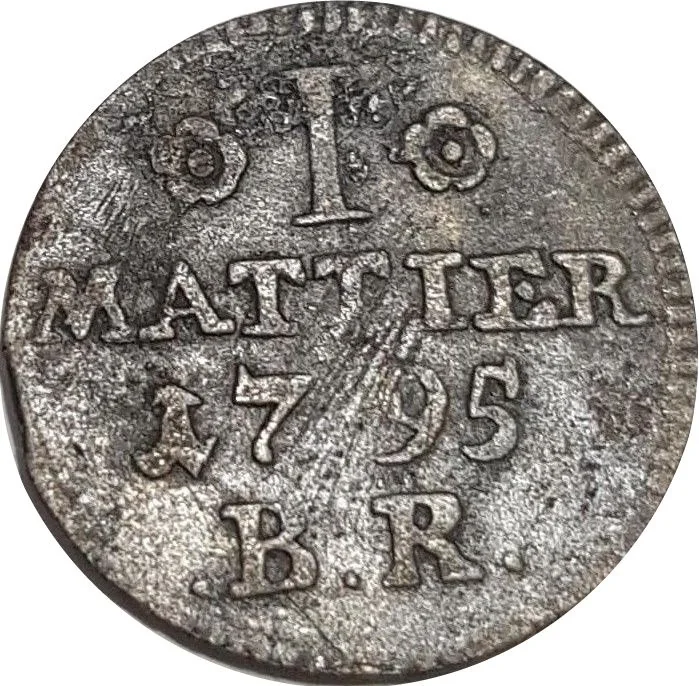
reverse
Barlasov
Context
Years: 1791–1799
Ruler: Leopold I
Currency:
(1789—1837)
Demonetized: Yes
Material
Diameter: 16 mm
Weight: 0.99 g
Shape: Round
Composition: Billon
Alignment: Medal alignment
Obverse
OBVERSE ↑
flip
Reverse
REVERSE ↑
References
KM: #Click to copy to clipboard218
Numista: #316838

Obverse

Description:
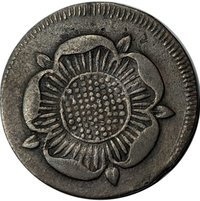
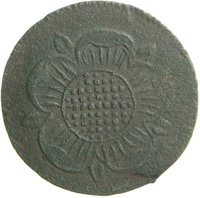
A rose is a flowering plant.
Inscription:
FURSTL LIPP LANDM
Script: Latin

Reverse

Description:
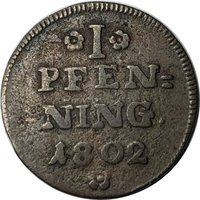
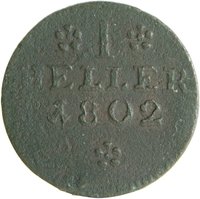
Denomination, date, and mint master's initials.
Inscription:
I

MATTIER

1791

.B.R.
Script: Latin

Edge

Plain

Mints

NameMark
Detmold

Mintings

YearMint MarkMintageQualityCollection
1791
1792
1793
1794
1795
1796
1797
1798
1799

Historical background

In 1791, the currency situation in the Principality of Lippe was complex and fragmented, typical of the Holy Roman Empire's pre-modern monetary landscape. The principality did not have a fully sovereign, unified coinage system. Instead, its currency was deeply entangled within the wider regional economic sphere, primarily using the Reichsthaler as a standard accounting unit for larger transactions and official matters, as mandated by imperial monetary ordinances. However, the actual circulating medium consisted of a multitude of smaller, divisional coins from various issuing authorities.

Daily commerce was conducted using a confusing array of lower-denomination coins, notably the Mariengroschen and Pfennig. These were often minted not only by the Lippe counts themselves at their modest mint in Detmold but also by neighboring states, ecclesiastical territories, and even cities. The value and silver content of these coins could vary, leading to a constant need for exchange and calculation. Furthermore, older, debased coins and foreign currencies circulated alongside newer issues, creating a chronically unstable monetary environment for merchants and the populace.

This fragmentation posed significant challenges for the Lippe government under Count Leopold I. It hindered efficient tax collection and state accounting, as values had to be constantly reconciled. While there were imperial attempts to standardize currency, effective control was limited. Therefore, in 1791, Lippe's monetary system was essentially a localized patchwork, vulnerable to manipulation and counterfeiting, and a reflection of the principality's limited economic power within the decaying imperial framework on the eve of the revolutionary wars that would soon reshape Europe.

Series: 1791 Principality of Lippe circulation coins

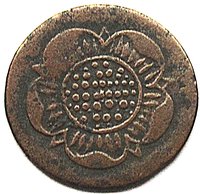
1 Heller obverse
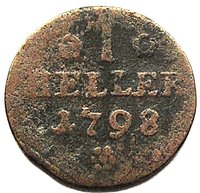
1 Heller reverse
1 Heller
1791-1798
1 Pfennig obverse
1 Pfennig reverse
1 Pfennig
1791-1802
1 Mattier obverse
1 Mattier reverse
1 Mattier
1791-1799
💎 Extremely Rare