

2 Ducats – Kingdom of Bohemia
Context
Years: 1715–1722
Country: Bohemia
Issuer: Kingdom of Bohemia
Ruler: Charles VI
Currency:
(1520—1754)
Demonetized: Yes
Material
References
KM: #Click to copy to clipboard673
Numista: #316013
Value
Bullion value: $1134.13
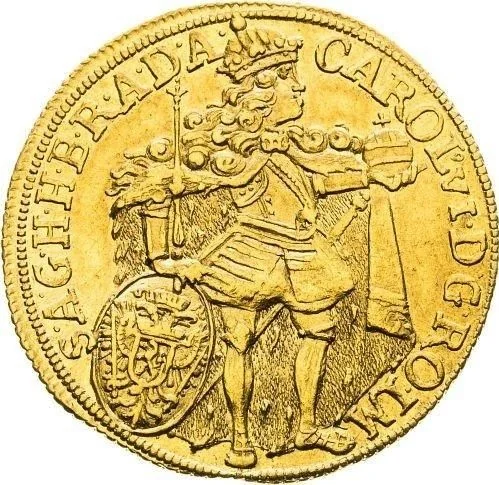
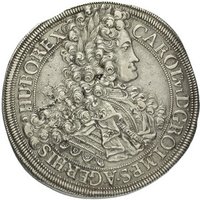
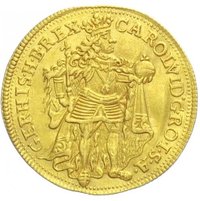
Obverse
Description:
Crowned imperial eagle on oval shield.
Inscription:
CAROL VI D G RO IM S A G H H B R A D A
Script: Latin
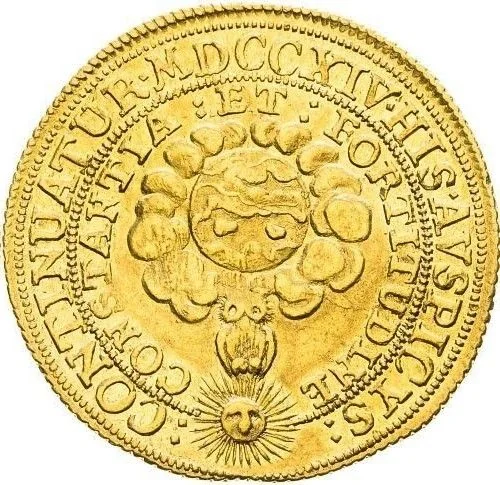
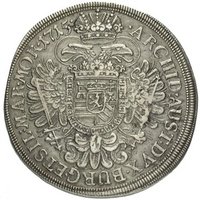
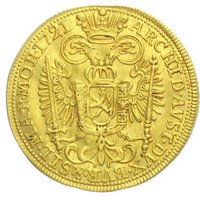
Reverse
Description:
Globe in clouds, owl on sun below, double legend with R.N. dates.
Inscription:
CONTINUATUR MDCCXV HIS AVSPICYS
CONSTANTIA ET FORTITUDINE
CONSTANTIA ET FORTITUDINE
Script: Latin
Edge
Mints
| Name | Mark |
|---|---|
| Prague | — |
Mintings
| Year | Mint Mark | Mintage | Quality | Collection |
|---|---|---|---|---|
| 1715 | — | — | ||
| 1719 | — | — | ||
| 1722 | — | — |
Historical background
In 1715, the currency situation in the Kingdom of Bohemia was complex and strained, a legacy of the preceding decades of war and economic upheaval. As a core province of the Habsburg Monarchy, Bohemia did not issue its own independent currency but used the coinage of the Holy Roman Empire, predominantly the silver Reichsthaler and its smaller division, the Kreuzer. However, the monetary system was fragmented and unstable. The Great Turkish War and the War of the Spanish Succession had forced the Vienna court to repeatedly debase the coinage to fund its military campaigns, leading to a severe loss of silver content and a proliferation of inferior, lightweight coins circulating alongside older, full-value pieces. This created widespread confusion, a distrust in small change, and significant price inflation, hampering both trade and daily commerce.
The primary response to this crisis was the imperial coinage ordinance of 1714, which was being implemented in 1715. This reform, spearheaded by Emperor Charles VI, aimed to standardize the monetary system across the Habsburg lands. It introduced a new, stable silver Konventionsthaler (also called the Reichsthaler after the 1714 standard), defined as containing 25.98 grams of fine silver. A key feature was the establishment of a fixed Konventionsfuß, a mint standard that pegged 10 Konventionsthaler to a specific weight of fine silver (one Cologne Mark), thereby creating a reliable and uniform currency for large transactions. For Bohemia, this meant that the chaotic mix of old coins was gradually supposed to be replaced by this new, standardized imperial coinage, promising greater stability for its important agricultural and manufacturing economy.
Despite this top-down reform, the monetary reality in Bohemia in 1715 remained one of transition and lingering disorder. The old debased coins remained in circulation for years, and the public's confidence was slow to recover. Furthermore, the reform primarily addressed large silver coinage, while the chronic shortage of reliable small change (Kleingeld) for everyday purchases persisted as a significant practical problem. Thus, while the year 1715 stood at the beginning of a period of monetary stabilization under the Konventionsfuß system, the kingdom still grappled with the immediate consequences of decades of fiscal mismanagement, working to align its local markets with the Habsburg monarchy's broader, but still nascent, project of financial consolidation.
The primary response to this crisis was the imperial coinage ordinance of 1714, which was being implemented in 1715. This reform, spearheaded by Emperor Charles VI, aimed to standardize the monetary system across the Habsburg lands. It introduced a new, stable silver Konventionsthaler (also called the Reichsthaler after the 1714 standard), defined as containing 25.98 grams of fine silver. A key feature was the establishment of a fixed Konventionsfuß, a mint standard that pegged 10 Konventionsthaler to a specific weight of fine silver (one Cologne Mark), thereby creating a reliable and uniform currency for large transactions. For Bohemia, this meant that the chaotic mix of old coins was gradually supposed to be replaced by this new, standardized imperial coinage, promising greater stability for its important agricultural and manufacturing economy.
Despite this top-down reform, the monetary reality in Bohemia in 1715 remained one of transition and lingering disorder. The old debased coins remained in circulation for years, and the public's confidence was slow to recover. Furthermore, the reform primarily addressed large silver coinage, while the chronic shortage of reliable small change (Kleingeld) for everyday purchases persisted as a significant practical problem. Thus, while the year 1715 stood at the beginning of a period of monetary stabilization under the Konventionsfuß system, the kingdom still grappled with the immediate consequences of decades of fiscal mismanagement, working to align its local markets with the Habsburg monarchy's broader, but still nascent, project of financial consolidation.
✨ Legendary