

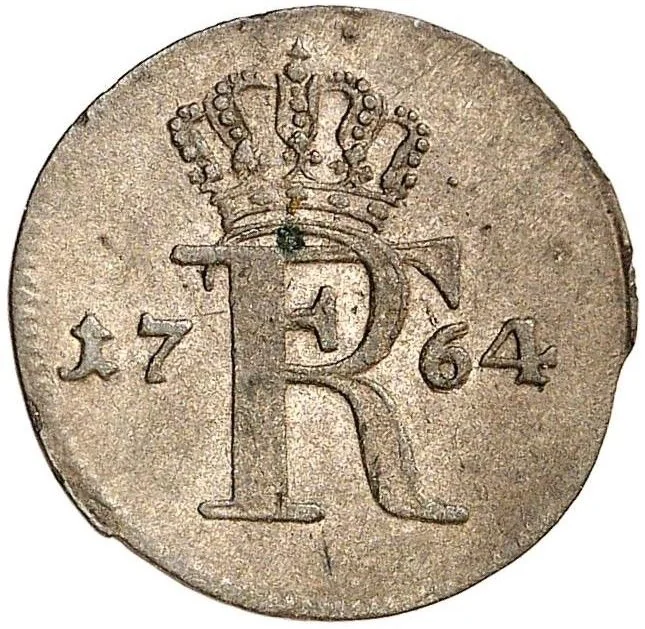
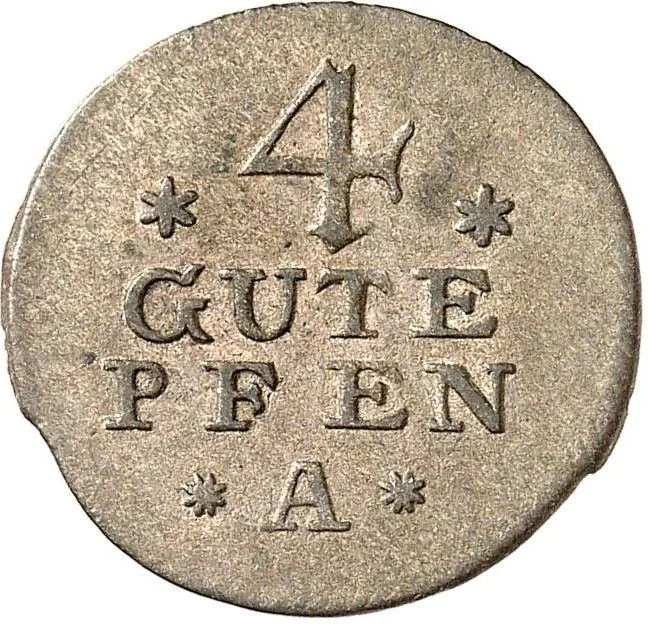
4 pfennigs – East Frisia
Add to wishlist
Germany
Context
Years: 1764–1766
Country: Germany
Issuer: East Frisia
Ruler: Frederick II
Currency:
Demonetized: Yes
Total mintage: 1,361,000
Material
References
KM: #
Numista: #315427
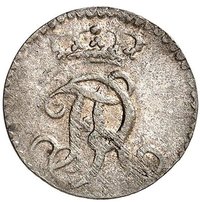
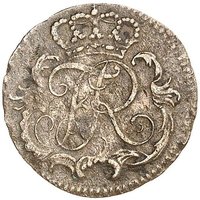
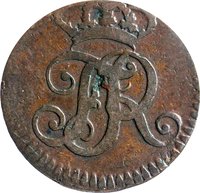
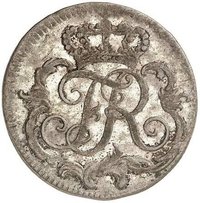
Obverse
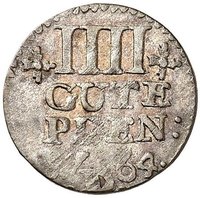
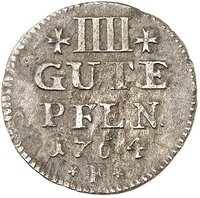
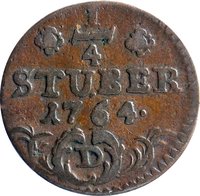
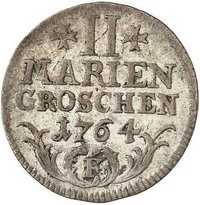
Reverse
Edge
Mints
| Name | Mark |
|---|---|
| Berlin | A |
Historical background
In 1764, the currency situation in East Frisia was complex and fragmented, a direct legacy of its political history. The region was not a unified monetary zone but a patchwork of different circulating coins, reflecting its past divisions and external influences. While officially part of the Prussian Kingdom since 1744, East Frisia still saw extensive use of older, local currencies like the Emder Mark and Reichsthaler, alongside a multitude of Dutch guilders (florins), small change from neighboring German states, and the new Prussian Reichsthaler introduced by Frederick the Great. This created a chaotic marketplace where merchants and farmers had to navigate confusing exchange rates and valuations.
The core of the problem lay in the coexistence of two different monetary standards: the Reichsthaler of the Holy Roman Empire, divided into 24 Groschen, and the northern German Courantthaler, which was tied to the Dutch banking system and divided into 36 Mariengroschen. In East Frisia, daily transactions were often quoted in the local Emder Mark (worth 1/3 of a Reichsthaler), but settlement could be demanded in various physical coins. This mismatch between accounting units and actual specie led to widespread confusion, arbitrage, and disputes, hindering trade and economic stability.
Authorities in Emden and the Prussian administration recognized these issues as a barrier to commerce and tax collection. The year 1764 falls within a period of gradual Prussian efforts to standardize the monetary system, aligning it more closely with the broader Prussian territories. However, this process was slow and met with local resistance, meaning that for the ordinary inhabitant of East Frisia in 1764, buying and selling goods remained a daily exercise in financial calculation and uncertainty, emblematic of the region's transition from a semi-autonomous territory to a province integrated into a larger state.
The core of the problem lay in the coexistence of two different monetary standards: the Reichsthaler of the Holy Roman Empire, divided into 24 Groschen, and the northern German Courantthaler, which was tied to the Dutch banking system and divided into 36 Mariengroschen. In East Frisia, daily transactions were often quoted in the local Emder Mark (worth 1/3 of a Reichsthaler), but settlement could be demanded in various physical coins. This mismatch between accounting units and actual specie led to widespread confusion, arbitrage, and disputes, hindering trade and economic stability.
Authorities in Emden and the Prussian administration recognized these issues as a barrier to commerce and tax collection. The year 1764 falls within a period of gradual Prussian efforts to standardize the monetary system, aligning it more closely with the broader Prussian territories. However, this process was slow and met with local resistance, meaning that for the ordinary inhabitant of East Frisia in 1764, buying and selling goods remained a daily exercise in financial calculation and uncertainty, emblematic of the region's transition from a semi-autonomous territory to a province integrated into a larger state.
✨ Legendary