

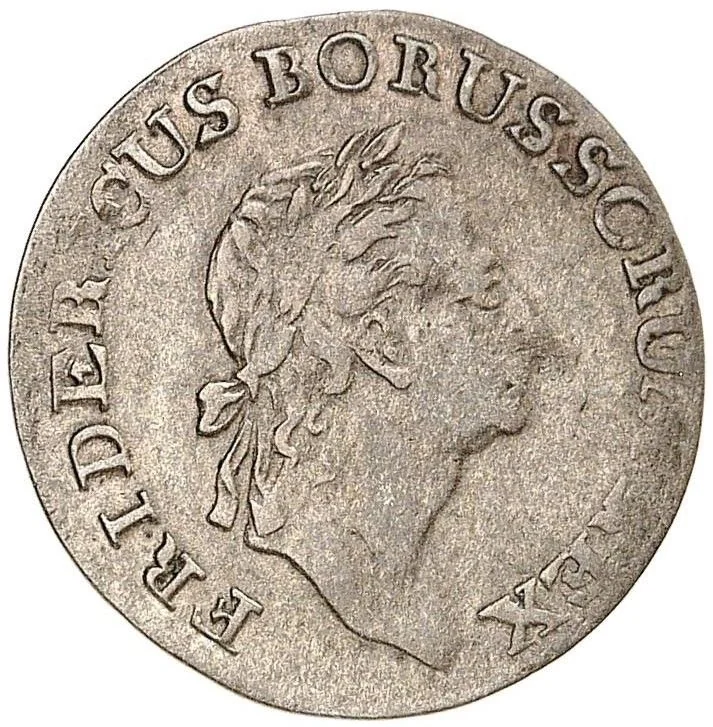
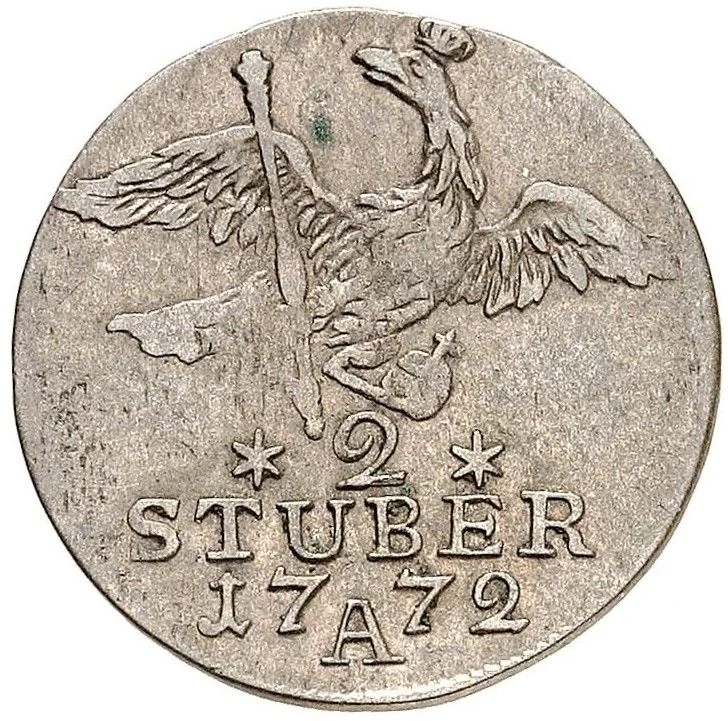
2 Stübers – East Frisia
Germany
Context
Years: 1772–1775
Country: Germany 
Issuer: East Frisia
Ruler: Frederick II
Currency:
Demonetized: Yes
Material
References
KM: #Click to copy to clipboard248
Numista: #315417
Value
Bullion value: $4.15
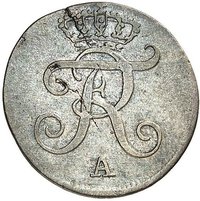
Obverse
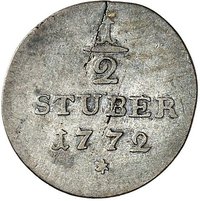
Reverse
Edge
Mints
| Name | Mark |
|---|---|
| Berlin | A |
Historical background
In 1772, East Frisia found itself in a complex monetary landscape, typical of the Holy Roman Empire's fragmented political structure. The region was not a unified monetary zone; instead, it was saturated with a bewildering variety of circulating coins. These included local issues from the ruling Prince of East Frisia, but also a vast array of foreign currencies from neighboring German states, the Dutch Republic (whose Thalers and Guilders were particularly influential due to trade links), and even older, debased coins. This proliferation led to chronic confusion in commerce, as merchants and the public had to constantly navigate fluctuating exchange rates and the intrinsic silver content of dozens of coin types.
The root of the problem lay in the monetary prerogatives of the local estates and towns, which often clashed with the authority of the prince. While the prince sought to control minting for profit and stability, various entities held historic rights to issue or regulate currency. Furthermore, the region was vulnerable to the inflow of inferior coinage from outside its borders, a practice known as "bad money driving out good" (Gresham's Law). This monetary chaos stifled trade, facilitated fraud, and created significant uncertainty for both daily transactions and long-term contracts, hampering economic development.
This situation reached a critical point just a few years prior, leading to a significant reform. In 1764, under Prince Frederick II, East Frisia had introduced the Conventionsgeld system, aligning its primary currency unit, the Thaler, with the widely recognized Leipzig standard used across much of northern Germany. By 1772, this reform was still in its relative infancy, aiming to bring order by providing a stable, standardized accounting unit. However, the practical challenge of physically replacing the myriad of old coins in circulation meant that the chaotic mix of currencies undoubtedly persisted on the ground, making 1772 a year of transition between old disorder and a hoped-for new stability.
The root of the problem lay in the monetary prerogatives of the local estates and towns, which often clashed with the authority of the prince. While the prince sought to control minting for profit and stability, various entities held historic rights to issue or regulate currency. Furthermore, the region was vulnerable to the inflow of inferior coinage from outside its borders, a practice known as "bad money driving out good" (Gresham's Law). This monetary chaos stifled trade, facilitated fraud, and created significant uncertainty for both daily transactions and long-term contracts, hampering economic development.
This situation reached a critical point just a few years prior, leading to a significant reform. In 1764, under Prince Frederick II, East Frisia had introduced the Conventionsgeld system, aligning its primary currency unit, the Thaler, with the widely recognized Leipzig standard used across much of northern Germany. By 1772, this reform was still in its relative infancy, aiming to bring order by providing a stable, standardized accounting unit. However, the practical challenge of physically replacing the myriad of old coins in circulation meant that the chaotic mix of currencies undoubtedly persisted on the ground, making 1772 a year of transition between old disorder and a hoped-for new stability.
✨ Legendary