

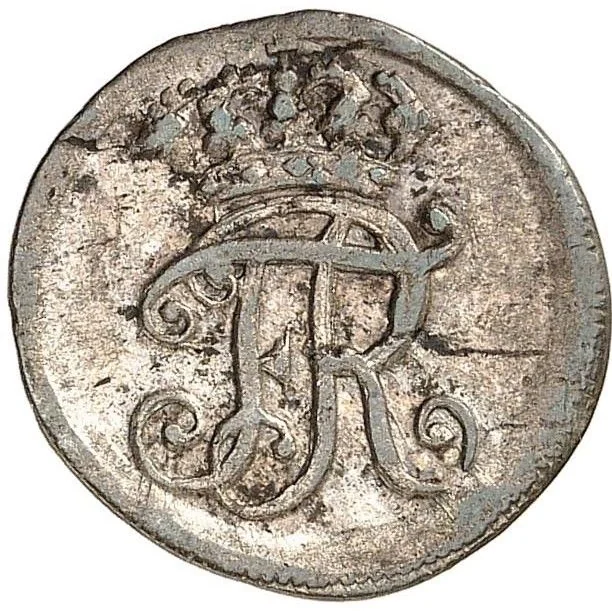
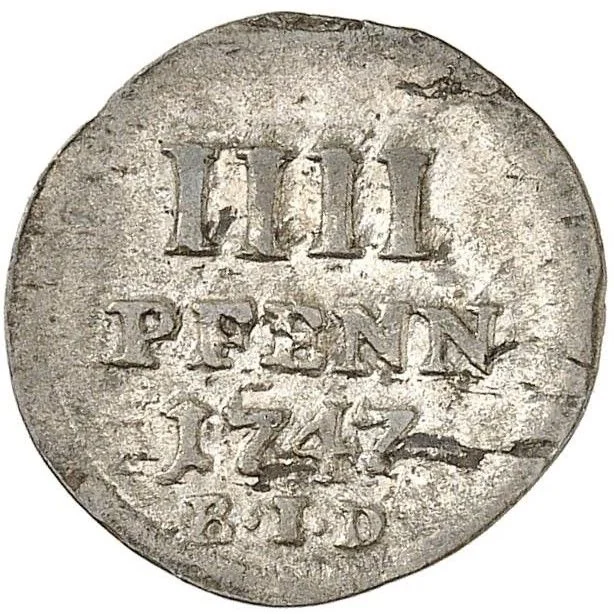
4 pfennigs – East Frisia
Add to wishlist
Germany
Context
Years: 1747–1748
Country: Germany
Issuer: East Frisia
Ruler: Frederick II
Currency:
Demonetized: Yes
Total mintage: 222,000
Material
References
KM: #
Numista: #315410
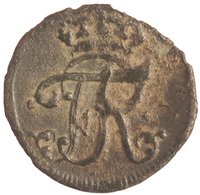
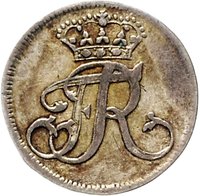
Obverse
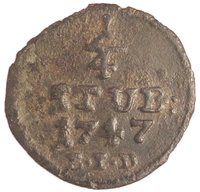
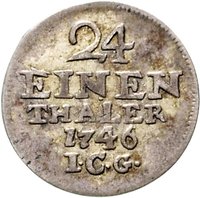
Reverse
Edge
Mints
| Name | Mark |
|---|---|
| Aurich | BID |
Historical background
In 1747, the currency situation in East Frisia was characterized by significant complexity and instability, a direct consequence of its political status. The region was not a sovereign state but a fragmented territory under the nominal sovereignty of the Prussian King Frederick the Great, who had inherited the title of Prince of East Frisia in 1744. However, local estates and the port city of Emden retained considerable autonomy, leading to a lack of a unified monetary authority. This resulted in a chaotic circulation of multiple coinage systems, including Prussian Reichsthaler, Dutch guilders, and a plethora of older, debased regional coins from various German states, all competing and fluctuating in value.
The core of the problem lay in the absence of a standard. Exchange rates between these currencies were not fixed, creating fertile ground for arbitrage and confusion in daily trade, particularly for the agrarian population. Furthermore, the ongoing War of the Austrian Succession (1740-1748) exacerbated the situation, as wartime fiscal pressures often led states to debase their coinage to fund military expenses. This "bad money" tended to drive "good money" (coins with higher precious metal content) out of circulation, as people hoarded the more valuable coins, a phenomenon described by Gresham's Law.
While Prussia sought to impose greater control and integrate East Frisia into its economic sphere, the process in 1747 was still incomplete and met with local resistance. Therefore, the monetary landscape remained in a transitional and disordered state. The situation called for a standardizing reform, which Prussia would later pursue more forcefully, but in 1747, East Frisians contended with a cumbersome and unreliable patchwork of currencies that hindered commerce and reflected the region's contested political integration.
The core of the problem lay in the absence of a standard. Exchange rates between these currencies were not fixed, creating fertile ground for arbitrage and confusion in daily trade, particularly for the agrarian population. Furthermore, the ongoing War of the Austrian Succession (1740-1748) exacerbated the situation, as wartime fiscal pressures often led states to debase their coinage to fund military expenses. This "bad money" tended to drive "good money" (coins with higher precious metal content) out of circulation, as people hoarded the more valuable coins, a phenomenon described by Gresham's Law.
While Prussia sought to impose greater control and integrate East Frisia into its economic sphere, the process in 1747 was still incomplete and met with local resistance. Therefore, the monetary landscape remained in a transitional and disordered state. The situation called for a standardizing reform, which Prussia would later pursue more forcefully, but in 1747, East Frisians contended with a cumbersome and unreliable patchwork of currencies that hindered commerce and reflected the region's contested political integration.
✨ Legendary