

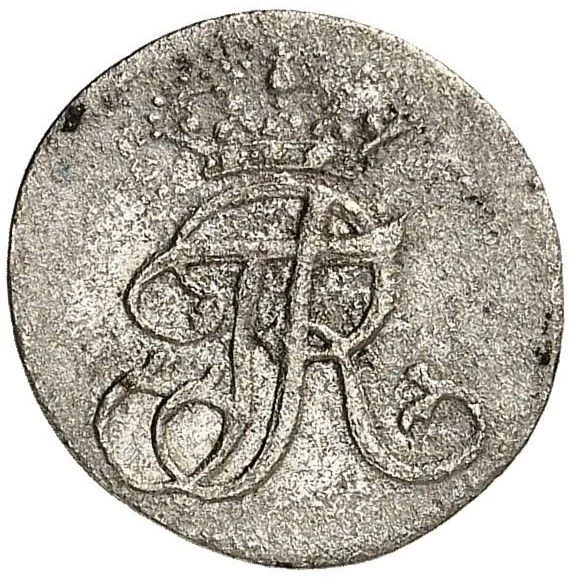
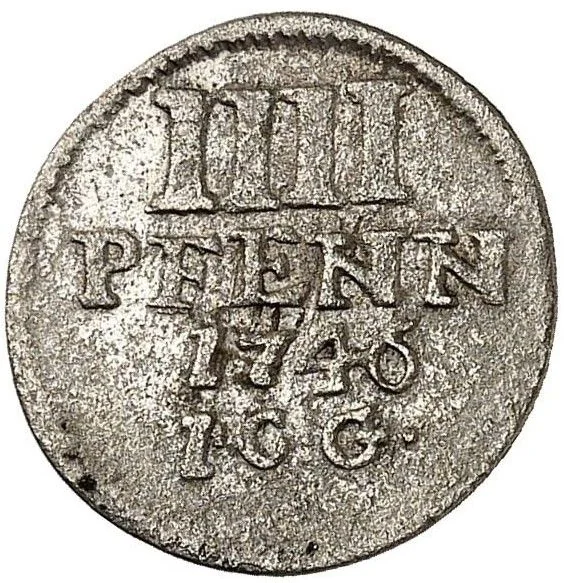
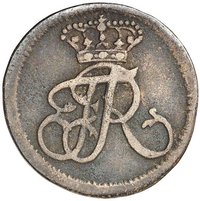
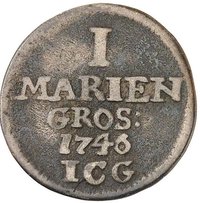
4 pfennigs – East Frisia
Add to wishlist
Germany
Context
Year: 1746
Country: Germany
Issuer: East Frisia
Ruler: Frederick II
Currency:
Demonetized: Yes
Total mintage: 12,000
Material
References
KM: #
Numista: #315403
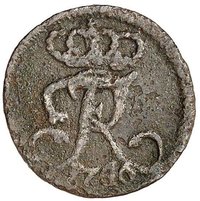
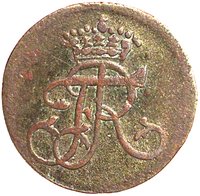
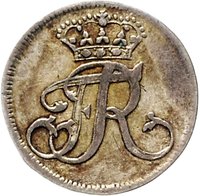
Obverse
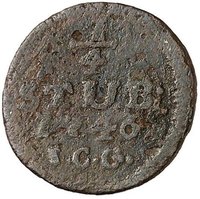
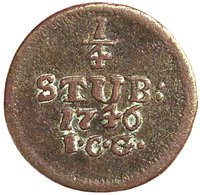
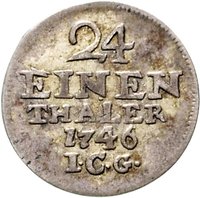
Reverse
Edge
Mints
| Name | Mark |
|---|---|
| Esens | — |
Mintings
| Year | Mint Mark | Mintage | Quality | Collection |
|---|---|---|---|---|
| 1746 | ICG | 12,000 |
Historical background
In 1746, the currency situation in East Frisia was complex and fragmented, a direct legacy of its political history. The region was not a unified monetary zone but a patchwork of different circulating coins, reflecting its lack of sovereign minting rights and its position as a contested territory. Officially, East Frisia was a principality within the Holy Roman Empire, but since 1744 it had fallen under the direct administration of Prussia following the extinction of the local Cirksena ruling house. This political transition meant that Prussian monetary policy was beginning to exert influence, but had not yet fully standardized the system.
The daily monetary reality was one of confusion. A multitude of coins circulated simultaneously, including older local issues from the Cirksena period, various German Thaler denominations from neighbouring states like Hanover and Münster, Dutch guilders and stuivers (due to strong trade links across the border), and now newly introduced Prussian coins. Exchange rates between these units were not fixed, leading to constant calculation difficulties for merchants and peasants alike. The value of money was often tied to its intrinsic silver content, making transactions slow and prone to dispute.
This chaotic environment created significant economic friction, hindering trade and facilitating fraud. Counterfeiting and the clipping of precious metal from coins were chronic problems. For the Prussian administration, establishing monetary order was a key step in consolidating control and integrating East Frisia into its broader fiscal and economic sphere. Thus, 1746 represents a transitional year, caught between the old, disordered plurality of currencies and the impending push for standardization under Prussian authority, which would ultimately seek to replace the mosaic of coins with a uniform, state-controlled currency.
The daily monetary reality was one of confusion. A multitude of coins circulated simultaneously, including older local issues from the Cirksena period, various German Thaler denominations from neighbouring states like Hanover and Münster, Dutch guilders and stuivers (due to strong trade links across the border), and now newly introduced Prussian coins. Exchange rates between these units were not fixed, leading to constant calculation difficulties for merchants and peasants alike. The value of money was often tied to its intrinsic silver content, making transactions slow and prone to dispute.
This chaotic environment created significant economic friction, hindering trade and facilitating fraud. Counterfeiting and the clipping of precious metal from coins were chronic problems. For the Prussian administration, establishing monetary order was a key step in consolidating control and integrating East Frisia into its broader fiscal and economic sphere. Thus, 1746 represents a transitional year, caught between the old, disordered plurality of currencies and the impending push for standardization under Prussian authority, which would ultimately seek to replace the mosaic of coins with a uniform, state-controlled currency.
✨ Legendary