

1⁄12 Shilling – Jersey
Context
Years: 1937–1947
Country: British Crown dependencies
Issuer: Jersey 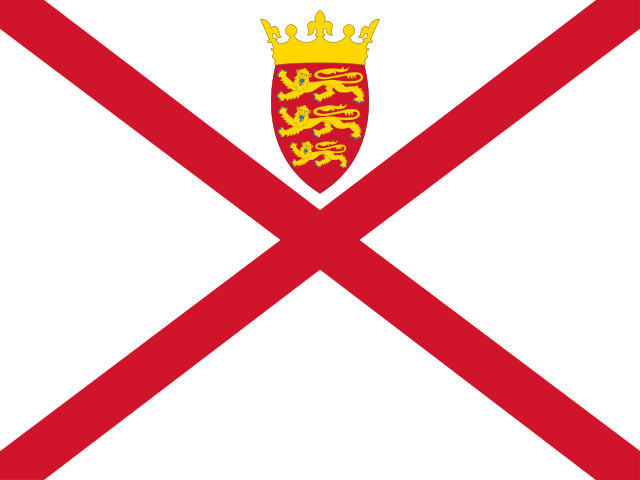
Ruler: George VI
Currency:
(1813—1971)
Demonetization: 27 December 1971
Total mintage: 852,000
Material
References
KM: #Click to copy to clipboard18
Numista: #10096
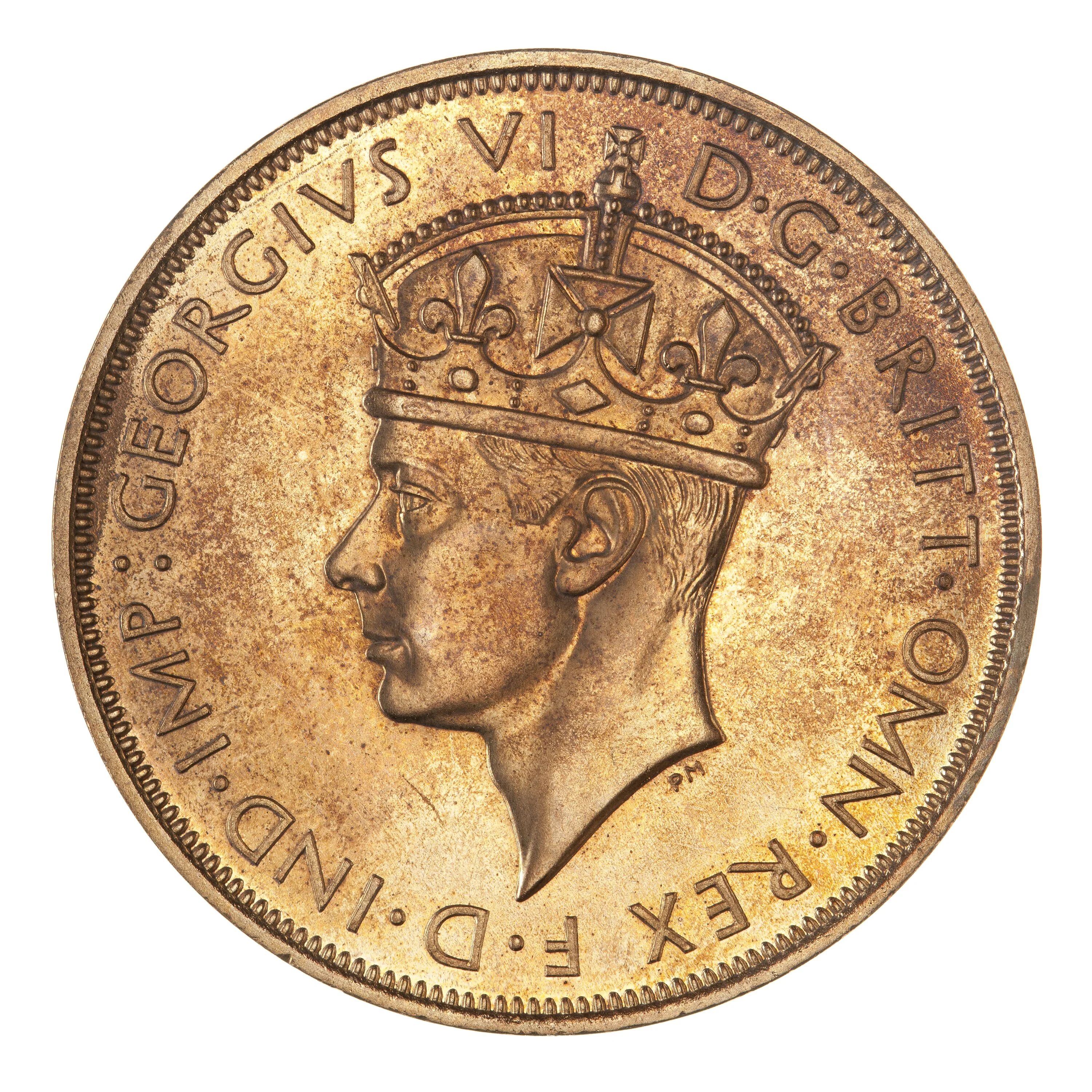
Obverse
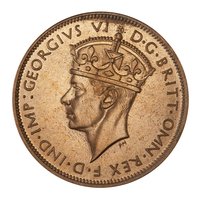
Description:
King George VI crowned portrait left, legend encircling, engraver's initials below.
Inscription:
GEORGIVS VI D·G·BRITT·OMN·REX F·D·IND·IMP:
PM
PM
Translation:
George VI by the Grace of God King of all the Britains Defender of the Faith Emperor of India:
Script: Latin
Language: Latin
Engraver: Percy Metcalfe
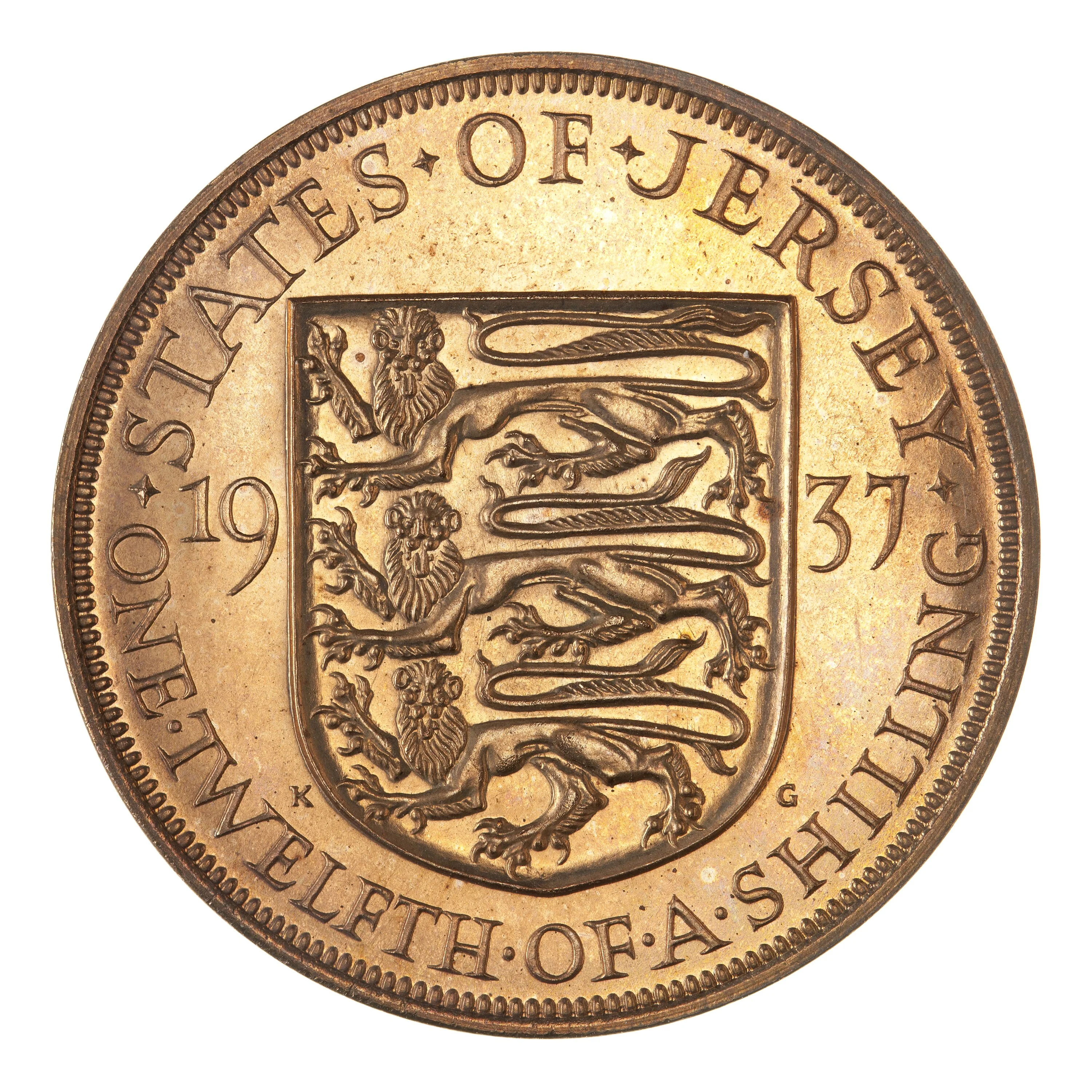
Reverse
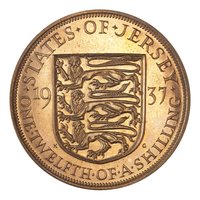
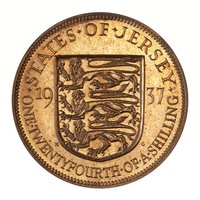
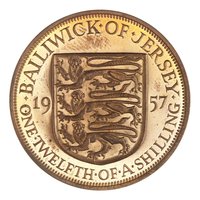
Description:
Shield divides date, legend above, denomination below.
Inscription:
·STATES·OF·JERSEY·
19 46
K G
ONE·TWELFTH·OF·A·SHILLING
19 46
K G
ONE·TWELFTH·OF·A·SHILLING
Script: Latin
Engraver: George Kruger Gray
Edge
Plain
Mints
| Name | Mark |
|---|---|
| Royal Mint (Tower Hill) | — |
Mintings
| Year | Mint Mark | Mintage | Quality | Collection |
|---|---|---|---|---|
| 1937 | — | 204,000 | ||
| 1937 | — | — | Proof | |
| 1946 | — | 204,000 | ||
| 1946 | — | — | Proof | |
| 1947 | — | 444,000 | ||
| 1947 | — | — | Proof |
Historical background
In 1937, the currency situation in Jersey was defined by its unique position as a British Crown Dependency with a high degree of fiscal autonomy. The island was not part of the United Kingdom's domestic currency area and did not use Bank of England notes as legal tender. Instead, the official currency was the Jersey pound, which maintained parity with the British pound sterling (£1 Jersey = £1 sterling). This parity was ensured by the States of Jersey, which issued its own banknotes and coinage, a practice established in the 19th century to address a chronic shortage of circulating British currency.
The local economy, heavily reliant on agriculture and tourism, was effectively on a "sterling exchange standard." Jersey's banks, primarily the Jersey Savings Bank and branches of UK banks, held sterling reserves in London to fully back the local note issue. This meant Jersey pound notes were essentially sterling vouchers, freely convertible on demand. The system provided stability and facilitated seamless trade with the UK, which was by far the island's dominant trading partner. There was no independent monetary policy; interest rates and broader financial conditions were directly influenced by the Bank of England's decisions.
This arrangement in 1937 was stable and uncontroversial, operating in the shadow of the UK's departure from the Gold Standard in 1931. The island had no need for exchange controls or a separate currency policy, as its economic fortunes were inextricably linked to Britain's. The period was one of monetary continuity, with the States of Jersey carefully managing its conservative note issue to maintain public confidence and the essential 1:1 link with sterling, which was the cornerstone of the island's financial system.
The local economy, heavily reliant on agriculture and tourism, was effectively on a "sterling exchange standard." Jersey's banks, primarily the Jersey Savings Bank and branches of UK banks, held sterling reserves in London to fully back the local note issue. This meant Jersey pound notes were essentially sterling vouchers, freely convertible on demand. The system provided stability and facilitated seamless trade with the UK, which was by far the island's dominant trading partner. There was no independent monetary policy; interest rates and broader financial conditions were directly influenced by the Bank of England's decisions.
This arrangement in 1937 was stable and uncontroversial, operating in the shadow of the UK's departure from the Gold Standard in 1931. The island had no need for exchange controls or a separate currency policy, as its economic fortunes were inextricably linked to Britain's. The period was one of monetary continuity, with the States of Jersey carefully managing its conservative note issue to maintain public confidence and the essential 1:1 link with sterling, which was the cornerstone of the island's financial system.
🌱 Very Common