

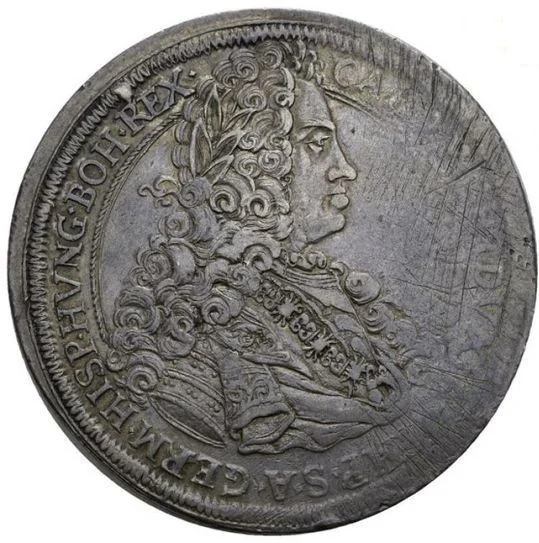
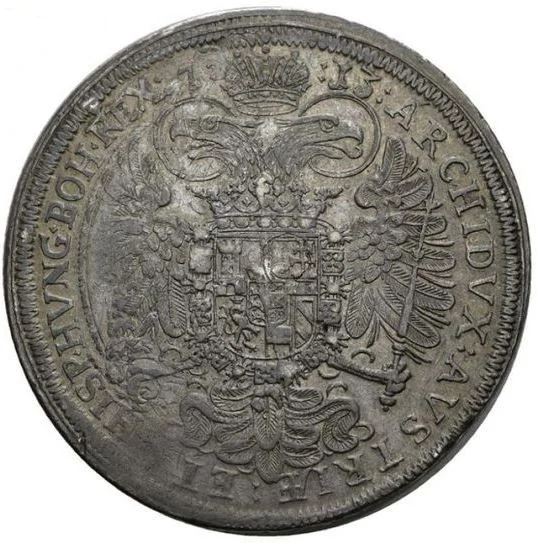
2 Thalers – Austrian Empire
Austria
Context
Year: 1713
Country: Austria 
Issuer: Austrian Empire
Ruler: Charles VI
Currency:
(1520—1754)
Demonetized: Yes
References
KM: #Click to copy to clipboard1555
Numista: #314843
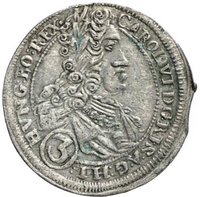
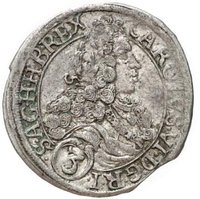
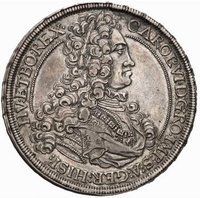
Obverse
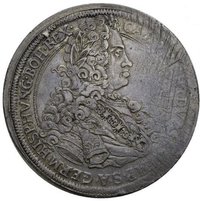
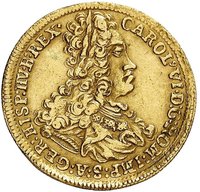
Description:
Enter the inner circle.
Inscription:
CAROL · VI · D · G · RO · IMP · S · A · GERM · HISP · HVNG · BOH · REX ·
Script: Latin
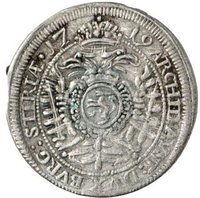
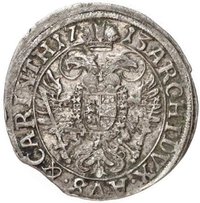
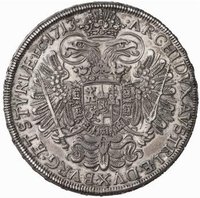
Reverse
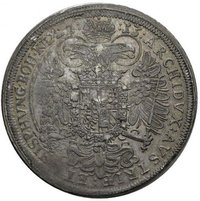
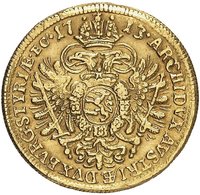
Description:
Imperial eagle with crown above date.
Inscription:
ARCHIDVX : AVSTRIAE : ET : HISP : HVNG : BOH : REX : 7 : 13 :
Script: Latin
Edge
Mints
| Name | Mark |
|---|---|
| Sankt Veit | — |
Mintings
| Year | Mint Mark | Mintage | Quality | Collection |
|---|---|---|---|---|
| 1713 | — | — |
Historical background
In 1713, the currency situation within the Habsburg-ruled Austrian Empire was complex and strained, a direct legacy of decades of near-continuous warfare. The most significant conflict, the War of the Spanish Succession (1701-1714), had placed enormous fiscal pressure on the state. To finance its military ambitions, the government under Emperor Charles VI repeatedly resorted to debasing the coinage, particularly the small-denomination kreuzer coins used in everyday transactions. This involved reducing the silver content in coins while officially maintaining their face value, a short-term measure that generated seigniorage revenue but eroded public trust and sparked inflation.
The monetary landscape was not unified but a patchwork of different systems. The Empire’s core Austrian and Bohemian lands operated on a standard based on the Reichsthaler (a large silver coin) and the guiden (florin), subdivided into 60 kreuzer. However, the debasement of the kreuzer created a disconnect between the stable Banco money used for large accounts and trade and the constantly fluctuating current money used in daily life. Furthermore, the Kingdom of Hungary, though under Habsburg rule, maintained its own distinct monetary system based on the forint, adding another layer of complication to imperial finance and commerce.
Consequently, the year 1713 fell within a period of monetary instability and uncertainty. Prices were rising, and the value of small coinage was unreliable, causing hardship for common people and disrupting markets. While the war was nearing its end with the negotiations of the Treaty of Utrecht, the fiscal and monetary consequences were deeply entrenched. The state faced the daunting task of post-war financial reconstruction, which would eventually lead to attempts at monetary reform, such as the Konventionsfuß standard of the 1750s, to bring order to the chaotic currency situation.
The monetary landscape was not unified but a patchwork of different systems. The Empire’s core Austrian and Bohemian lands operated on a standard based on the Reichsthaler (a large silver coin) and the guiden (florin), subdivided into 60 kreuzer. However, the debasement of the kreuzer created a disconnect between the stable Banco money used for large accounts and trade and the constantly fluctuating current money used in daily life. Furthermore, the Kingdom of Hungary, though under Habsburg rule, maintained its own distinct monetary system based on the forint, adding another layer of complication to imperial finance and commerce.
Consequently, the year 1713 fell within a period of monetary instability and uncertainty. Prices were rising, and the value of small coinage was unreliable, causing hardship for common people and disrupting markets. While the war was nearing its end with the negotiations of the Treaty of Utrecht, the fiscal and monetary consequences were deeply entrenched. The state faced the daunting task of post-war financial reconstruction, which would eventually lead to attempts at monetary reform, such as the Konventionsfuß standard of the 1750s, to bring order to the chaotic currency situation.

✨ Legendary