

1 Thaler – Austrian Empire
Austria
Context
Years: 1761–1765
Country: Austria 
Issuer: Austrian Empire
Ruler: Francis I of Lorraine
Currency:
(1754—1857)
Demonetized: Yes
Material
References
KM: #Click to copy to clipboard2039
Numista: #314683
Value
Bullion value: $81.76
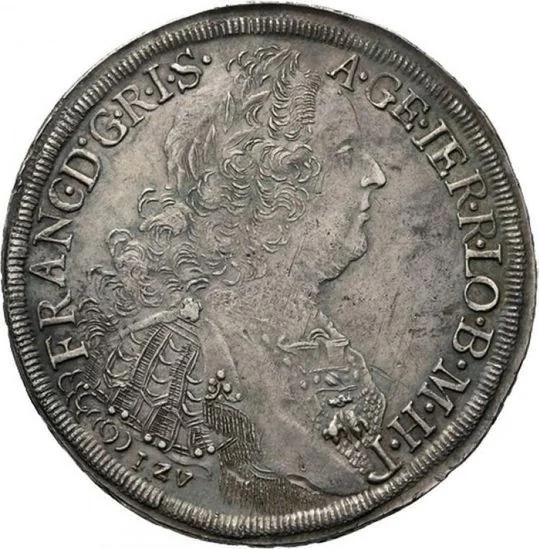
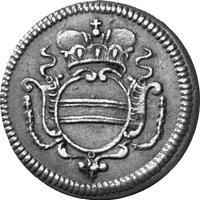
Obverse
Description:
Armored profile right
Inscription:
FRANC • D • G • R • I • S • A • GE • IER • R • LO • B • M • H • D •
IZV
IZV
Script: Latin
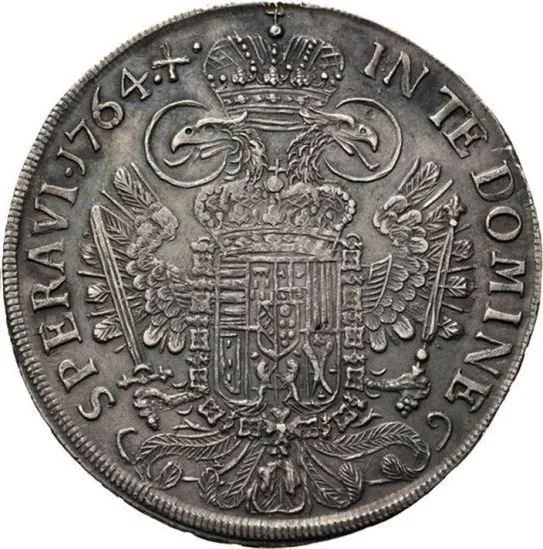
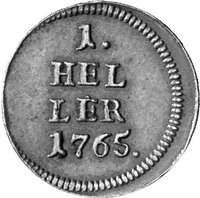
Reverse
Edge
Mints
| Name | Mark |
|---|---|
| Münze Österreich | — |
Mintings
| Year | Mint Mark | Mintage | Quality | Collection |
|---|---|---|---|---|
| 1761 | GTK | — | ||
| 1761 | IZV | — | ||
| 1763 | IZV | — | ||
| 1764 | AW | — | ||
| 1764 | IZV | — | ||
| 1765 | IZV | — |
Historical background
In 1761, the currency system of the Austrian Habsburg Monarchy was a complex and fragile patchwork, still reeling from the immense financial strain of the ongoing Seven Years' War (1756-1763). The state's primary method of funding the conflict was the heavy debasement of coinage, particularly the silver Konventionsmünze (Convention Coinage) system established in 1753. The government, under Empress Maria Theresa, repeatedly reduced the silver content of coins while officially maintaining their face value, a practice that generated short-term revenue but triggered severe inflation and a loss of public confidence. This period saw a proliferation of inferior, lightweight coins circulating alongside older, full-weight ones, which were inevitably hoarded or melted down, following Gresham's Law.
The situation was further complicated by the empire's regional diversity. While the core Austrian and Bohemian lands used the Convention standard, other territories like Hungary maintained separate coinage systems. Furthermore, the war necessitated the issuance of massive amounts of paper money, known as Bancozettel, from the state-backed Wiener Stadtbanco. Initially introduced as interest-bearing debt notes, they began to function as a forced paper currency. By 1761, their circulation was expanding rapidly, leading to a growing discount against silver specie. This created a dual monetary system where prices in paper currency were significantly higher than in coin, eroding the purchasing power of ordinary subjects and soldiers paid in these notes.
Consequently, the year 1761 fell within a protracted crisis of state finance and monetary instability. The deliberate debasement and the unchecked rise of paper money fueled price increases, disrupted trade, and placed a heavy burden on the population. While providing essential war funding, these measures severely undermined the monetary sovereignty and economic cohesion of the empire, storing up profound problems for the post-war period. The experience directly informed the more comprehensive, though ultimately challenging, monetary reforms attempted by Maria Theresa and her son Joseph II in the subsequent decades.
The situation was further complicated by the empire's regional diversity. While the core Austrian and Bohemian lands used the Convention standard, other territories like Hungary maintained separate coinage systems. Furthermore, the war necessitated the issuance of massive amounts of paper money, known as Bancozettel, from the state-backed Wiener Stadtbanco. Initially introduced as interest-bearing debt notes, they began to function as a forced paper currency. By 1761, their circulation was expanding rapidly, leading to a growing discount against silver specie. This created a dual monetary system where prices in paper currency were significantly higher than in coin, eroding the purchasing power of ordinary subjects and soldiers paid in these notes.
Consequently, the year 1761 fell within a protracted crisis of state finance and monetary instability. The deliberate debasement and the unchecked rise of paper money fueled price increases, disrupted trade, and placed a heavy burden on the population. While providing essential war funding, these measures severely undermined the monetary sovereignty and economic cohesion of the empire, storing up profound problems for the post-war period. The experience directly informed the more comprehensive, though ultimately challenging, monetary reforms attempted by Maria Theresa and her son Joseph II in the subsequent decades.
✨ Legendary