

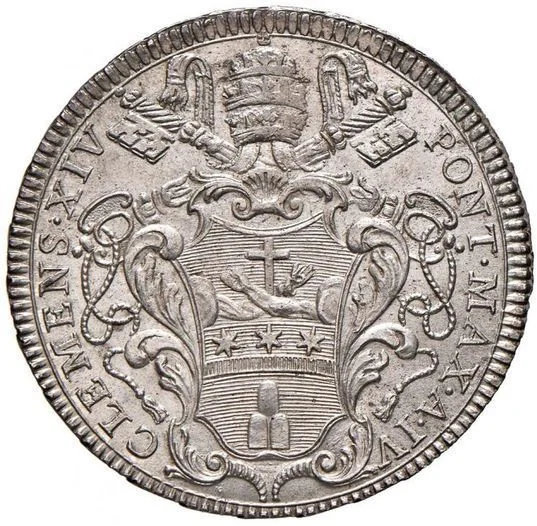
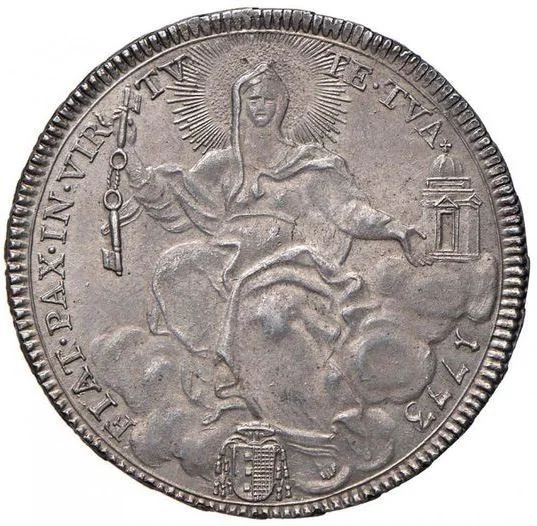
½ Scudo – Papal States
Vatican City
Context
Year: 1773
Country: Vatican City 
Issuer: Papal States
Ruler: Clement XIV
Currency:
(1534—1835)
Demonetized: Yes
Material
References
KM: #Click to copy to clipboard1208
Numista: #314667
Value
Bullion value: $35.03
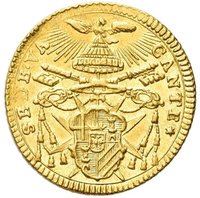
Obverse
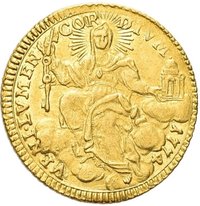
Reverse
Edge
Mints
| Name | Mark |
|---|---|
| Rome | — |
Mintings
| Year | Mint Mark | Mintage | Quality | Collection |
|---|---|---|---|---|
| 1773 | — | — |
Historical background
In 1773, the Papal States faced a complex and strained currency situation, typical of the fragmented monetary systems of pre-modern Italy. The state lacked a unified, authoritative coinage. While the papal mint in Rome produced the primary silver scudo and the smaller baiocco, its output was often insufficient. Consequently, a plethora of foreign coins, particularly Spanish silver reales and gold doppie from various Italian and European states, circulated freely alongside papal issues. This created a chaotic marketplace where exchange rates fluctuated based on the metal content and perceived reliability of each coin, complicating trade and taxation.
The system was further burdened by chronic financial weakness. The papal government, under Pope Clement XIV, was perennially in debt due to administrative costs, patronage, and lost revenue from widespread tax exemptions for clergy and nobility. To raise funds, the state frequently resorted to debasement—reducing the precious metal content in its coinage while maintaining its face value. This practice, though providing short-term liquidity, eroded public trust in papal currency. Merchants and citizens began to hoard older, purer coins (Gresham's Law in action), which exacerbated shortages of sound money and fueled inflation, harming the broader economy.
Ultimately, the monetary disorder of 1773 was a symptom of deeper structural issues: a weak central fiscal authority, a reliance on outdated feudal revenues, and an economy struggling to keep pace with commercial developments elsewhere in Europe. The situation would see little improvement until the Napoleonic invasions swept away the old order, forcing monetary reform. Thus, the coinage chaos reflected the broader political and economic stagnation of the Papal States in the late 18th century.
The system was further burdened by chronic financial weakness. The papal government, under Pope Clement XIV, was perennially in debt due to administrative costs, patronage, and lost revenue from widespread tax exemptions for clergy and nobility. To raise funds, the state frequently resorted to debasement—reducing the precious metal content in its coinage while maintaining its face value. This practice, though providing short-term liquidity, eroded public trust in papal currency. Merchants and citizens began to hoard older, purer coins (Gresham's Law in action), which exacerbated shortages of sound money and fueled inflation, harming the broader economy.
Ultimately, the monetary disorder of 1773 was a symptom of deeper structural issues: a weak central fiscal authority, a reliance on outdated feudal revenues, and an economy struggling to keep pace with commercial developments elsewhere in Europe. The situation would see little improvement until the Napoleonic invasions swept away the old order, forcing monetary reform. Thus, the coinage chaos reflected the broader political and economic stagnation of the Papal States in the late 18th century.
✨ Legendary