

1 Thaler – Landgraviate of Hesse-Darmstadt
Context
Year: 1721
Issuer: Landgraviate of Hesse-Darmstadt
Ruler: Ernest Louis
Currency:
(1568—1805)
Demonetized: Yes
References
KM: #Click to copy to clipboard147
Numista: #314233
Value
Bullion value: $82.74
Obverse
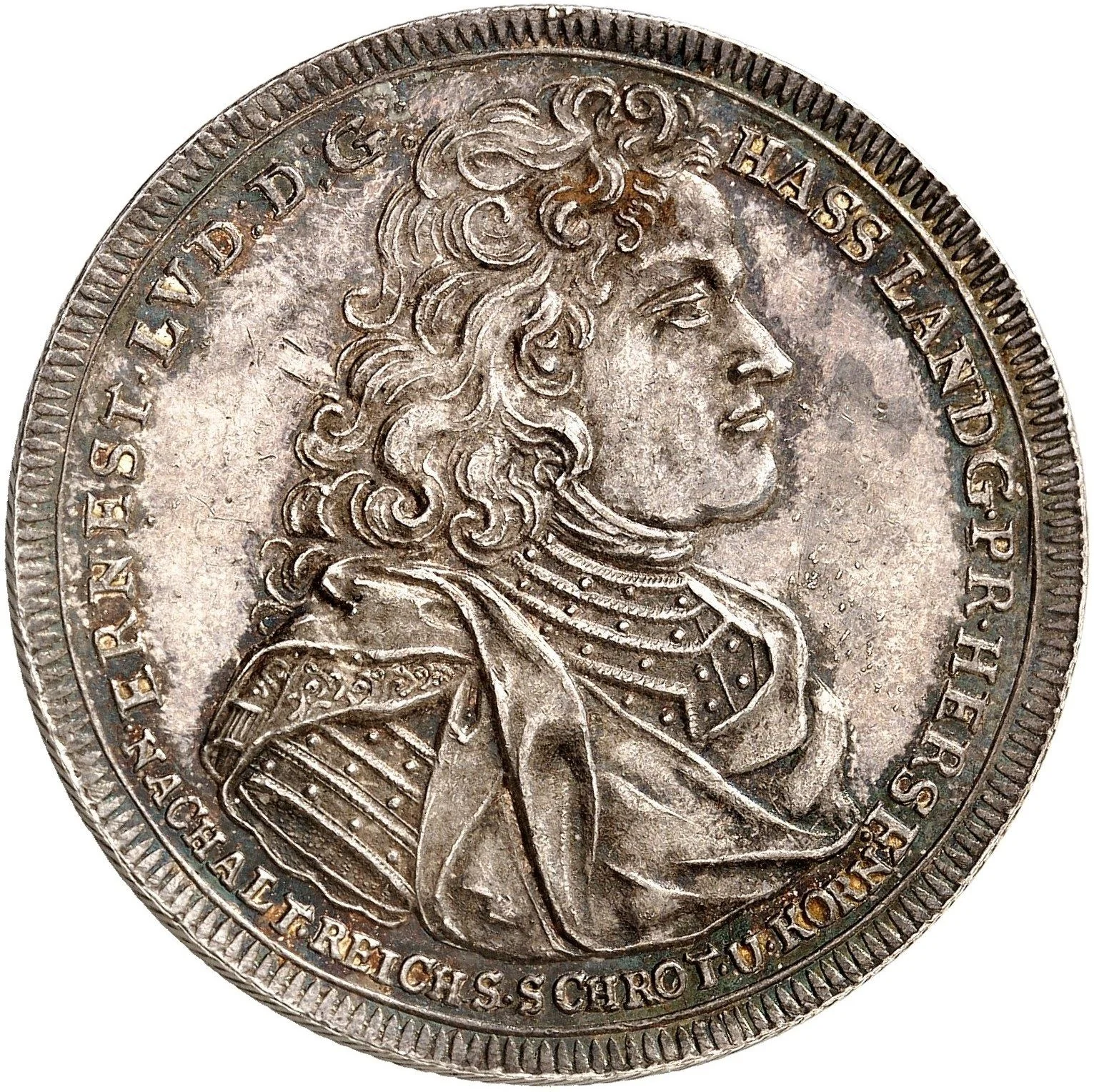
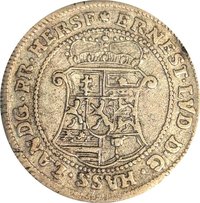
Description:
Get in. Let's go.
Inscription:
ERNEST. LVD: D: G: HASS LANDG. PR. HERSF
NACH ALT REICHS SCHROT U. KORN
NACH ALT REICHS SCHROT U. KORN
Script: Latin
Reverse
Description:
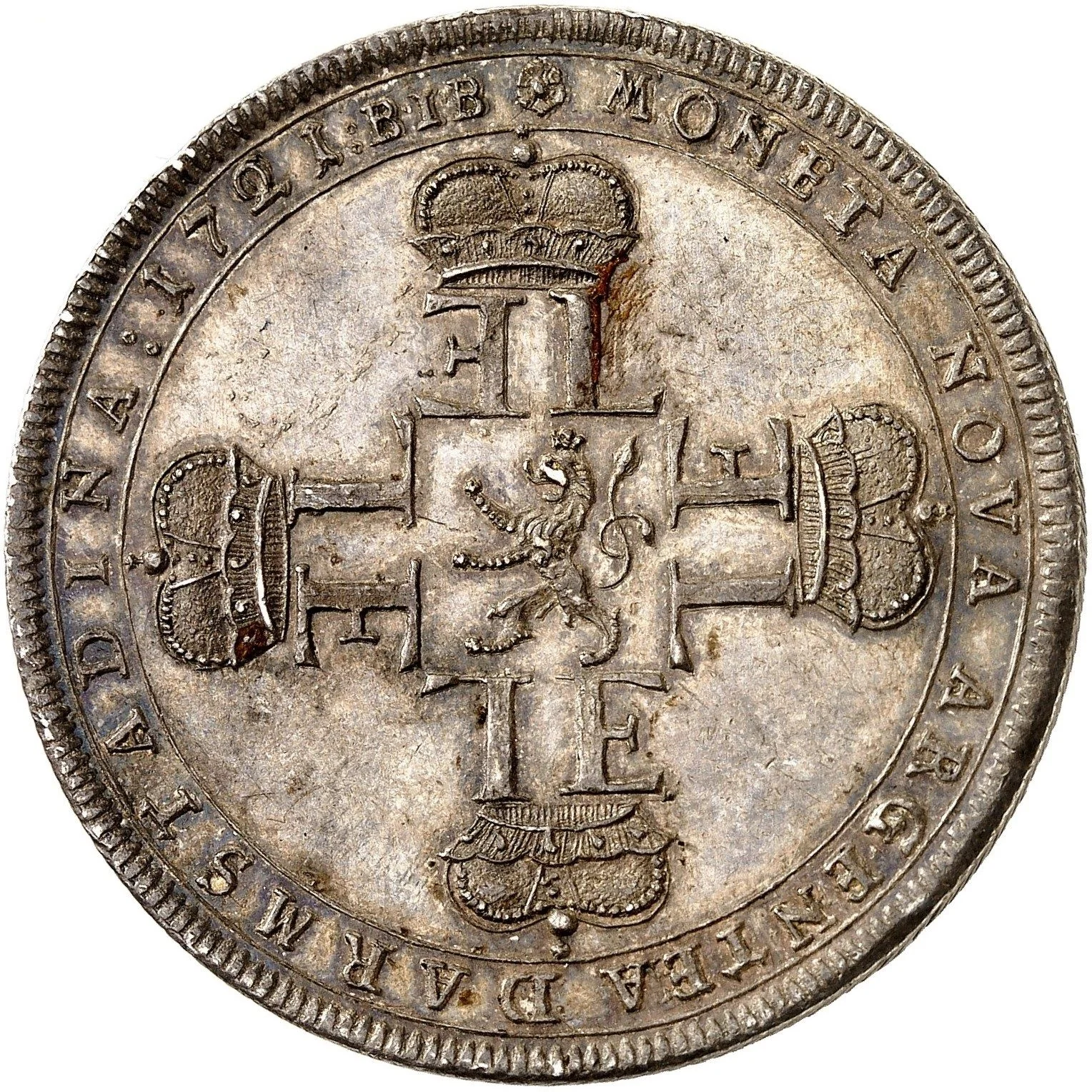
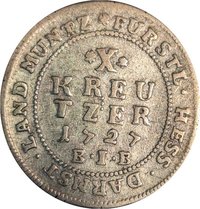
Crowned reversed E and L monograms, central Hesse lion, undivided date in legend.
Inscription:
MONETA NOVA ARGENTEA DARMSTADINA: 1721: BIB
Script: Latin
Edge
Mints
| Name | Mark |
|---|---|
| Darmstadt | — |
Mintings
| Year | Mint Mark | Mintage | Quality | Collection |
|---|---|---|---|---|
| 1721 | — | — |
Historical background
In 1721, the currency situation in the Landgraviate of Hesse-Darmstadt was characterized by significant complexity and instability, a common challenge across the fragmented Holy Roman Empire. The landgraviate did not have a uniform, sovereign currency. Instead, its monetary system was a chaotic mix of circulating coins from various sources: coins minted by Hesse-Darmstadt itself, those from neighboring Hessian states (like Hesse-Kassel), and a plethora of regional and foreign coins from across the Germanies and beyond. This proliferation created a confusing environment for trade, where the value and metal content of coins were highly variable.
The root of this instability lay in the monetary policies of the ruling prince, Landgrave Ernst Ludwig. Facing chronic financial difficulties due to his lavish court and architectural projects, he frequently engaged in the practice of Kippermünze (debasement). This involved reducing the precious metal content (silver) in coins while maintaining their face value, thereby creating short-term profit for the state treasury at the cost of long-term inflation and loss of public trust. Consequently, the value of Hesse-Darmstadt's own coinage was often weak and subject to fluctuation, damaging both domestic commerce and the landgraviate's economic reputation.
This chaotic monetary landscape necessitated constant regulation. Officials published Münztarife (currency tariffs), which were official exchange lists attempting to fix the values of the myriad circulating coins against a theoretical standard. However, these tariffs were often reactive and struggled to keep pace with market realities and further debasements. Thus, in 1721, the currency system was a fragile and administratively burdensome patchwork, undermining economic stability and reflecting the broader fiscal pressures faced by the landgraviate.
The root of this instability lay in the monetary policies of the ruling prince, Landgrave Ernst Ludwig. Facing chronic financial difficulties due to his lavish court and architectural projects, he frequently engaged in the practice of Kippermünze (debasement). This involved reducing the precious metal content (silver) in coins while maintaining their face value, thereby creating short-term profit for the state treasury at the cost of long-term inflation and loss of public trust. Consequently, the value of Hesse-Darmstadt's own coinage was often weak and subject to fluctuation, damaging both domestic commerce and the landgraviate's economic reputation.
This chaotic monetary landscape necessitated constant regulation. Officials published Münztarife (currency tariffs), which were official exchange lists attempting to fix the values of the myriad circulating coins against a theoretical standard. However, these tariffs were often reactive and struggled to keep pace with market realities and further debasements. Thus, in 1721, the currency system was a fragile and administratively burdensome patchwork, undermining economic stability and reflecting the broader fiscal pressures faced by the landgraviate.
✨ Legendary