

6 tari – Malta
Add to wishlist
Malta
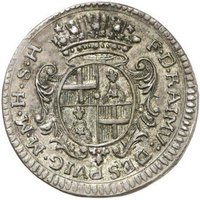
Obverse
Description:
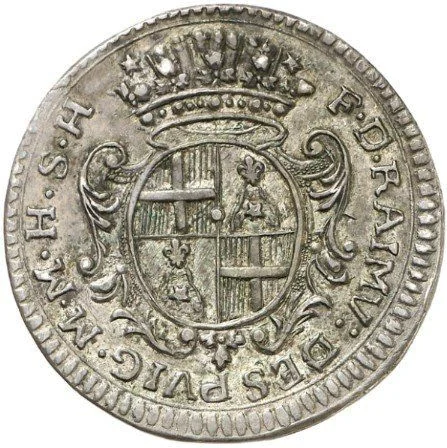
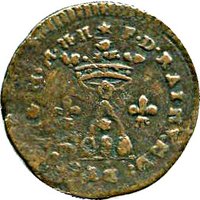
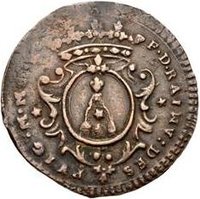
Grand master's arms quartered with the Order's, within a crowned ornamental shield, surrounded by lettering.
Inscription:
F · D · RAIMV : DESPVIG · M · M · H · S · H ·
Script: Latin
Reverse
Edge
Mintings
| Year | Mint Mark | Mintage | Quality | Collection |
|---|---|---|---|---|
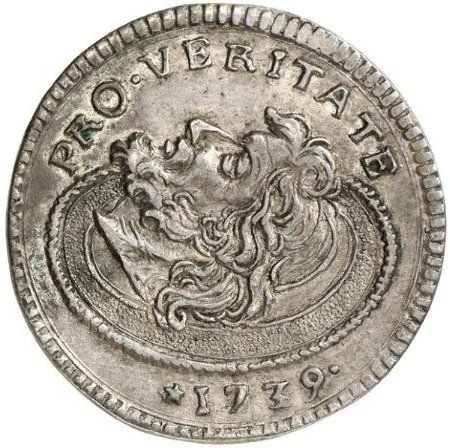
| 1739 | — | — |
Historical background
In 1739, Malta's currency situation was complex and reflected its unique position as a strategic crossroads under the rule of the Knights of St. John. The primary unit of account was the Maltese scudo, divided into 12 tari, each of 20 grani. However, a multitude of physical coins from across the Mediterranean and Europe circulated in the islands' busy ports, including Spanish pieces of eight, Venetian sequins, Neapolitan and Sicilian coins, and French louis d'or. This created a chaotic system where merchants and officials constantly had to assess both the metal content and the fluctuating exchange rates of these foreign coins against the local scudo.
The Knights of the Order, as sovereigns, attempted to regulate this system by periodically issuing official tariffs, known as bandos, which fixed the value of foreign coins in terms of the Maltese scudo. These decrees were essential for public accounting, tax collection, and stabilizing commerce, but they were often reactive and struggled to keep pace with the international flow of debased or clipped coins. A significant problem was the chronic shortage of small-denomination copper coins (grani and piccioli) for everyday transactions, which led to the circulation of illegally cut foreign copper coins and frequent public complaints about the difficulty of making change.
Underlying this monetary mosaic was a deeper economic tension. The Knights' lavish building projects and military expenditures, coupled with a reliance on imported grain, often led to trade imbalances and the outflow of silver. Consequently, while the bando of 1739 would have aimed to provide order, the reality was a fragile and often inconvenient monetary environment. This system placed Malta at the mercy of international bullion flows and made its economy vulnerable to the quality and quantity of foreign coinage arriving on its shores, a defining challenge of its pre-modern, maritime-based economy.
The Knights of the Order, as sovereigns, attempted to regulate this system by periodically issuing official tariffs, known as bandos, which fixed the value of foreign coins in terms of the Maltese scudo. These decrees were essential for public accounting, tax collection, and stabilizing commerce, but they were often reactive and struggled to keep pace with the international flow of debased or clipped coins. A significant problem was the chronic shortage of small-denomination copper coins (grani and piccioli) for everyday transactions, which led to the circulation of illegally cut foreign copper coins and frequent public complaints about the difficulty of making change.
Underlying this monetary mosaic was a deeper economic tension. The Knights' lavish building projects and military expenditures, coupled with a reliance on imported grain, often led to trade imbalances and the outflow of silver. Consequently, while the bando of 1739 would have aimed to provide order, the reality was a fragile and often inconvenient monetary environment. This system placed Malta at the mercy of international bullion flows and made its economy vulnerable to the quality and quantity of foreign coinage arriving on its shores, a defining challenge of its pre-modern, maritime-based economy.
✨ Legendary