

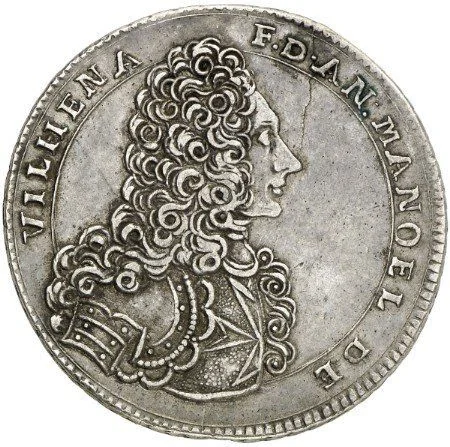
2 scudi – Malta
Add to wishlist
Malta
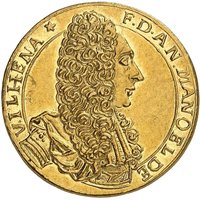
Obverse
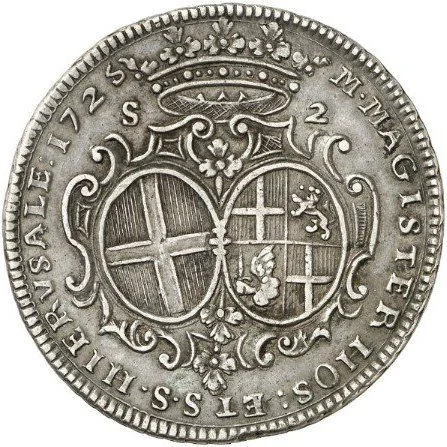
Reverse
Description:
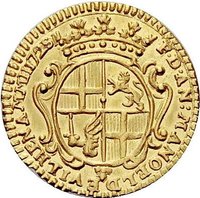
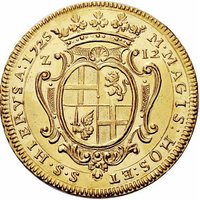
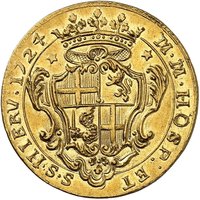
Crown above two ovals: left shield with Order arms, right with Master's arms.
Inscription:
M • MAGISTER HOS : ET S • S • HIERVSALE : 1725
S 2
S 2
Script: Latin
Edge
Mintings
| Year | Mint Mark | Mintage | Quality | Collection |
|---|---|---|---|---|
| 1725 | — | — |
Historical background
In 1725, Malta’s currency situation was complex and fragmented, reflecting its position as a bustling crossroads of Mediterranean trade under the rule of the Knights of St. John. The official currency was the Maltese scudo, but a multitude of foreign coins circulated daily, including Spanish pieces of eight, Venetian sequins, French écus, and Turkish piastres. This proliferation created a chaotic monetary environment where exchange rates fluctuated based on the intrinsic silver or gold content of each coin, leading to confusion and frequent disputes in commerce.
The Knights attempted to impose order by minting local copper grani and silver tari and scudi at the Zecca (mint) in Valletta. However, these issues were often insufficient in quantity and frequently debased, meaning they contained less precious metal than their face value. Consequently, sound foreign specie was hoarded or exported, leaving the poorer-quality local coinage in common circulation—a classic example of Gresham’s Law, where "bad money drives out good." This undermined public confidence and complicated both local transactions and the Knights' own financial administration.
Ultimately, the currency chaos of 1725 was symptomatic of broader fiscal strains. The Knights' treasury was often depleted due to the high costs of maintaining fortifications, the navy, and their hospital, leading to recurrent debasements. The situation placed a burden on Maltese merchants and the populace, who bore the risk of fluctuating values. It was a system awaiting reform, which would only begin to materialize decades later with more consistent minting policies and attempts to standardize the coinage in line with European trends.
The Knights attempted to impose order by minting local copper grani and silver tari and scudi at the Zecca (mint) in Valletta. However, these issues were often insufficient in quantity and frequently debased, meaning they contained less precious metal than their face value. Consequently, sound foreign specie was hoarded or exported, leaving the poorer-quality local coinage in common circulation—a classic example of Gresham’s Law, where "bad money drives out good." This undermined public confidence and complicated both local transactions and the Knights' own financial administration.
Ultimately, the currency chaos of 1725 was symptomatic of broader fiscal strains. The Knights' treasury was often depleted due to the high costs of maintaining fortifications, the navy, and their hospital, leading to recurrent debasements. The situation placed a burden on Maltese merchants and the populace, who bore the risk of fluctuating values. It was a system awaiting reform, which would only begin to materialize decades later with more consistent minting policies and attempts to standardize the coinage in line with European trends.
✨ Legendary