

1 Thaler – Brunswick-Lüneburg-Calenberg-Hannover
Germany

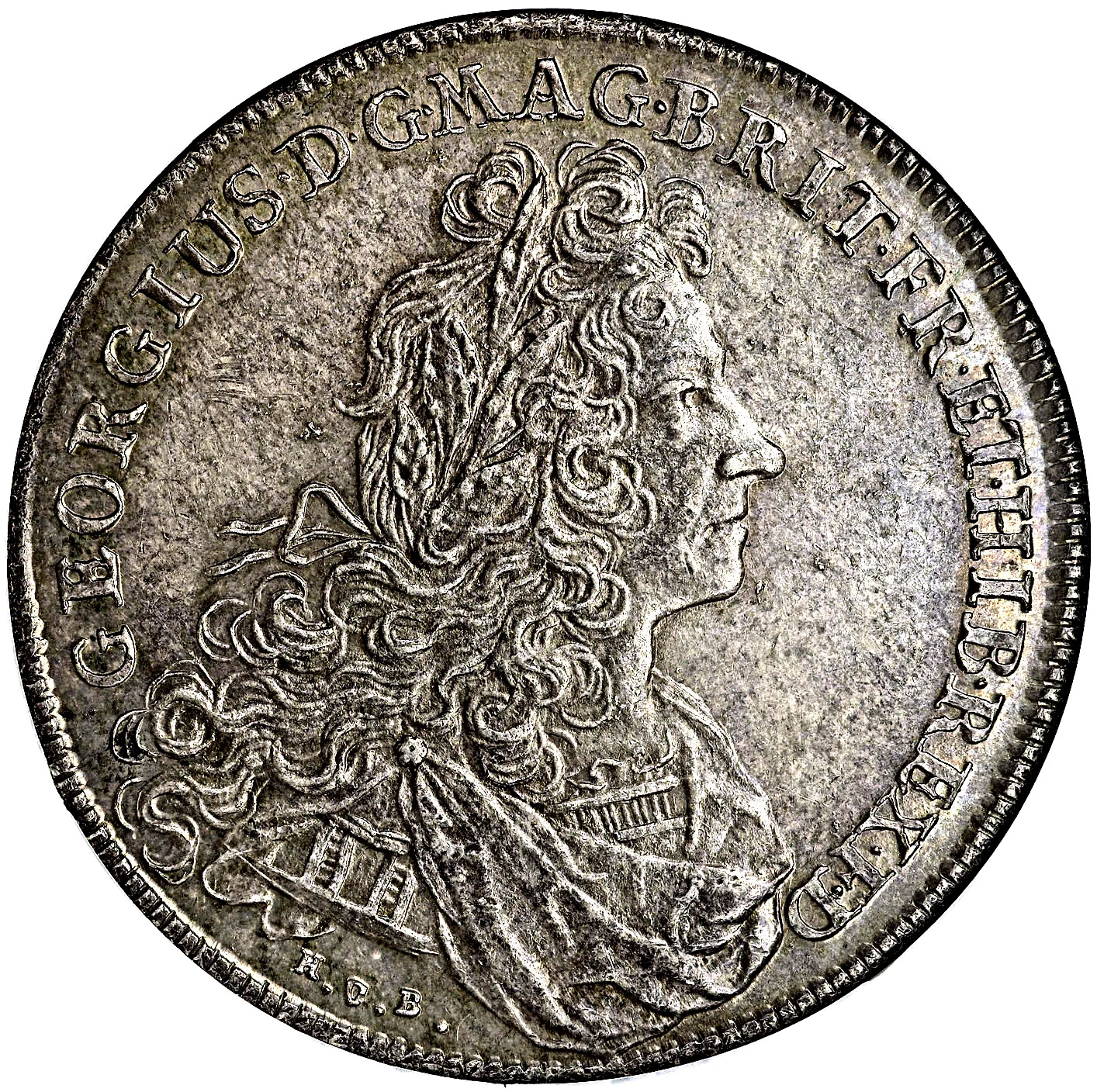
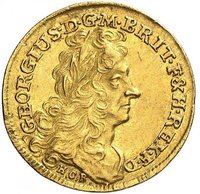
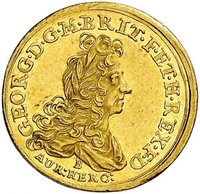
Obverse
Description:
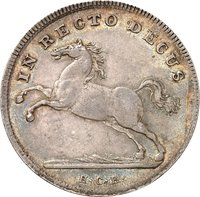
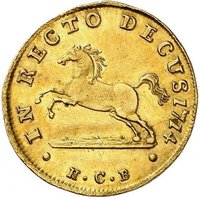
George I bust right, legend surrounding.
Script: Latin
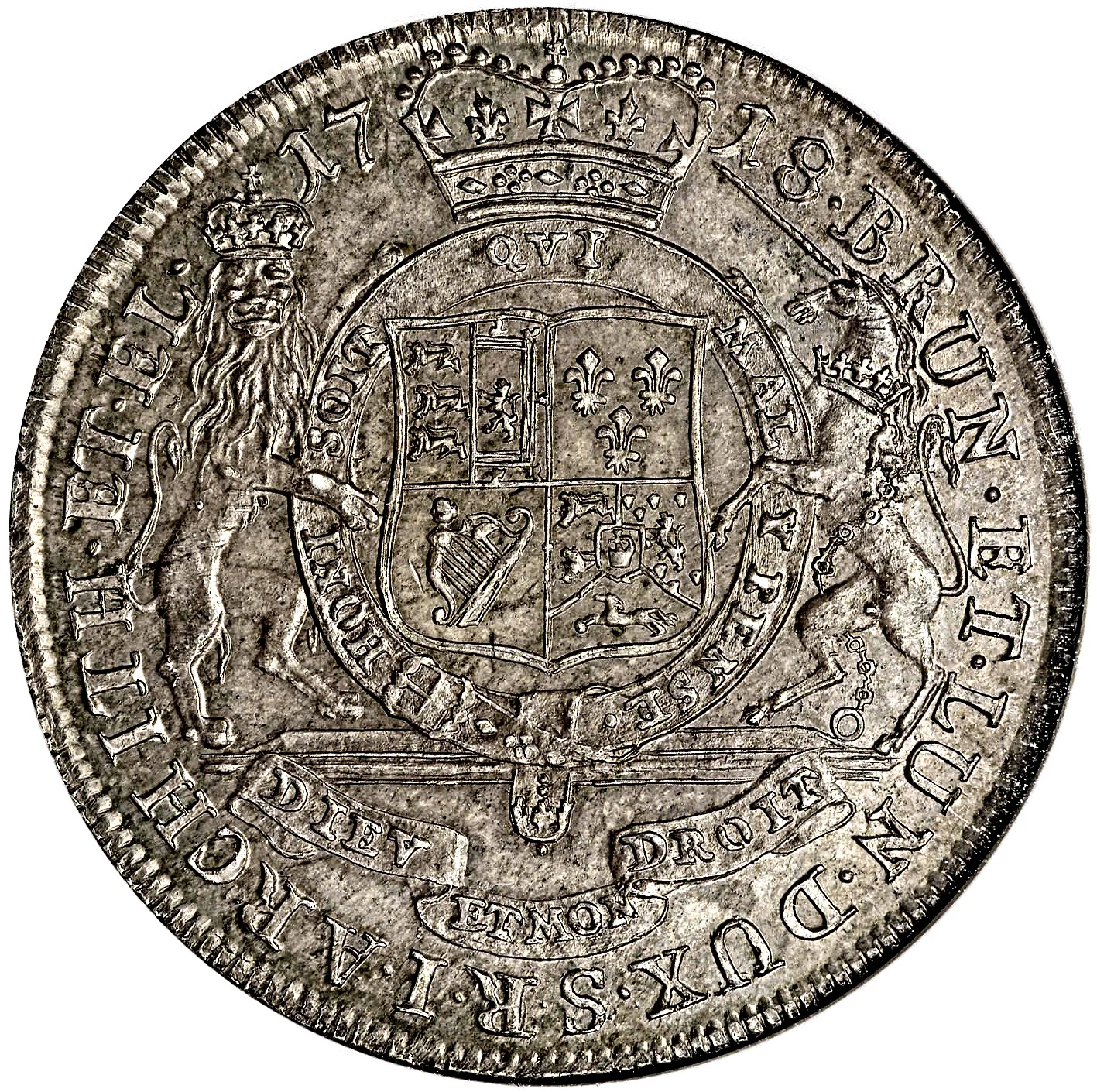
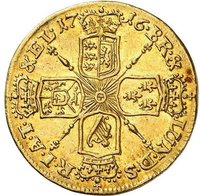
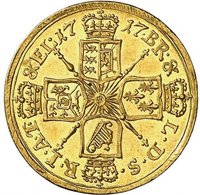
Reverse
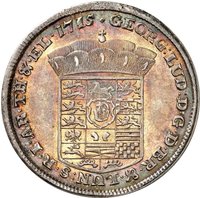
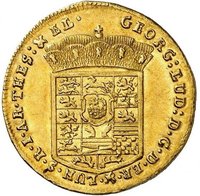
Description:
Crowned coat of arms flanked by animals with encircling legend.
Script: Latin
Edge
Mints
| Name | Mark |
|---|---|
| Zellerfeld | — |
Mintings
| Year | Mint Mark | Mintage | Quality | Collection |
|---|---|---|---|---|
| 1715 | — | — | ||
| 1716 | — | — | ||
| 1717 | — | — | ||
| 1718 | — | — | ||
| 1719 | — | — | ||
| 1720 | — | — | ||
| 1721 | — | — | ||
| 1722 | — | — | ||
| 1723 | — | — | ||
| 1724 | — | — | ||
| 1725 | — | — | ||
| 1726 | — | — | ||
| 1727 | — | — |
Historical background
In 1715, the currency situation in the Duchy of Brunswick-Lüneburg, specifically the Principality of Calenberg (with its capital in Hanover), was complex and fragmented, reflecting the broader monetary disarray of the Holy Roman Empire. The territory did not have a uniform, sovereign coinage system. Instead, it operated within the framework of the Reichstaler, a theoretical imperial standard, but in practice, a multitude of different coins circulated. These included coins minted by various Brunswick-Lüneburg branch lines (like Wolfenbüttel), neighboring German states, and foreign currencies like Dutch Duit and Gulden, which entered through trade. This proliferation led to chronic confusion over exchange rates and the intrinsic silver content of coins.
The core of the problem was the disparity between the Reichstaler used for accounting (worth 24 Gute Groschen) and the actual, debased coins in everyday circulation. Princes often minted inferior, low-weight coins (known as Landmünze) for local use to generate seigniorage revenue, while high-value trade was conducted in full-weight Reichstaler or foreign specie. This created a dual-system where the "money of account" and the "money in hand" had different values, complicating all financial transactions, tax collection, and commerce. The recent acquisition of the British crown by the Hanoverian Elector George I in 1714 added a new layer of complexity, as state finances were now entangled with international subsidies and obligations, increasing the pressure for monetary stability.
Consequently, authorities faced constant challenges with counterfeiting, currency speculation, and public mistrust. While there were periodic ordinances and attempts at regulation, a comprehensive reform of the coinage system remained elusive. The situation in 1715 was thus one of entrenched instability, setting the stage for more concerted, but still incremental, monetary reforms that would unfold over the following decades, particularly under the guidance of officials like Johann Philipp Graumann in the 1740s.
The core of the problem was the disparity between the Reichstaler used for accounting (worth 24 Gute Groschen) and the actual, debased coins in everyday circulation. Princes often minted inferior, low-weight coins (known as Landmünze) for local use to generate seigniorage revenue, while high-value trade was conducted in full-weight Reichstaler or foreign specie. This created a dual-system where the "money of account" and the "money in hand" had different values, complicating all financial transactions, tax collection, and commerce. The recent acquisition of the British crown by the Hanoverian Elector George I in 1714 added a new layer of complexity, as state finances were now entangled with international subsidies and obligations, increasing the pressure for monetary stability.
Consequently, authorities faced constant challenges with counterfeiting, currency speculation, and public mistrust. While there were periodic ordinances and attempts at regulation, a comprehensive reform of the coinage system remained elusive. The situation in 1715 was thus one of entrenched instability, setting the stage for more concerted, but still incremental, monetary reforms that would unfold over the following decades, particularly under the guidance of officials like Johann Philipp Graumann in the 1740s.
✨ Legendary