

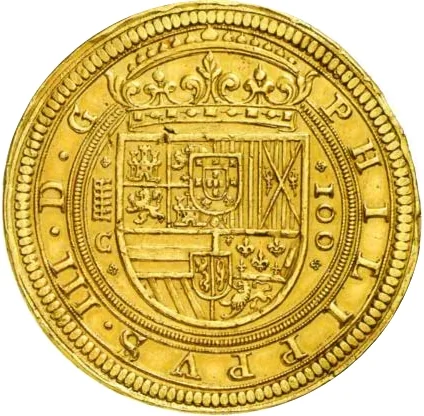
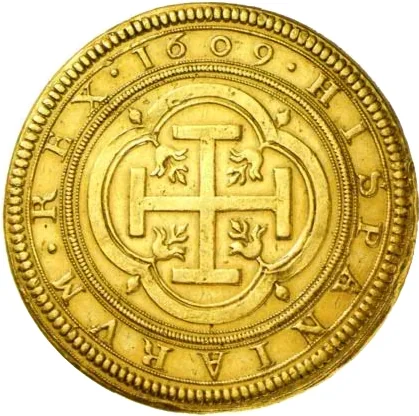
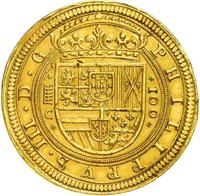
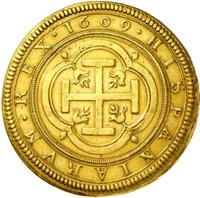
100 escudos – Spain
Add to wishlist
Spain
Context
Material
Diameter: 71 mm
Weight: 340 g
Gold Weight:: 311.78 g
Thickness: 5 mm
Shape: Round
Composition: 91.7% Gold
Magnetic: No
Technique: Roller milled
References
KM: #
Numista: #111217
Value
Bullion value: $48092.92
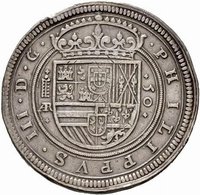
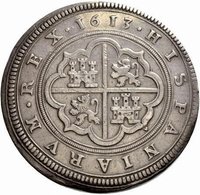
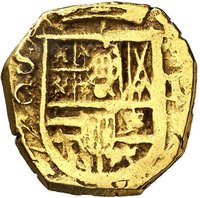
Obverse
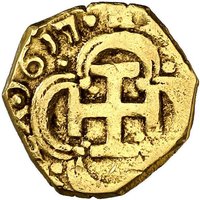
Reverse
Edge
Mints
| Name | Mark |
|---|---|
| Royal Mint of Segovia | — |
Mintings
| Year | Mint Mark | Mintage | Quality | Collection |
|---|---|---|---|---|
| 1609 | C | — | ||
| 1618 | AR | — |
Historical background
In 1609, Spain’s currency system was in a state of profound crisis, a direct consequence of the Crown’s relentless spending on its vast military commitments across Europe and the Atlantic. The seemingly endless flow of silver from the American colonies, particularly from Potosí, had created a vicious cycle of inflation and debt. Rather than building a stable economy, the treasure was used to service loans from foreign bankers, fund the armies of the Thirty Years' War, and maintain the empire's global presence. This resulted in frequent royal bankruptcies, the most recent being in 1607, which shattered creditor confidence and left the state perennially short of liquid capital.
The domestic coinage itself was deeply unstable, characterized by a severe debasement of the ubiquitous vellón currency—coins made from a base metal of copper with only a trace of silver. To finance its deficits, the Crown repeatedly increased the face value of these coins while reducing their metal content, leading to a collapse in public trust. Prices soared as the real value of vellón plummeted, causing economic distress for ordinary people and complicating all commercial transactions. A dual system emerged where older, purer coins of silver and gold (reales and escudos) were hoarded for their intrinsic value, while the inflated vellón circulated at artificially mandated rates, creating a chaotic and inefficient monetary environment.
This deteriorating currency situation in 1609 existed against a backdrop of significant domestic policy. In that very year, King Philip III, with his valido the Duke of Lerma, issued the decree for the expulsion of the Moriscos (Muslims forcibly converted to Christianity). This drastic measure was driven by political and religious motives, but it also had a direct, damaging impact on the fragile economy. The Moriscos formed a vital part of the agricultural and artisanal workforce, particularly in the eastern kingdom of Valencia. Their forced removal further disrupted production and trade, exacerbating the fiscal and monetary crises by reducing the kingdom's tax base and economic output at a time when sound finances were most desperately needed.
The domestic coinage itself was deeply unstable, characterized by a severe debasement of the ubiquitous vellón currency—coins made from a base metal of copper with only a trace of silver. To finance its deficits, the Crown repeatedly increased the face value of these coins while reducing their metal content, leading to a collapse in public trust. Prices soared as the real value of vellón plummeted, causing economic distress for ordinary people and complicating all commercial transactions. A dual system emerged where older, purer coins of silver and gold (reales and escudos) were hoarded for their intrinsic value, while the inflated vellón circulated at artificially mandated rates, creating a chaotic and inefficient monetary environment.
This deteriorating currency situation in 1609 existed against a backdrop of significant domestic policy. In that very year, King Philip III, with his valido the Duke of Lerma, issued the decree for the expulsion of the Moriscos (Muslims forcibly converted to Christianity). This drastic measure was driven by political and religious motives, but it also had a direct, damaging impact on the fragile economy. The Moriscos formed a vital part of the agricultural and artisanal workforce, particularly in the eastern kingdom of Valencia. Their forced removal further disrupted production and trade, exacerbating the fiscal and monetary crises by reducing the kingdom's tax base and economic output at a time when sound finances were most desperately needed.
✨ Legendary