

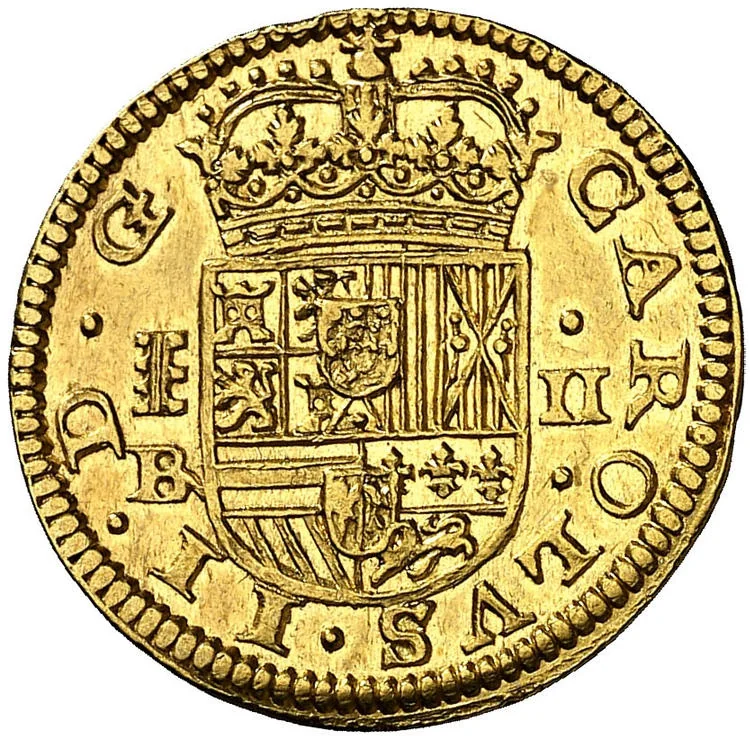
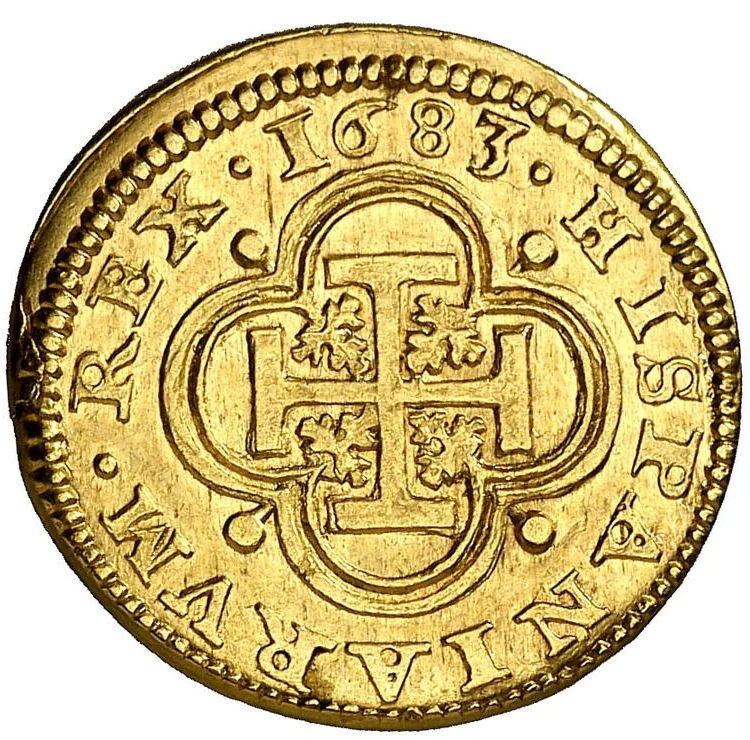
2 escudos – Spain
Add to wishlist
Spain
Context
Material
Diameter: 22 mm
Weight: 6.8 g
Gold Weight:: 6.24 g
Thickness: 1 mm
Shape: Round
Composition: 91.7% Gold
Magnetic: No
Technique: Roller milled
References
KM: #
Numista: #111207
Value
Bullion value: $949.19
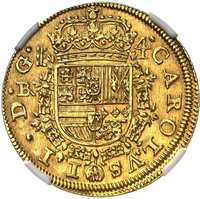
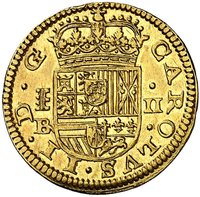
Obverse
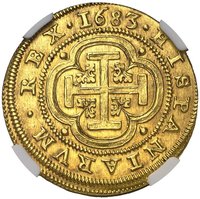
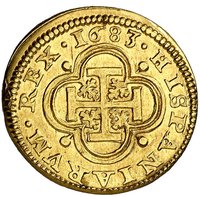
Reverse
Edge
Mints
| Name | Mark |
|---|---|
| Royal Mint of Segovia | — |
| Royal Mint of Seville | — |
Mintings
| Year | Mint Mark | Mintage | Quality | Collection |
|---|---|---|---|---|
| 1683 | BR | — | ||
| 1687 | BR | — | ||
| 1699 | SM | — | ||
| 1700 | SM | — |
Historical background
In 1683, the Spanish monetary system was a complex and troubled reflection of the broader Habsburg economic decline. The primary unit was the silver real, with eight reales making the famous "piece of eight" (real de a ocho). However, the century had been marked by severe currency debasement, particularly under King Philip IV, who had repeatedly reduced the silver content in coins like the vellón (copper alloy) to finance endless military conflicts. By the 1680s, this resulted in a chaotic circulation of heavily debased copper coinage alongside full-weight silver and gold, causing rampant inflation, public mistrust, and severe economic distortion.
The reign of Charles II (1665-1700), physically and politically weak, did little to resolve these deep-seated issues. The government in Madrid struggled with a chronic fiscal crisis, relying on erratic silver shipments from the Americas, which were by then in decline. Much of this precious metal flowed directly out to pay foreign bankers and troops, failing to stabilize the domestic currency. The economy remained heavily reliant on imports, further draining specie, while domestic production languished, exacerbating the monetary scarcity of sound coin.
Consequently, the currency situation in 1683 was one of entrenched instability. Different regions of the peninsula, especially the Crown of Aragon, often operated with their own monetary practices, hindering unified policy. The widespread circulation of clipped, counterfeit, and debased coins made everyday commerce difficult, discouraging investment and deepening economic stagnation. This monetary disorder was a key symptom of Spain's diminished power, as it entered the final decades of Habsburg rule with its public finances and monetary integrity in profound disarray.
The reign of Charles II (1665-1700), physically and politically weak, did little to resolve these deep-seated issues. The government in Madrid struggled with a chronic fiscal crisis, relying on erratic silver shipments from the Americas, which were by then in decline. Much of this precious metal flowed directly out to pay foreign bankers and troops, failing to stabilize the domestic currency. The economy remained heavily reliant on imports, further draining specie, while domestic production languished, exacerbating the monetary scarcity of sound coin.
Consequently, the currency situation in 1683 was one of entrenched instability. Different regions of the peninsula, especially the Crown of Aragon, often operated with their own monetary practices, hindering unified policy. The widespread circulation of clipped, counterfeit, and debased coins made everyday commerce difficult, discouraging investment and deepening economic stagnation. This monetary disorder was a key symptom of Spain's diminished power, as it entered the final decades of Habsburg rule with its public finances and monetary integrity in profound disarray.
Series: 1683 Spain circulation coins
✨ Legendary