

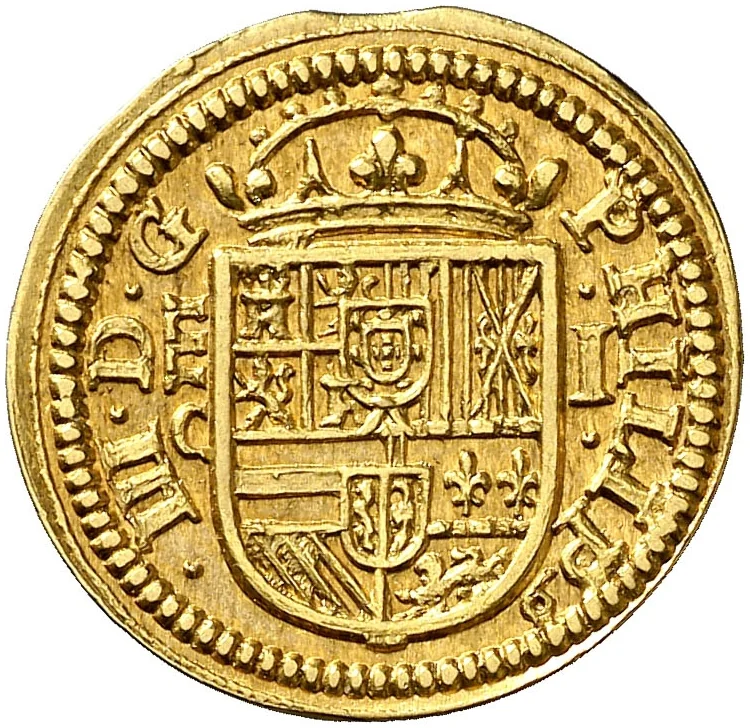
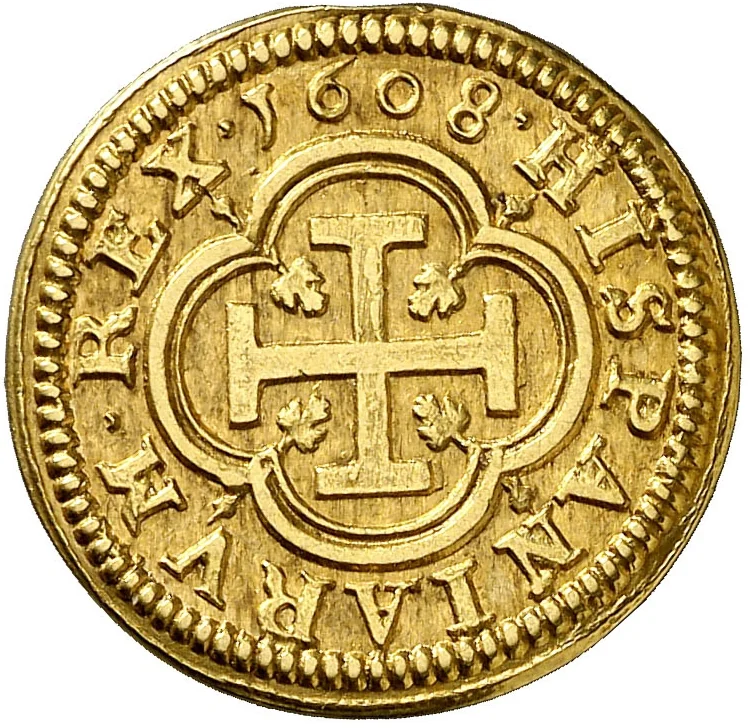
1 escudo – Spain
Add to wishlist
Spain
Context
Material
Diameter: 19 mm
Weight: 3.4 g
Gold Weight:: 3.12 g
Thickness: 0.6 mm
Shape: Round
Composition: 91.7% Gold
Magnetic: No
Technique: Roller milled
References
KM: #
Numista: #111200
Value
Bullion value: $478.27
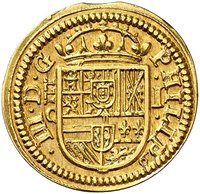
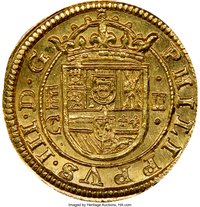
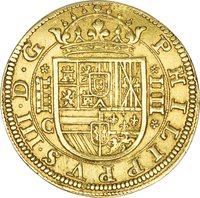
Obverse
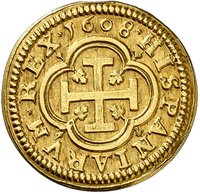
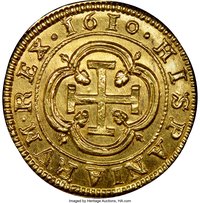
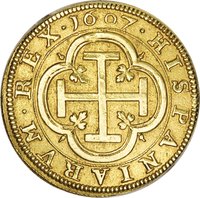
Reverse
Edge
Mints
| Name | Mark |
|---|---|
| Royal Mint of Segovia | — |
Mintings
| Year | Mint Mark | Mintage | Quality | Collection |
|---|---|---|---|---|
| 1607 | C | — | ||
| 1608 | C | — |
Historical background
In 1607, the Kingdom of Spain was in the throes of a profound monetary crisis, a direct consequence of decades of fiscally unsustainable Habsburg imperial policy. To finance continuous warfare in the Netherlands and against England, and to maintain its vast global empire, the Crown had resorted to massive borrowing, leading to staggering debts owed to Genoese and German bankers. The situation was compounded by the influx of silver from the Americas, which, rather than creating sustainable wealth, caused severe price inflation (the "Price Revolution") and encouraged imports that damaged domestic industry. By the early 17th century, the Crown's expenditures far outstripped its income from New World silver and Castilian taxes, pushing its finances to the brink.
The immediate crisis came to a head with the 1607 bankruptcy decree, the third such state bankruptcy declared by the Spanish monarchy since Philip II's first in 1557. This was not a bankruptcy in the modern sense but a forced renegotiation (medio general) of the king's debts with his creditors. The decree unilaterally suspended payments on short-term, high-interest loans (asientos) and converted them into long-term, lower-interest bonds (juros). This action, while providing immediate fiscal breathing room, severely damaged the Crown's creditworthiness and alienated the international banking consortiums upon which Spain relied for liquidity. It was a stark admission that the legendary rivers of American silver were insufficient to sustain the empire's military ambitions.
This monetary turmoil had devastating effects on the Spanish economy. The repeated debasement of copper coinage (vellón) to create cheap currency led to rampant inflation and a loss of public trust in money. A destructive cycle emerged where good silver coin was hoarded or exported, leaving the economy to function on unstable copper, which further distorted prices and trade. Thus, 1607 stands as a pivotal year, marking the point where the structural weaknesses of Spain's economy—its dependence on foreign finance, neglect of domestic production, and inflationary monetary policy—became undeniable, signaling the beginning of a long period of relative decline for the Spanish Empire.
The immediate crisis came to a head with the 1607 bankruptcy decree, the third such state bankruptcy declared by the Spanish monarchy since Philip II's first in 1557. This was not a bankruptcy in the modern sense but a forced renegotiation (medio general) of the king's debts with his creditors. The decree unilaterally suspended payments on short-term, high-interest loans (asientos) and converted them into long-term, lower-interest bonds (juros). This action, while providing immediate fiscal breathing room, severely damaged the Crown's creditworthiness and alienated the international banking consortiums upon which Spain relied for liquidity. It was a stark admission that the legendary rivers of American silver were insufficient to sustain the empire's military ambitions.
This monetary turmoil had devastating effects on the Spanish economy. The repeated debasement of copper coinage (vellón) to create cheap currency led to rampant inflation and a loss of public trust in money. A destructive cycle emerged where good silver coin was hoarded or exported, leaving the economy to function on unstable copper, which further distorted prices and trade. Thus, 1607 stands as a pivotal year, marking the point where the structural weaknesses of Spain's economy—its dependence on foreign finance, neglect of domestic production, and inflationary monetary policy—became undeniable, signaling the beginning of a long period of relative decline for the Spanish Empire.
Series: 1607 Spain circulation coins
✨ Legendary