

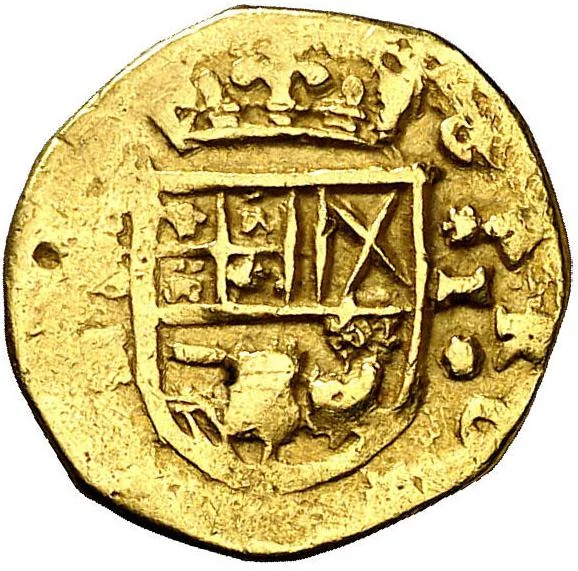
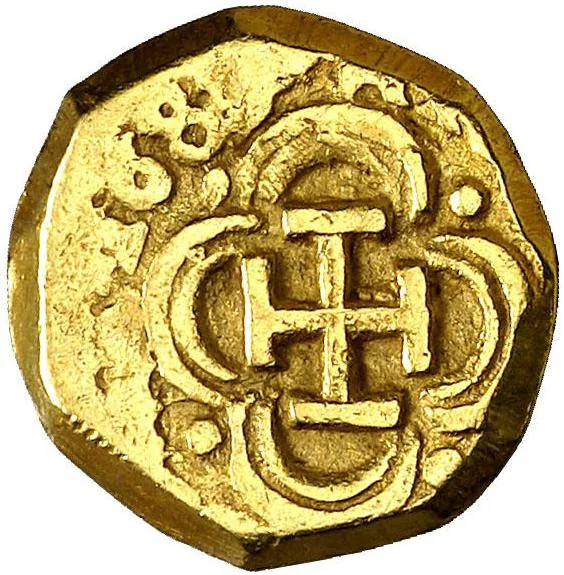
1 Escudo – Spain
Spain
Context

Material
Diameter: 18 mm
Weight: 3.4 g
Gold weight: 3.12 g
Thickness: 0.7 mm
Shape: Irregular round
Composition: 91.7% Gold
Magnetic: No
Technique: Hammered
References
KM: #Click to copy to clipboard46
Numista: #111198
Value
Bullion value: $520.04
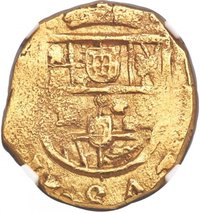
Obverse
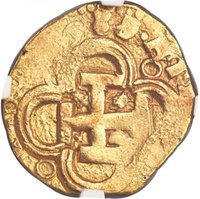
Reverse
Edge
Mints
| Name | Mark |
|---|---|
| Royal Mint of Madrid | — |
| Royal Mint of Seville | — |
Mintings
| Year | Mint Mark | Mintage | Quality | Collection |
|---|---|---|---|---|
| 1672 | SM | — | ||
| 1675 | SM | — | ||
| 1679 | MDBR | — | ||
| 1687 | SM | — | ||
| 1689 | MDM | — |
Historical background
In 1672, Spain's currency system was in a state of profound crisis, a direct consequence of decades of economic mismanagement and the immense fiscal pressures of sustaining its global empire. The crown, under the rule of the ailing and childless Charles II, was perpetually bankrupt, financing its endless wars in the Netherlands and against France through reckless borrowing and the debasement of its coinage. The primary unit, the silver real, had been repeatedly reduced in weight and fineness, while the once-golden pillar of international trade, the escudo, saw its value fluctuate wildly. This created a chaotic monetary environment where the intrinsic metal value of coins often exceeded their face value, leading to hoarding, clipping, and the circulation of a confusing multitude of foreign and outdated coins.
The situation was exacerbated by the government's desperate and counterproductive measures. In 1680, a major attempt at stabilization would be decreed, but in 1672, the practice of vellón—a cheap copper-billon coinage—remained a severe problem. Originally intended for small transactions, the monarchy had flooded the economy with vellón to pay its domestic debts, causing rampant inflation that devastated ordinary people and creditors alike. Attempts to fix the value of copper coins by royal decree failed, as market forces and public distrust consistently undermined them. The result was a destructive cycle where the government issued more debased coinage to cover the costs of previous devaluations, further eroding economic confidence.
Consequently, Spain's domestic economy was strangled by monetary instability, which stifled trade and agriculture. Internationally, the loss of confidence in Spanish coinage mirrored the political decline of the Habsburg monarchy, as other European powers began to dominate finance and commerce. The currency chaos of 1672 was not merely a financial issue but a symptomatic manifestation of the broader "Decline of Spain," highlighting a sclerotic administration unable to reform its fiscal foundations even as its imperial commitments continued to drain its resources.
The situation was exacerbated by the government's desperate and counterproductive measures. In 1680, a major attempt at stabilization would be decreed, but in 1672, the practice of vellón—a cheap copper-billon coinage—remained a severe problem. Originally intended for small transactions, the monarchy had flooded the economy with vellón to pay its domestic debts, causing rampant inflation that devastated ordinary people and creditors alike. Attempts to fix the value of copper coins by royal decree failed, as market forces and public distrust consistently undermined them. The result was a destructive cycle where the government issued more debased coinage to cover the costs of previous devaluations, further eroding economic confidence.
Consequently, Spain's domestic economy was strangled by monetary instability, which stifled trade and agriculture. Internationally, the loss of confidence in Spanish coinage mirrored the political decline of the Habsburg monarchy, as other European powers began to dominate finance and commerce. The currency chaos of 1672 was not merely a financial issue but a symptomatic manifestation of the broader "Decline of Spain," highlighting a sclerotic administration unable to reform its fiscal foundations even as its imperial commitments continued to drain its resources.
✨ Legendary