

2 krone – Denmark
Add to wishlist
Denmark
Context
Material
References
KM: #
Numista: #111157
Value
Bullion value: $81.00
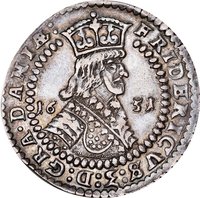
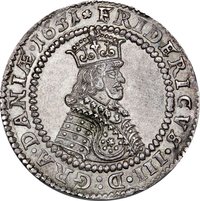
Obverse
Description:
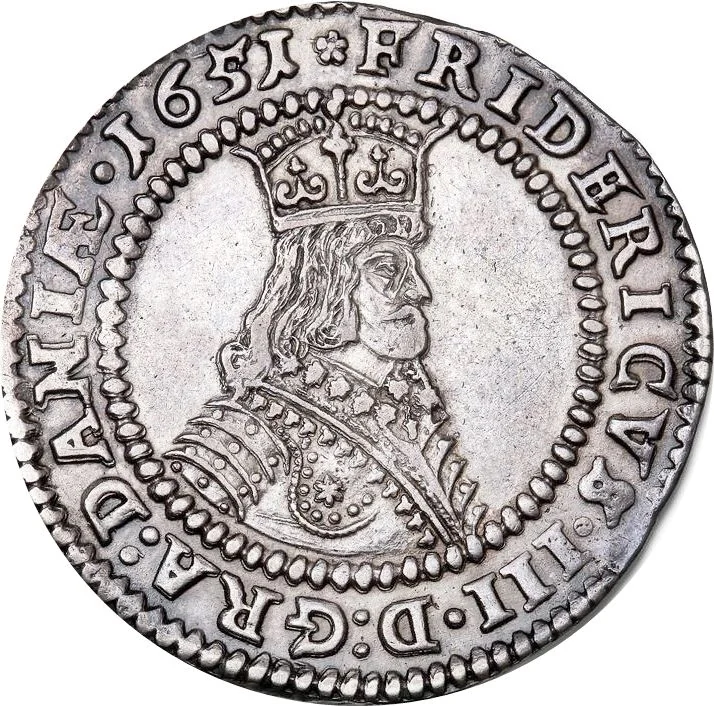
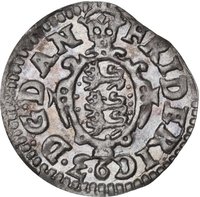
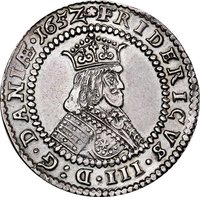
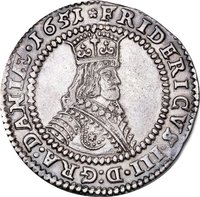
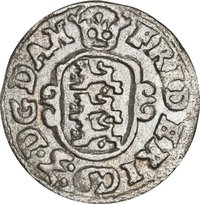
Armored bust of King Frederik III facing right, within a beaded circle. Legend surrounds.
Inscription:
FRIDERICVS • III • D : GRA • DANIÆ • 1651 *
Script: Latin
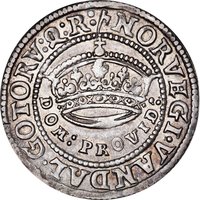
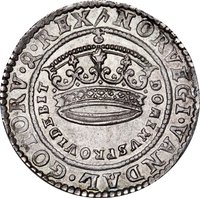
Reverse
Description:
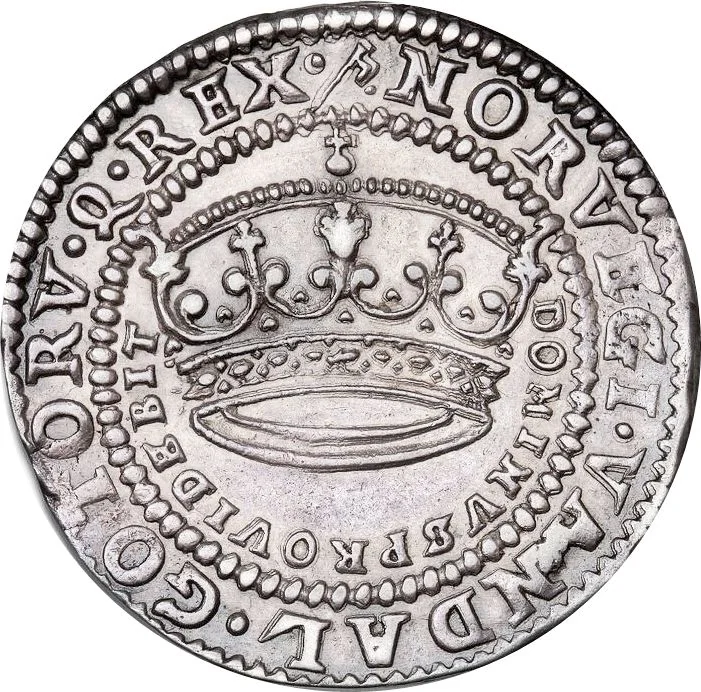
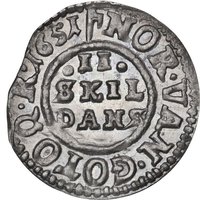
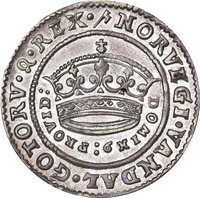
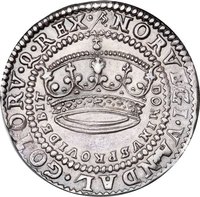
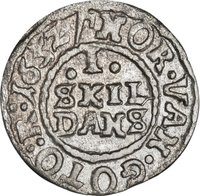
A beaded circle encloses a large closed crown. Below it, the curved royal motto reads clockwise from the top right. The legend encircles the rim, ending with the mintmark.
Inscription:
NORVEGI • VANDAL • GOTORV • Q • REX • (mm)
DOMINVSPROVIDEBIT
DOMINVSPROVIDEBIT
Script: Latin
Edge
Mints
| Name | Mark |
|---|---|
| Royal Danish Mint | — |
Mintings
| Year | Mint Mark | Mintage | Quality | Collection |
|---|---|---|---|---|
| 1651 | h | — |
Historical background
In 1651, Denmark was navigating a complex and challenging currency situation, largely a legacy of the costly Thirty Years' War (1618-1648). The state, under King Frederik III, was burdened by significant debt and a debased coinage. Earlier in the century, the government had repeatedly engaged in "coinage manipulation," reducing the silver content in coins like the skilling and mark to generate short-term profit for the royal treasury. This practice led to a proliferation of coins of varying intrinsic value, causing confusion, inflation, and a loss of public trust in the currency.
The monetary system was officially bimetallic, based on both silver and copper, but it was in disarray. A key problem was the relationship between the circulating kroner (crowns) and the riksdaler, with the latter often being a stable accounting unit or a high-value foreign coin. The domestic coinage had deteriorated to the point where good-quality foreign coins, particularly the riksdaler, circulated at a premium, while debased domestic coins were heavily discounted. This created a two-tier system that hampered trade and state finances, as debts contracted in one type of coin were often repaid in another of lesser value.
This unstable environment set the stage for a major monetary reform. In 1651, the government began serious preparations for a comprehensive restructuring, which would culminate in the successful Currency Regulation of 1653. The aim was to restore confidence by standardizing the coinage, defining fixed values for coins in relation to the riksdaler, and curbing the influx of foreign coins. Thus, 1651 represents a critical turning point—the year in which the Danish state, recognizing the severe economic damage of currency debasement, moved decisively toward establishing a more stable and unified monetary system.
The monetary system was officially bimetallic, based on both silver and copper, but it was in disarray. A key problem was the relationship between the circulating kroner (crowns) and the riksdaler, with the latter often being a stable accounting unit or a high-value foreign coin. The domestic coinage had deteriorated to the point where good-quality foreign coins, particularly the riksdaler, circulated at a premium, while debased domestic coins were heavily discounted. This created a two-tier system that hampered trade and state finances, as debts contracted in one type of coin were often repaid in another of lesser value.
This unstable environment set the stage for a major monetary reform. In 1651, the government began serious preparations for a comprehensive restructuring, which would culminate in the successful Currency Regulation of 1653. The aim was to restore confidence by standardizing the coinage, defining fixed values for coins in relation to the riksdaler, and curbing the influx of foreign coins. Thus, 1651 represents a critical turning point—the year in which the Danish state, recognizing the severe economic damage of currency debasement, moved decisively toward establishing a more stable and unified monetary system.
Series: 1651 Denmark circulation coins
✨ Legendary