

1 Rosenobel – Denmark
Denmark
Context

Material
References
KM: #Click to copy to clipboard51
Numista: #308641
Value
Bullion value: $1251.70
Obverse
Description:
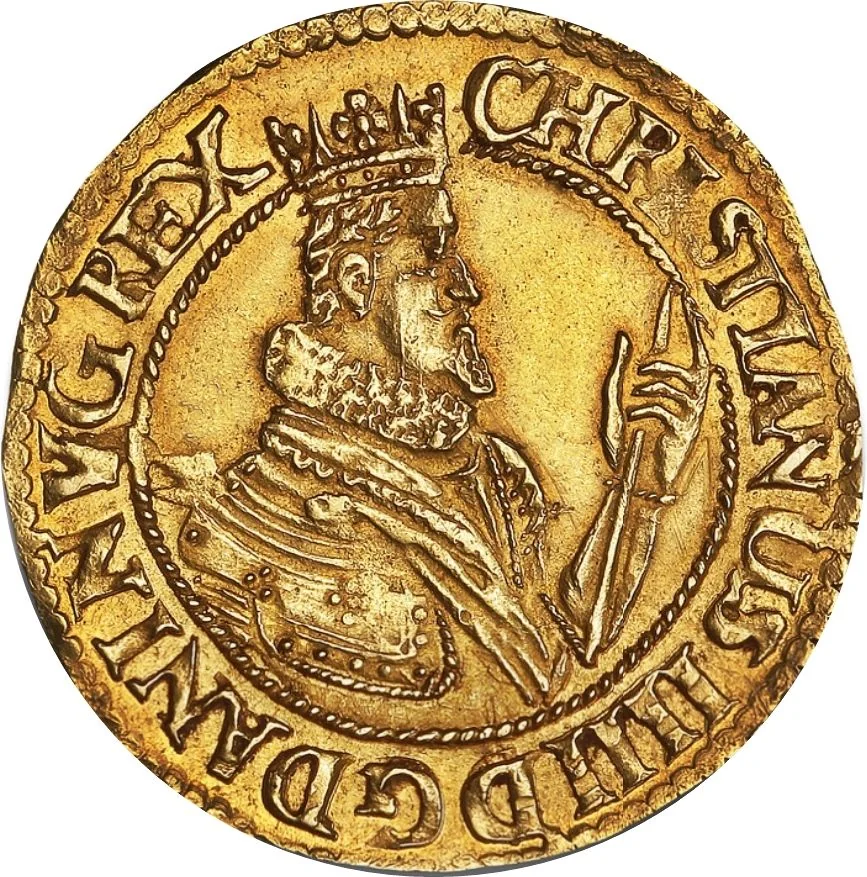
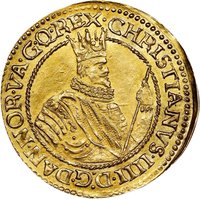
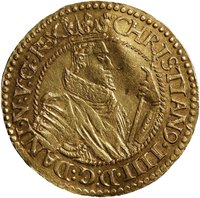
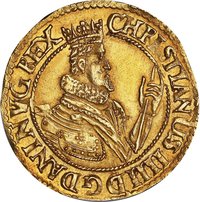
King Christian IV facing right, holding a staff, within a circle. Legend surrounds.
Inscription:
CHRISTIANUS IIII D G DANI N V G REX
Script: Latin
Reverse
Description:
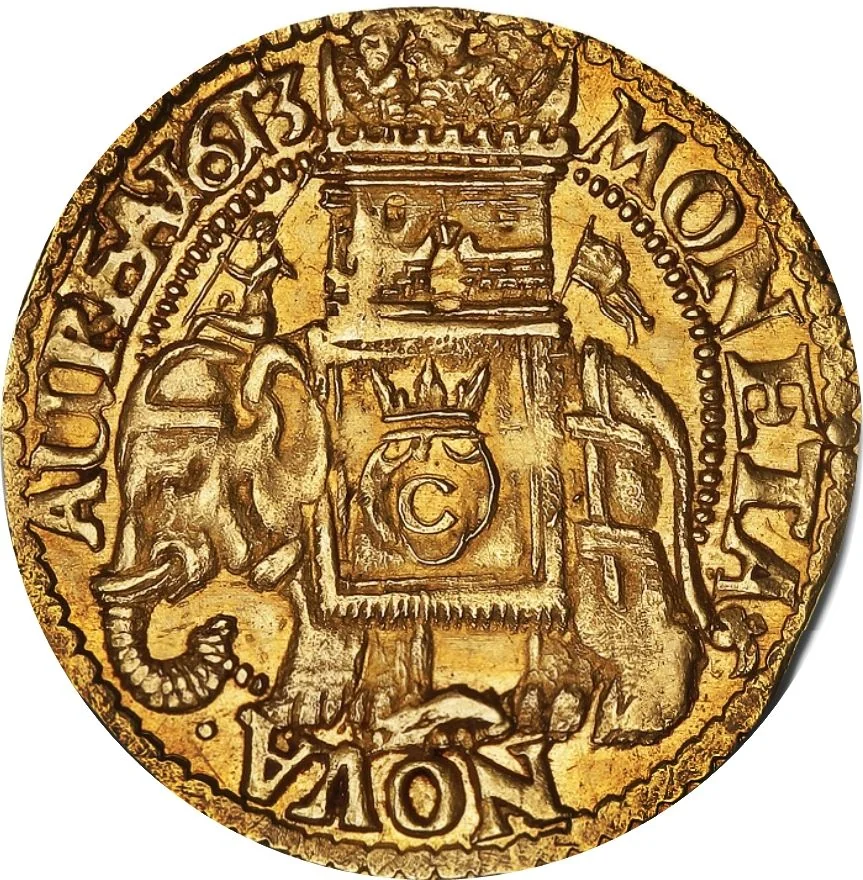
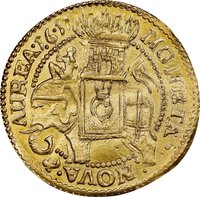
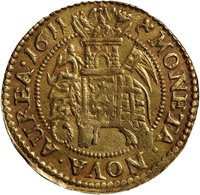
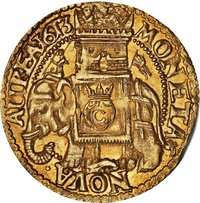
War elephant walking left, bearing a tower with three warriors and a rider on its head. A banner with a crowned monogram hangs from the tower. The elephant is within a partial beaded circle, surrounded by legend and date.
Inscription:
MONETA | NOVA | AUREA 1613
C
C
Script: Latin
Edge
Mints
| Name | Mark |
|---|---|
| Copenhagen | ☘ |
Historical background
In 1611, Denmark operated under a bimetallic monetary system, centered on the rigsdaler (rix-dollar) as the primary large unit of account. The system was officially defined by the Kongelig Majestets Recess of 1575, which established a fixed relationship between silver and gold: 1 guldgylden (gold gulden) was valued at 1½ rigsdaler. However, by the early 17th century, this fixed ratio was under severe strain due to fluctuating global bullion values, leading to chronic instability. The reality was a complex and often chaotic circulation of both domestic and foreign coins, including German, Dutch, and Baltic currencies, which traded based on their intrinsic metal content rather than their official face value.
The monetary situation was further strained by the Kalmar War (1611-1613) against Sweden. King Christian IV's extensive military campaigns, including the costly maintenance of mercenary armies and a powerful navy, required immense financial resources. This led to repeated debasements of the coinage, where the state reduced the silver content in minted coins while maintaining their nominal value. The resulting inflation and loss of public trust in the currency were significant problems, as people hoarded older, purer coins (Gresham's Law in action) and the crown struggled to finance its war efforts through traditional means.
Consequently, the year 1611 represents a point of significant monetary pressure within the longer Kipper und Wipper period (c. 1618-1623), a Europe-wide crisis of debasement. While the most extreme debasement in Denmark would occur a few years later under the influence of financier Ludvig Find, the foundations were being laid in 1611. The war-driven fiscal demands, combined with the structural weaknesses of the fixed bimetallic standard, created an environment where currency manipulation became a tempting short-term solution, setting the stage for deeper economic turmoil in the following decade.
The monetary situation was further strained by the Kalmar War (1611-1613) against Sweden. King Christian IV's extensive military campaigns, including the costly maintenance of mercenary armies and a powerful navy, required immense financial resources. This led to repeated debasements of the coinage, where the state reduced the silver content in minted coins while maintaining their nominal value. The resulting inflation and loss of public trust in the currency were significant problems, as people hoarded older, purer coins (Gresham's Law in action) and the crown struggled to finance its war efforts through traditional means.
Consequently, the year 1611 represents a point of significant monetary pressure within the longer Kipper und Wipper period (c. 1618-1623), a Europe-wide crisis of debasement. While the most extreme debasement in Denmark would occur a few years later under the influence of financier Ludvig Find, the foundations were being laid in 1611. The war-driven fiscal demands, combined with the structural weaknesses of the fixed bimetallic standard, created an environment where currency manipulation became a tempting short-term solution, setting the stage for deeper economic turmoil in the following decade.
Series: 1611 Denmark circulation coins

✨ Legendary