

2 Mariengroschen – Brunswick-Lüneburg-Calenberg-Hannover
Germany

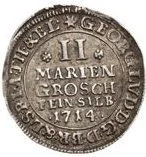
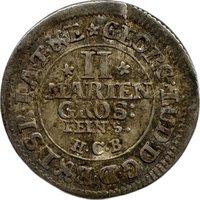
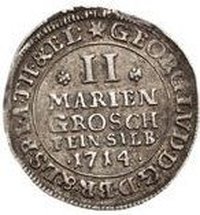
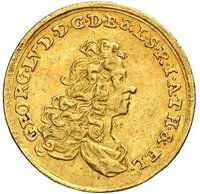
Obverse
Description:
Six-line inscription.
Inscription:
GEORG.LVD.D.G.D.BR.&L.S.R.I.A.T.H.&EL.
II
MARIEN
GROSCH
FEIN SILB
1714
II
MARIEN
GROSCH
FEIN SILB
1714
Script: Latin
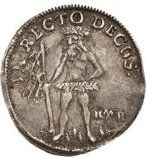
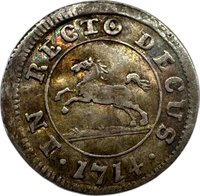
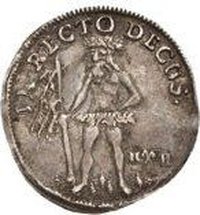
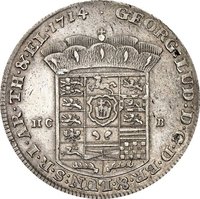
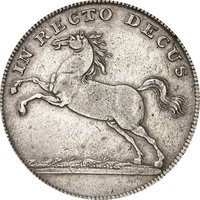
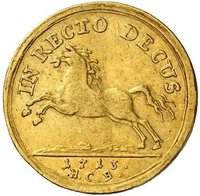
Reverse
Edge
Mints
| Name | Mark |
|---|---|
| Zellerfeld | — |
Mintings
| Year | Mint Mark | Mintage | Quality | Collection |
|---|---|---|---|---|
| 1713 | — | — | ||
| 1714 | — | — | ||
| 1715 | — | — |
Historical background
In 1713, the currency situation in the Duchy of Brunswick-Lüneburg, specifically the Principality of Calenberg (with its capital in Hanover), was complex and fragmented, reflecting the broader monetary disarray of the Holy Roman Empire. The territory did not have a uniform, sovereign coinage system. Instead, it operated within a web of regional monetary conventions, most notably the Reichstaler (Imperial Thaler) as a unit of account, but actual circulating currency consisted of a chaotic mix of domestic and foreign coins. These included various thalers, gulden, and a proliferation of smaller denominations like Gute Groschen and Mariengroschen, whose values and silver content were not stable. The recent acquisition of the Electorate of Hanover in 1708 had added another layer of administrative and monetary complexity to the realm.
This monetary fragmentation was exacerbated by the financial strains of the War of the Spanish Succession (1701-1714), in which Elector George Louis (the future King George I of Great Britain) was a major participant as an ally of the Habsburg Empire. The cost of maintaining armies drained silver reserves, leading to debasements—reducing the precious metal content in coins—to stretch state finances. This practice eroded public trust in the currency, caused price inflation, and disrupted trade. Furthermore, the circulation of heavily debased coins from neighboring states, particularly Kippermünzen from the Saxon monetary crisis, flooded the market, making sound Hanoverian coins prone to being hoarded or melted down (Gresham's Law).
Consequently, the year 1713 represented a low point of monetary instability, setting the stage for future reform. The need for a standardized and reliable currency to facilitate commerce and state revenue became increasingly urgent. This pressure would ultimately lead to significant monetary ordinances under the guidance of the Hanoverian Chancellery, aiming to stabilize the currency by defining fixed values for coins in circulation and aligning the principality's money more firmly with the Reichstaler standard, a process that would gain momentum following the end of the war in 1714.
This monetary fragmentation was exacerbated by the financial strains of the War of the Spanish Succession (1701-1714), in which Elector George Louis (the future King George I of Great Britain) was a major participant as an ally of the Habsburg Empire. The cost of maintaining armies drained silver reserves, leading to debasements—reducing the precious metal content in coins—to stretch state finances. This practice eroded public trust in the currency, caused price inflation, and disrupted trade. Furthermore, the circulation of heavily debased coins from neighboring states, particularly Kippermünzen from the Saxon monetary crisis, flooded the market, making sound Hanoverian coins prone to being hoarded or melted down (Gresham's Law).
Consequently, the year 1713 represented a low point of monetary instability, setting the stage for future reform. The need for a standardized and reliable currency to facilitate commerce and state revenue became increasingly urgent. This pressure would ultimately lead to significant monetary ordinances under the guidance of the Hanoverian Chancellery, aiming to stabilize the currency by defining fixed values for coins in circulation and aligning the principality's money more firmly with the Reichstaler standard, a process that would gain momentum following the end of the war in 1714.
✨ Legendary