

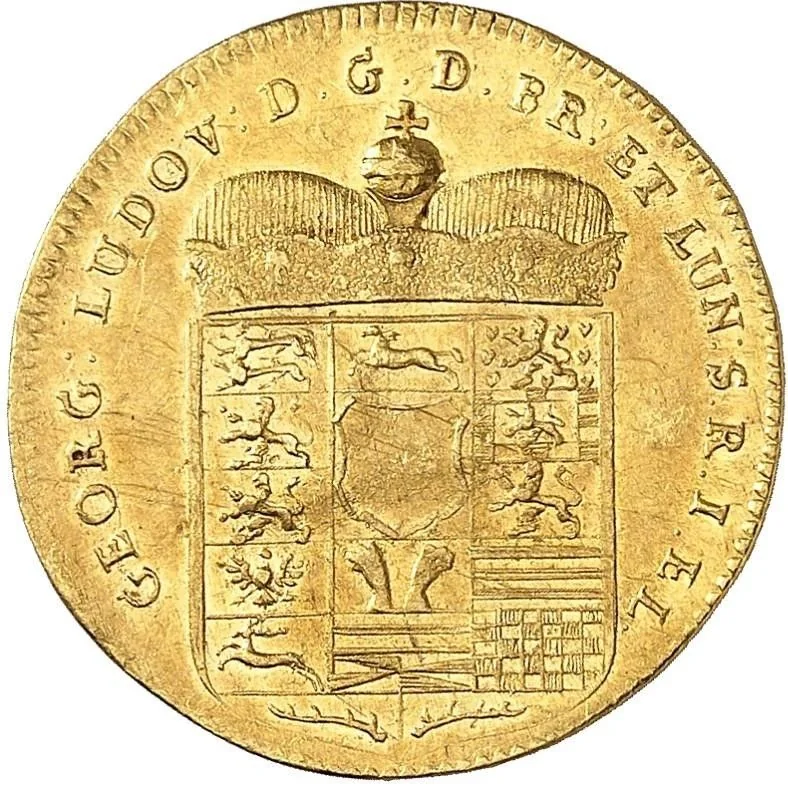

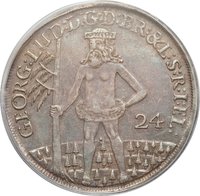
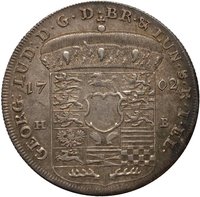
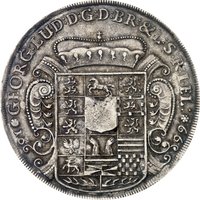
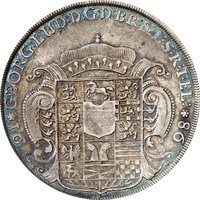
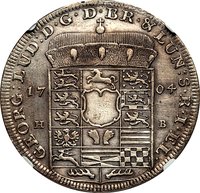
Obverse
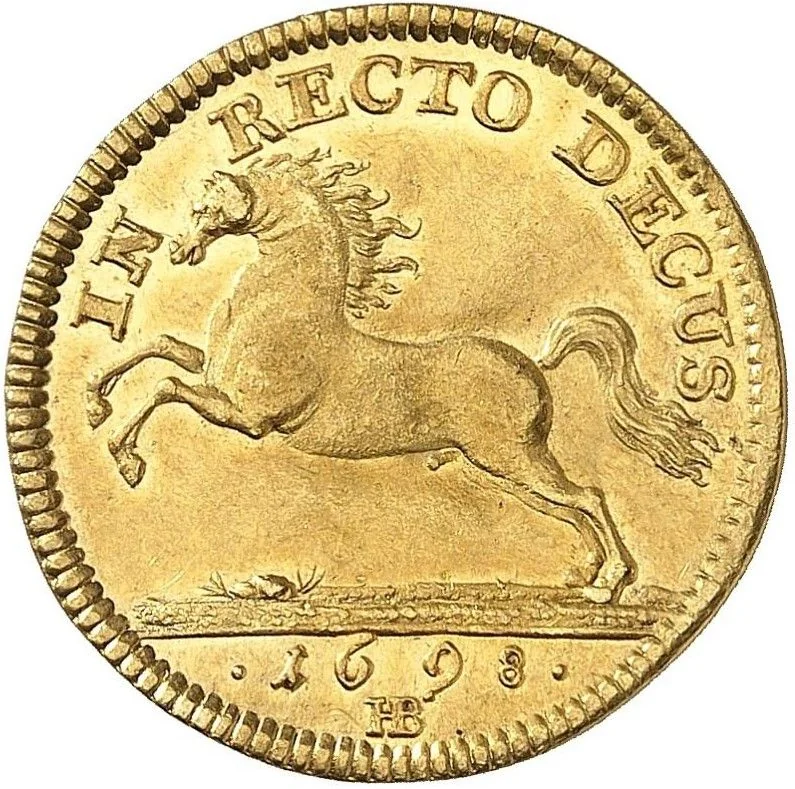
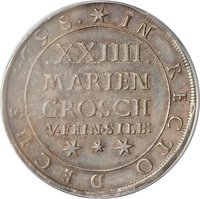
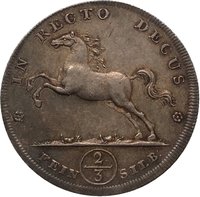
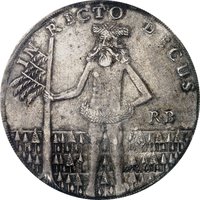
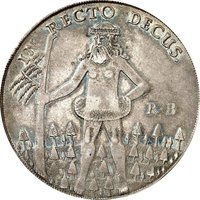
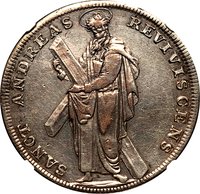
Reverse
Edge
Mints
| Name | Mark |
|---|---|
| Clausthal | — |
Mintings
| Year | Mint Mark | Mintage | Quality | Collection |
|---|---|---|---|---|
| 1698 | — | — | ||
| 1700 | — | — | ||
| 1701 | — | — | ||
| 1705 | — | — | ||
| 1709 | — | — | ||
| 1712 | — | — | ||
| 1714 | — | — |
Historical background
In 1698, the currency situation in the Duchy of Brunswick-Lüneburg, specifically the Principality of Calenberg (with its capital in Hanover), was complex and fragmented, reflecting the broader political structure of the Holy Roman Empire. The territory was part of a web of competing monetary systems, with its own mint producing coins like the Thaler, Gute Groschen, and Mariengroschen. However, its currency circulated alongside and was constantly measured against the influential Reichsthaler of the Empire and the widely trusted Bankothaler of Hamburg. This created a challenging environment for trade and taxation, as values fluctuated and conversions were cumbersome.
The period was marked by significant monetary debasement. The costly wars of the late 17th century, particularly the Nine Years' War (1688-1697), had drained ducal finances, leading rulers to repeatedly lower the silver content in their coinage to generate seigniorage profit. This practice, however, eroded public trust, drove older, full-value coins out of circulation (Gresham's Law), and caused price inflation. Furthermore, the impending elevation of Elector Ernest Augustus's successor to the British throne in 1701 added layers of financial ambition and strain, influencing monetary policy.
Consequently, authorities faced the difficult task of stabilizing the currency to ensure economic functionality and state revenue. Efforts to fix exchange rates between local coins and the stable Reichsthaler were often undermined by the influx of inferior foreign coins and the continued pressure on the mint to fund state expenditures. Thus, the monetary landscape in 1698 was one of transition and instability, caught between the legacy of war finance and the demands of an increasingly interconnected European economy, setting the stage for future attempts at standardization and reform in the 18th century.
The period was marked by significant monetary debasement. The costly wars of the late 17th century, particularly the Nine Years' War (1688-1697), had drained ducal finances, leading rulers to repeatedly lower the silver content in their coinage to generate seigniorage profit. This practice, however, eroded public trust, drove older, full-value coins out of circulation (Gresham's Law), and caused price inflation. Furthermore, the impending elevation of Elector Ernest Augustus's successor to the British throne in 1701 added layers of financial ambition and strain, influencing monetary policy.
Consequently, authorities faced the difficult task of stabilizing the currency to ensure economic functionality and state revenue. Efforts to fix exchange rates between local coins and the stable Reichsthaler were often undermined by the influx of inferior foreign coins and the continued pressure on the mint to fund state expenditures. Thus, the monetary landscape in 1698 was one of transition and instability, caught between the legacy of war finance and the demands of an increasingly interconnected European economy, setting the stage for future attempts at standardization and reform in the 18th century.
✨ Legendary