

Obverse
Description:
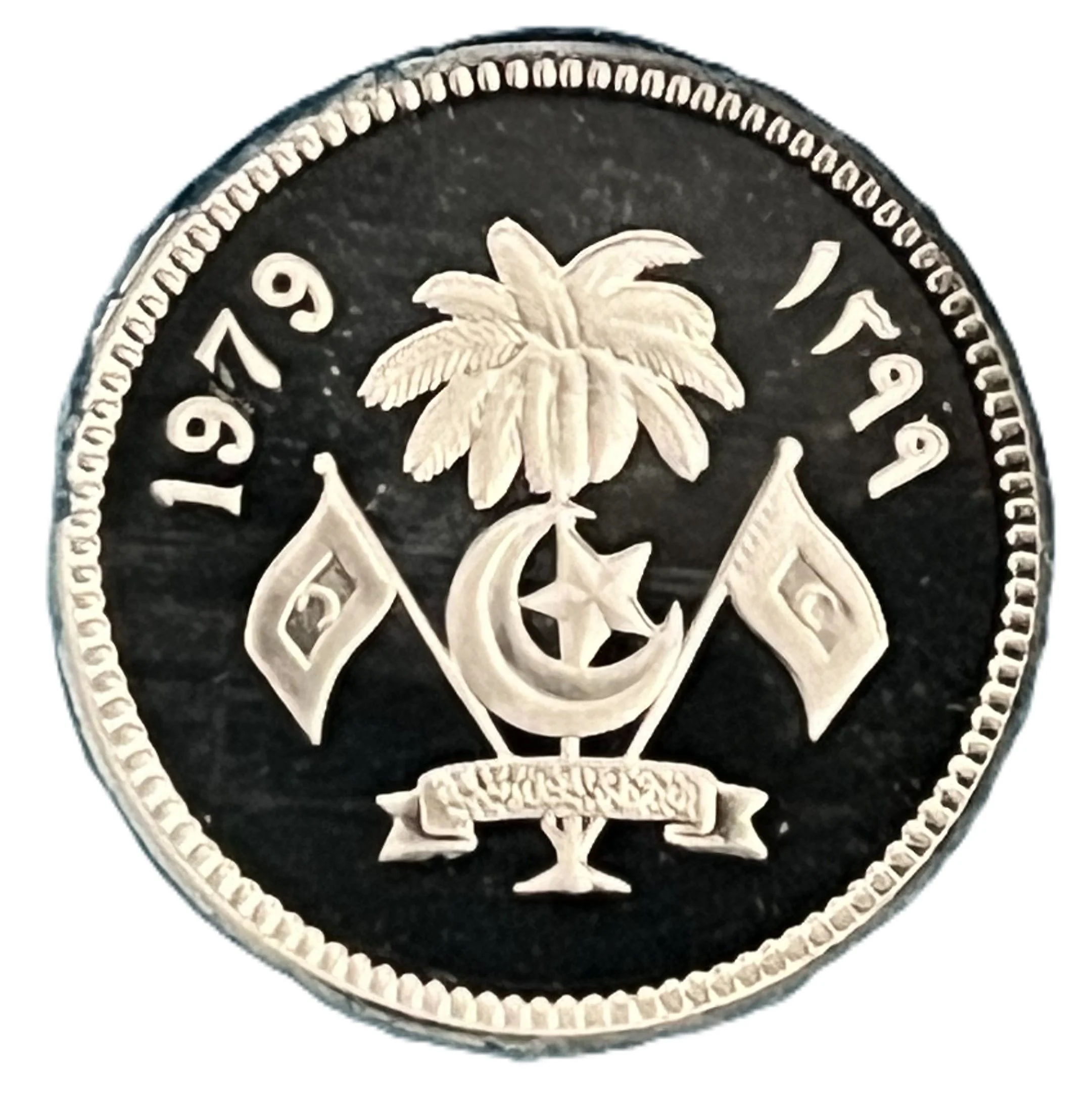
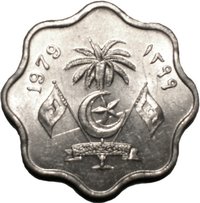
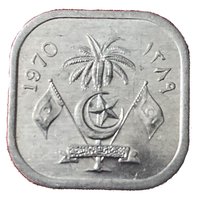
National emblem | Date | Maldives
Inscription:
1979 ١٣٩٩
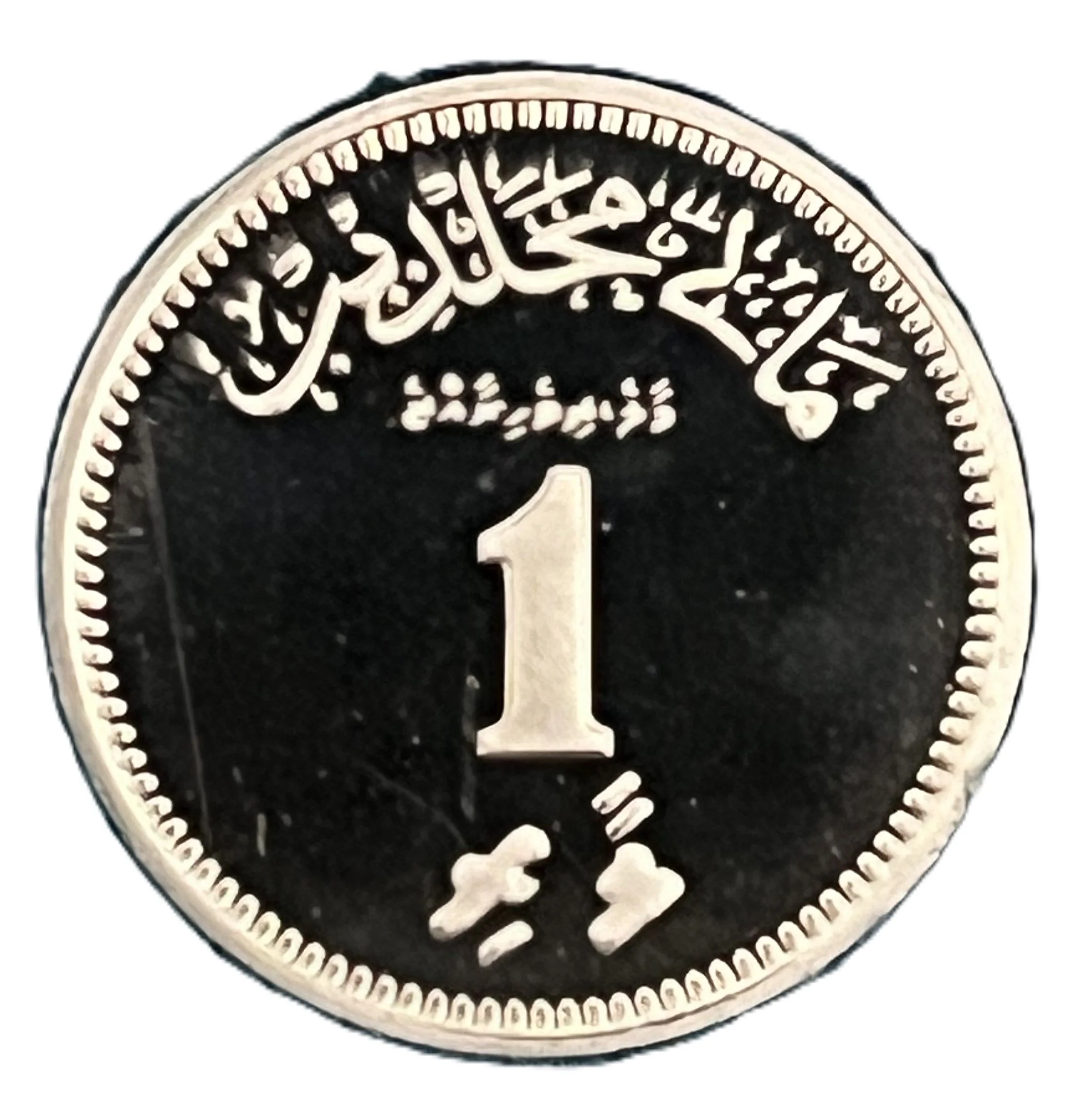
الدولة المحلديبية
الدولة المحلديبية
Translation:
State of the Mahdiyah
1979 1399
1979 1399
Languages: Eastern Arabic numerals, Arabic
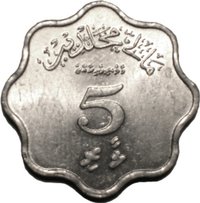
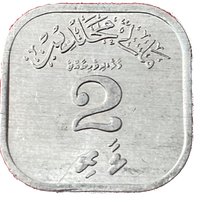
Reverse
Edge
Plain
Categories
| Symbols> Coat of Arms |
Mints
| Name | Mark |
|---|---|
| Royal Mint | — |
Mintings
| Year | Mint Mark | Mintage | Quality | Collection |
|---|---|---|---|---|
| 1970 | — | 500,000 | ||
| 1979 | — | — | ||
| 1979 | — | 100,000 | Proof |
Historical background
In the early 1970s, the Maldives was on the cusp of a significant monetary transition. The official currency in circulation was the Maldivian rupee (MVR), which had been introduced in 1947 to replace the Ceylonese rupee. However, this period was characterized by a dual-currency system where the Maldivian rupee coexisted with a traditional and culturally significant shell currency known as the laari (cowrie shells). The laari, divided into units like the kudhin and dhandi, was still widely used for small, everyday transactions, particularly in the outer atolls, reflecting the nation's artisanal economy and the logistical challenges of distributing printed currency across a dispersed archipelago.
Economically, the country was heavily dependent on three key sectors: the export of dried fish (Maldive fish), coir rope production, and a nascent tourism industry, with the first resort having opened in 1972. The currency system was managed by the Maldivian Monetary Authority (MMA), established in 1967, which functioned as both a central bank and a government treasury. The Maldivian rupee was pegged to a basket of currencies, with a strong historical link to the British pound sterling, a legacy of the nation's former protectorate status. This peg aimed to provide stability for its limited but vital foreign trade.
The year 1970 itself was a quiet prelude to a major change. While the traditional shell money persisted, the government was actively working to phase it out and standardize the national currency. This effort culminated in 1981 with a comprehensive currency reform that decimalized the rupee, formally making 100 laari equal to one rupee, and replacing the physical shells with metal coins that bore the historic name. Thus, the early 1970s represent the final chapter of an ancient monetary tradition and the consolidation of a modern national currency system to support the Maldives' developing economy.
Economically, the country was heavily dependent on three key sectors: the export of dried fish (Maldive fish), coir rope production, and a nascent tourism industry, with the first resort having opened in 1972. The currency system was managed by the Maldivian Monetary Authority (MMA), established in 1967, which functioned as both a central bank and a government treasury. The Maldivian rupee was pegged to a basket of currencies, with a strong historical link to the British pound sterling, a legacy of the nation's former protectorate status. This peg aimed to provide stability for its limited but vital foreign trade.
The year 1970 itself was a quiet prelude to a major change. While the traditional shell money persisted, the government was actively working to phase it out and standardize the national currency. This effort culminated in 1981 with a comprehensive currency reform that decimalized the rupee, formally making 100 laari equal to one rupee, and replacing the physical shells with metal coins that bore the historic name. Thus, the early 1970s represent the final chapter of an ancient monetary tradition and the consolidation of a modern national currency system to support the Maldives' developing economy.
🌱 Fairly Common