

1 kreuzer – Austrian Empire
Add to wishlist
Austria
Context
Years: 1749–1750
Country: Austria
Issuer: Austrian Empire
Ruler: Maria Theresa
Currency:
(1754—1857)
Demonetized: Yes
Material
References
KM: #
Numista: #298974
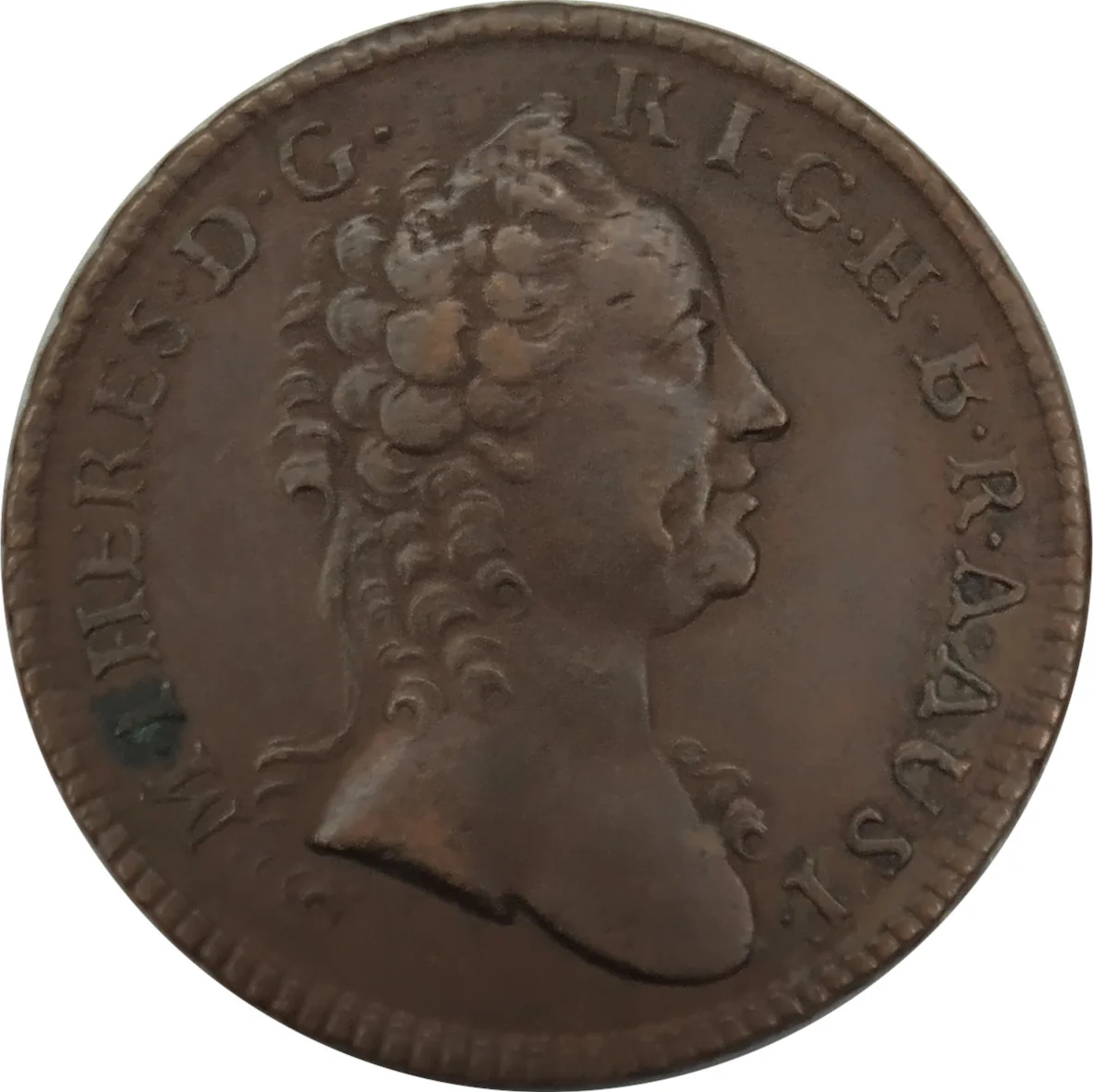
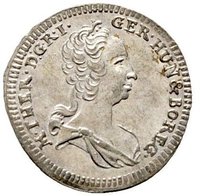
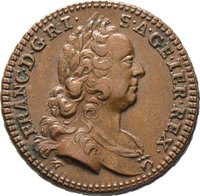
Obverse
Description:
Empress of the Romans, Queen of Germany, Hungary, and Bohemia, Archduchess of Austria.
Inscription:
M.THERES.D.G. R.I.G.H.B.R.A.AUST.
Script: Latin
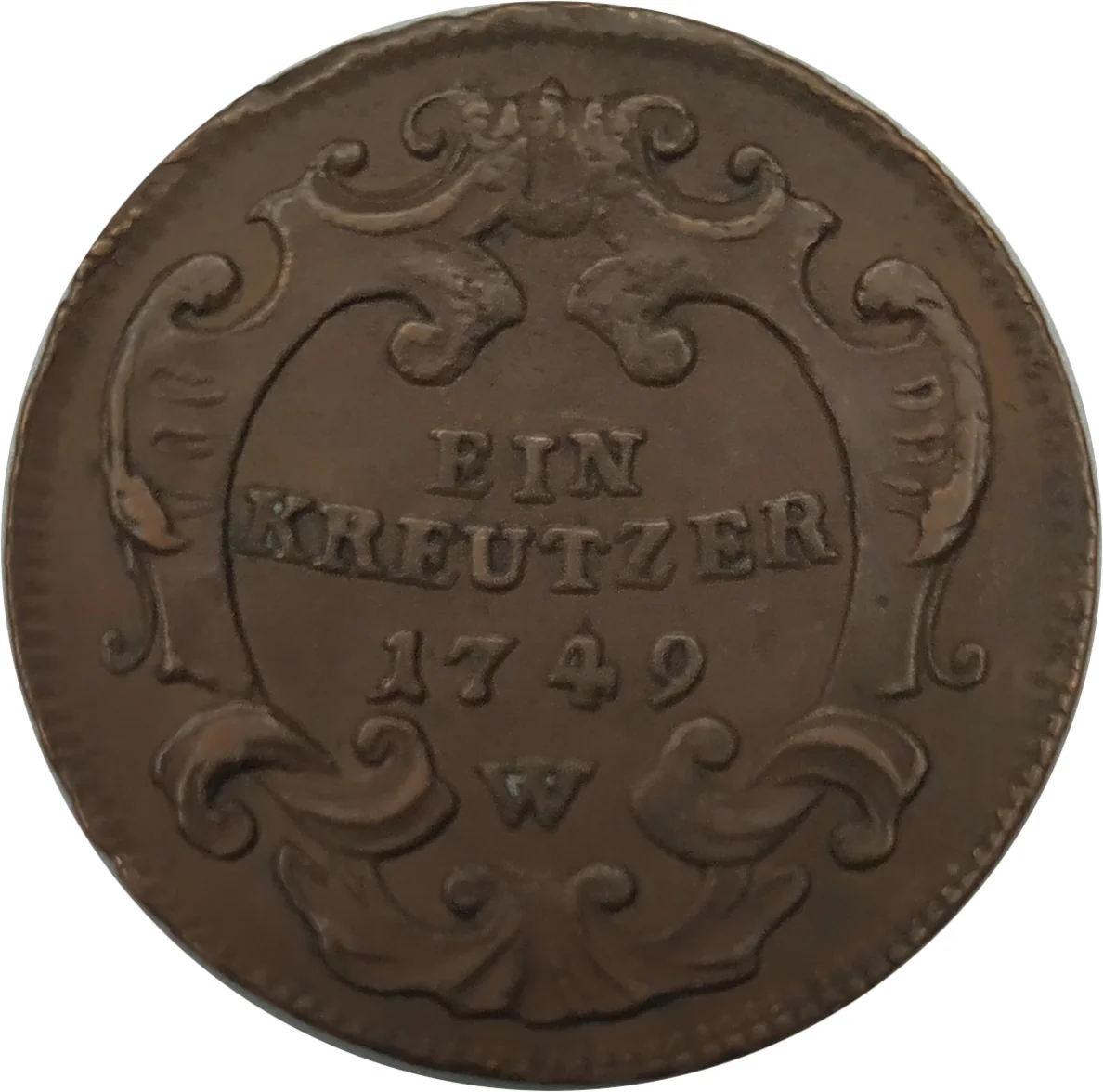
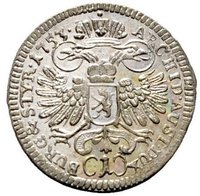
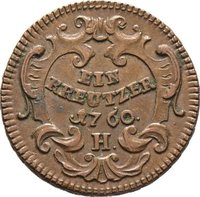
Reverse
Description:
Value, date, mint mark within baroque frame.
Inscription:
EIN
KREUTZER
1749
W
KREUTZER
1749
W
Script: Latin
Edge
Patterned
Mints
| Name | Mark |
|---|---|
| Münze Österreich | W |
Historical background
In 1749, the currency situation within the Habsburg Monarchy (often called the Austrian Empire) was one of profound disorder and instability, a direct legacy of the expensive War of the Austrian Succession (1740-1748). To finance the prolonged conflict, the state had resorted to massive debasement of the coinage, particularly the small-denomination Kreuzer coins used in daily life. The Vienna Mint, under pressure from the court, dramatically reduced the silver content in these coins, flooding the economy with inferior money. This led to a classic case of Gresham's Law, where "bad money drives out good," as people hoarded older, full-value coins and used the new debased ones for payments, causing widespread inflation and a crisis of confidence in the monetary system.
Recognizing the economic damage, Empress Maria Theresa's government, led by State Chancellor Count Friedrich Wilhelm von Haugwitz, embarked on a major administrative and financial reform program. A central part of this effort was the monetary patent of 1750, which was being prepared in 1749. The goal was a standardized, unified currency to replace the patchwork of regional and debased coins circulating across the diverse Habsburg lands. The plan centered on introducing a new standard silver coin, the Conventionsthaler, based on a 1750 monetary convention with Bavaria. This established a fixed silver standard (20 Gulden to a Cologne mark of fine silver), aiming to restore stability and predictability.
Therefore, the year 1749 represents a critical turning point—the painful trough of a monetary crisis and the beginning of a concerted state-led recovery. The immediate situation was chaotic for merchants and the populace, with unpredictable values and eroded purchasing power. However, the authorities were actively designing a systemic solution. The reforms set in motion that year would lead to the introduction of a stable, convention-based currency system that facilitated trade, improved state finances, and served as the basis for Austrian monetary policy for decades to come.
Recognizing the economic damage, Empress Maria Theresa's government, led by State Chancellor Count Friedrich Wilhelm von Haugwitz, embarked on a major administrative and financial reform program. A central part of this effort was the monetary patent of 1750, which was being prepared in 1749. The goal was a standardized, unified currency to replace the patchwork of regional and debased coins circulating across the diverse Habsburg lands. The plan centered on introducing a new standard silver coin, the Conventionsthaler, based on a 1750 monetary convention with Bavaria. This established a fixed silver standard (20 Gulden to a Cologne mark of fine silver), aiming to restore stability and predictability.
Therefore, the year 1749 represents a critical turning point—the painful trough of a monetary crisis and the beginning of a concerted state-led recovery. The immediate situation was chaotic for merchants and the populace, with unpredictable values and eroded purchasing power. However, the authorities were actively designing a systemic solution. The reforms set in motion that year would lead to the introduction of a stable, convention-based currency system that facilitated trade, improved state finances, and served as the basis for Austrian monetary policy for decades to come.
✨ Legendary