

4 maravedis – Spain
Add to wishlist
Spain
Material
References
KM: #
Numista: #29664
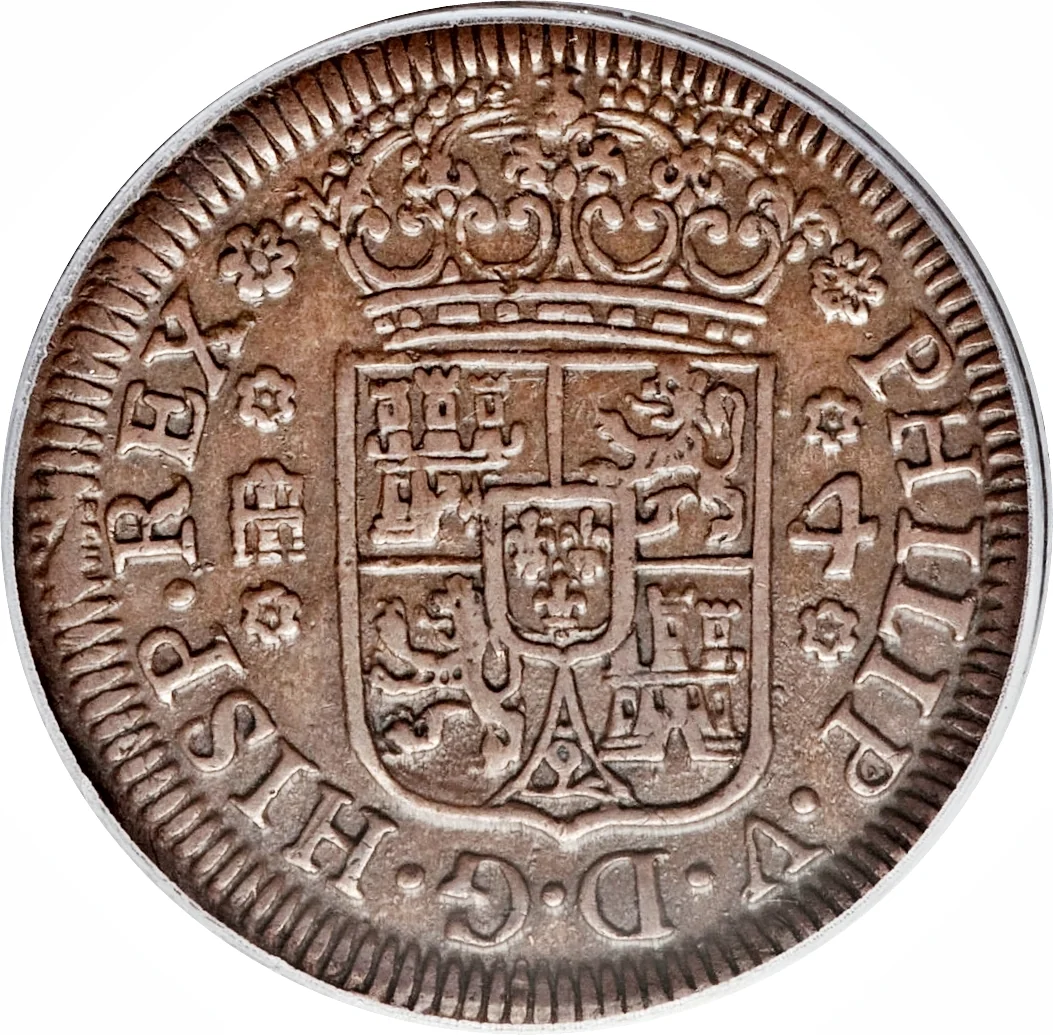
Obverse
Description:
Royal arms of Spain.
Inscription:
❀ PHILIP · V · D · G · HISP · REX ❀
IIII
IIII
Script: Latin
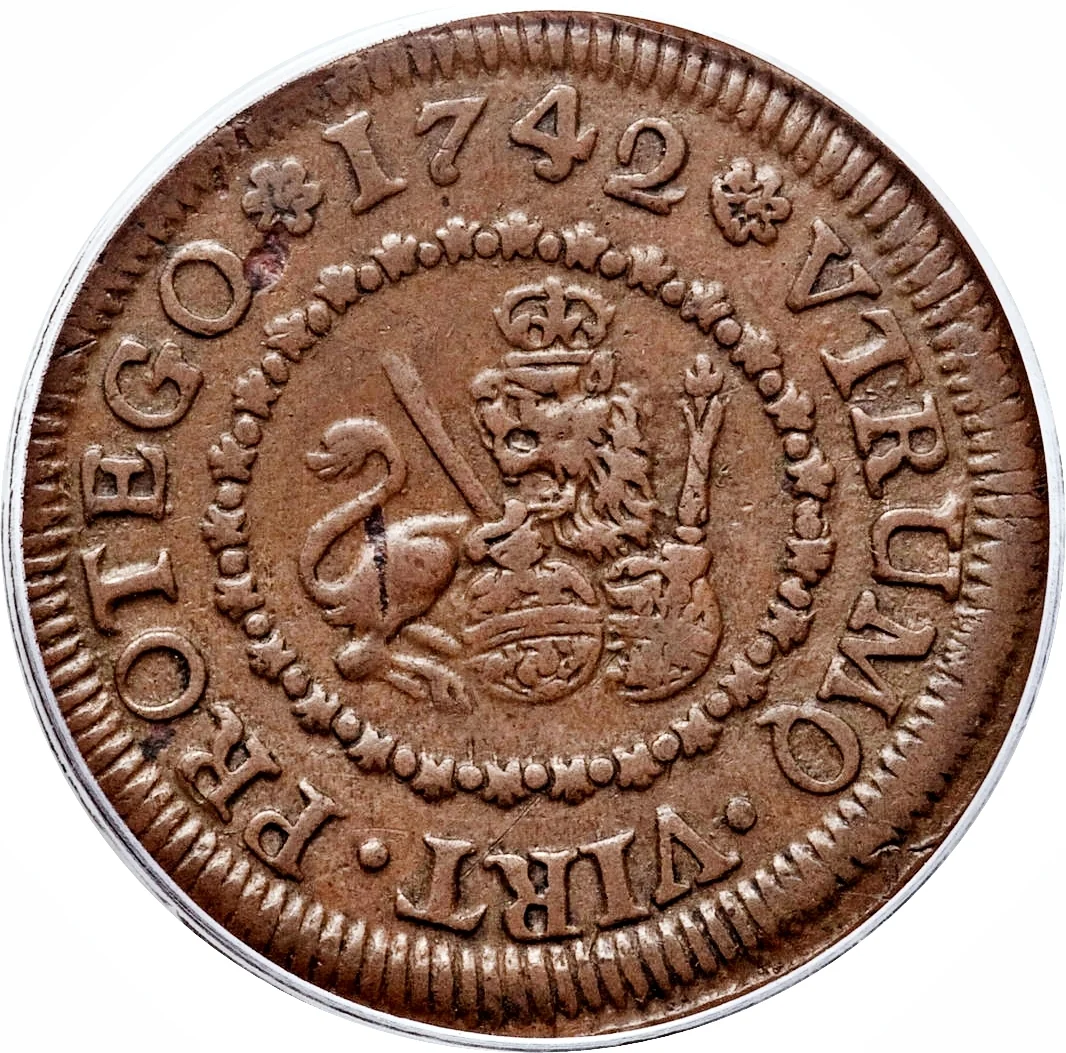
Reverse
Description:
Crowned lion holding a scepter and saber, with two globes at its feet.
Inscription:
VTRVMQ · VIRT · PROTEGO
❀ 1742 ❀
❀ 1742 ❀
Script: Latin
Edge
Plain
Mints
| Name | Mark |
|---|---|
| Royal Mint of Segovia | — |
Mintings
| Year | Mint Mark | Mintage | Quality | Collection |
|---|---|---|---|---|
| 1741 | — | — | ||
| 1742 | — | — | ||
| 1743 | — | — | ||
| 1744 | — | — |
Historical background
In 1741, Spain operated under a complex and strained monetary system, a legacy of its vast global empire and persistent fiscal pressures. The primary unit was the silver real, with 8 reales making the famous "piece of eight" or peso, and 16 reales de vellón (a billon coin with lower silver content) equalling one escudo gold coin. However, the monarchy, deeply indebted from decades of European wars (most recently the War of the Austrian Succession, in which Spain was engaged from 1740), repeatedly resorted to currency manipulation to finance its endeavors. This included issuing heavily debased vellón coinage and altering the official exchange rates between gold, silver, and this base coinage, leading to chronic instability and a disconnect between official and market values.
The system was further complicated by the circulation of a multitude of foreign coins, particularly Spanish-American silver pesos and Portuguese gold moedas, which were essential for international trade but whose values fluctuated. Domestically, the repeated debasements and arbitrary royal decrees changing conversion rates eroded public trust in the currency, encouraged hoarding of full-weight coins (Gresham's Law in action), and caused price inflation and commercial friction. Different regions of Spain, especially the Crown of Aragon, also maintained certain distinct monetary practices, hindering true national uniformity.
Ultimately, the currency situation in 1741 reflected the broader economic and political challenges of the Spanish Bourbon monarchy under Philip V. While early 18th-century reforms had begun to centralize power, the state's immediate financial desperation from military commitments consistently undermined monetary stability. This cycle of debasement and distortion would persist until more comprehensive reforms, like the monetary unification under the future real de vellón in the later 18th century, were gradually implemented.
The system was further complicated by the circulation of a multitude of foreign coins, particularly Spanish-American silver pesos and Portuguese gold moedas, which were essential for international trade but whose values fluctuated. Domestically, the repeated debasements and arbitrary royal decrees changing conversion rates eroded public trust in the currency, encouraged hoarding of full-weight coins (Gresham's Law in action), and caused price inflation and commercial friction. Different regions of Spain, especially the Crown of Aragon, also maintained certain distinct monetary practices, hindering true national uniformity.
Ultimately, the currency situation in 1741 reflected the broader economic and political challenges of the Spanish Bourbon monarchy under Philip V. While early 18th-century reforms had begun to centralize power, the state's immediate financial desperation from military commitments consistently undermined monetary stability. This cycle of debasement and distortion would persist until more comprehensive reforms, like the monetary unification under the future real de vellón in the later 18th century, were gradually implemented.
🌟 Limited