

⅛ Mohar – Nepal
Nepal
Context
Years: 1799–1816
Issuer: Nepal 
Ruler: Girvan Yuddha Bikram Shah
Currency:
(1546—1932)
Demonetized: Yes
Material
References
KM: #Click to copy to clipboard538
Numista: #295916
Value
Bullion value: $116.68
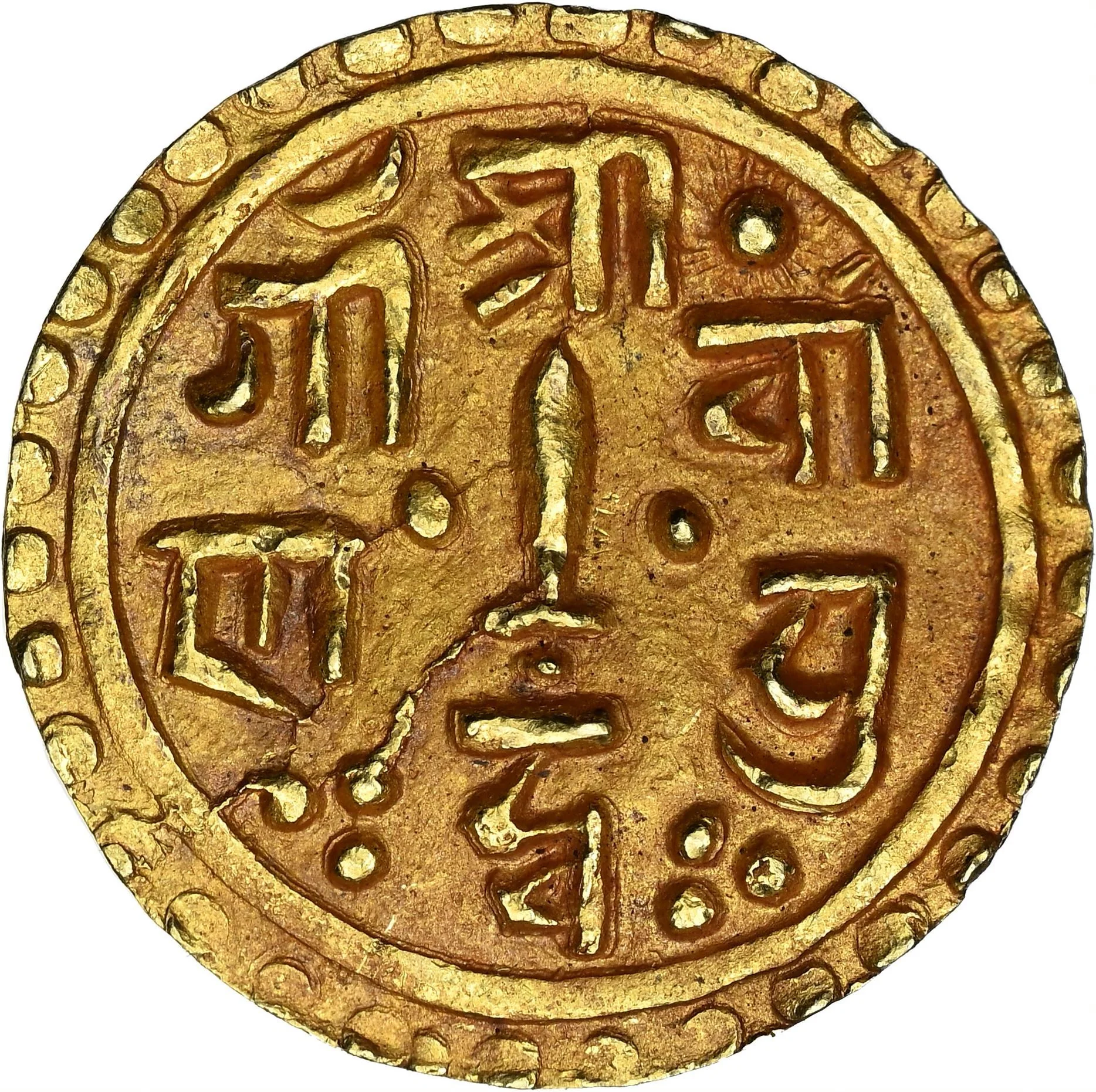
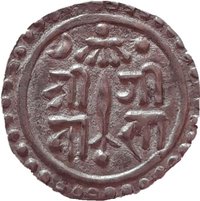
Obverse
Description:
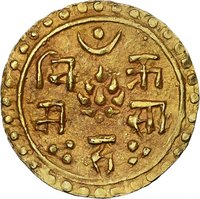
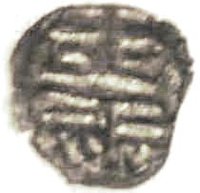
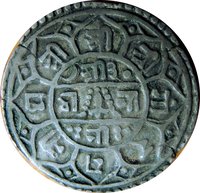
Shri" above sword amid Shah-era Nepalese symbols.
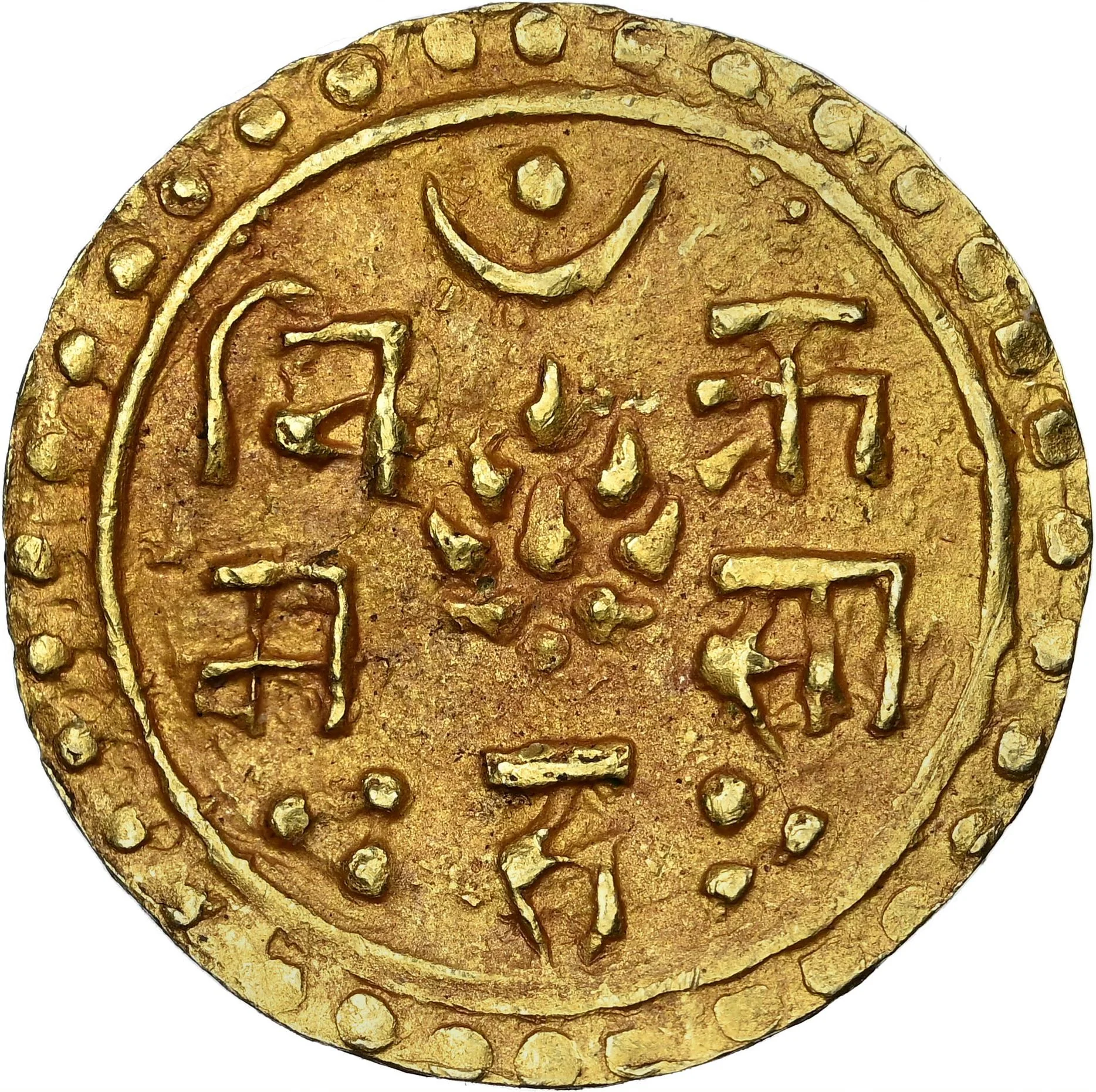
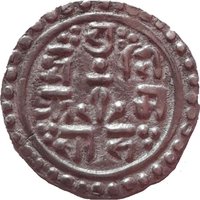
Reverse
Description:
King Girvan's lotus, encircled by Shah-era Nepalese symbols.
Edge
Plain, thin edge.
Mintings
| Year | Mint Mark | Mintage | Quality | Collection |
|---|---|---|---|---|
| — | — | — |
Historical background
In 1799, Nepal was in the midst of a period of aggressive unification and expansion under the Gorkha king Rana Bahadur Shah. The monetary system was a complex and fragmented legacy of the many independent hill principalities and valley kingdoms that had been recently conquered. There was no single, standardized national currency. Instead, circulation was dominated by a mix of silver Mohars from the Kathmandu Valley (struck by the earlier Malla kings), various local coinages from annexed regions, and a significant influx of foreign silver rupees, particularly the Mughal Rupees from India, which served as a major trade currency.
The state recognized the economic and administrative necessity of a unified currency. In the very late 18th century, the Shah kings had begun issuing their own silver Mohars and rupees from the Kathmandu mint, often imitating the designs and weight standards of the popular Malla coins to ensure public acceptance. These coins bore Hindu and Buddhist symbols, such as the trishul (trident) and kalash (water pot), asserting the authority of the new dynasty. However, the production was not yet systematized enough to fully replace the older mosaic of currencies, leading to concurrent circulation and exchange-rate complexities.
This monetary environment was fundamentally shaped by Nepal's political and economic reality. The state's finances were heavily geared towards warfare and territorial consolidation, with much wealth flowing from war booty and land revenue. The need to pay troops and facilitate trade across the newly unified but geographically challenging terrain made the control of currency a key sovereign project. Therefore, the currency situation in 1799 was one of transition—from a fragmented past toward a centralized system, reflecting the broader process of state-building under the Gorkha Empire.
The state recognized the economic and administrative necessity of a unified currency. In the very late 18th century, the Shah kings had begun issuing their own silver Mohars and rupees from the Kathmandu mint, often imitating the designs and weight standards of the popular Malla coins to ensure public acceptance. These coins bore Hindu and Buddhist symbols, such as the trishul (trident) and kalash (water pot), asserting the authority of the new dynasty. However, the production was not yet systematized enough to fully replace the older mosaic of currencies, leading to concurrent circulation and exchange-rate complexities.
This monetary environment was fundamentally shaped by Nepal's political and economic reality. The state's finances were heavily geared towards warfare and territorial consolidation, with much wealth flowing from war booty and land revenue. The need to pay troops and facilitate trade across the newly unified but geographically challenging terrain made the control of currency a key sovereign project. Therefore, the currency situation in 1799 was one of transition—from a fragmented past toward a centralized system, reflecting the broader process of state-building under the Gorkha Empire.
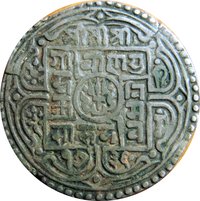
Series: 1799 Nepal circulation coins

✨ Legendary