

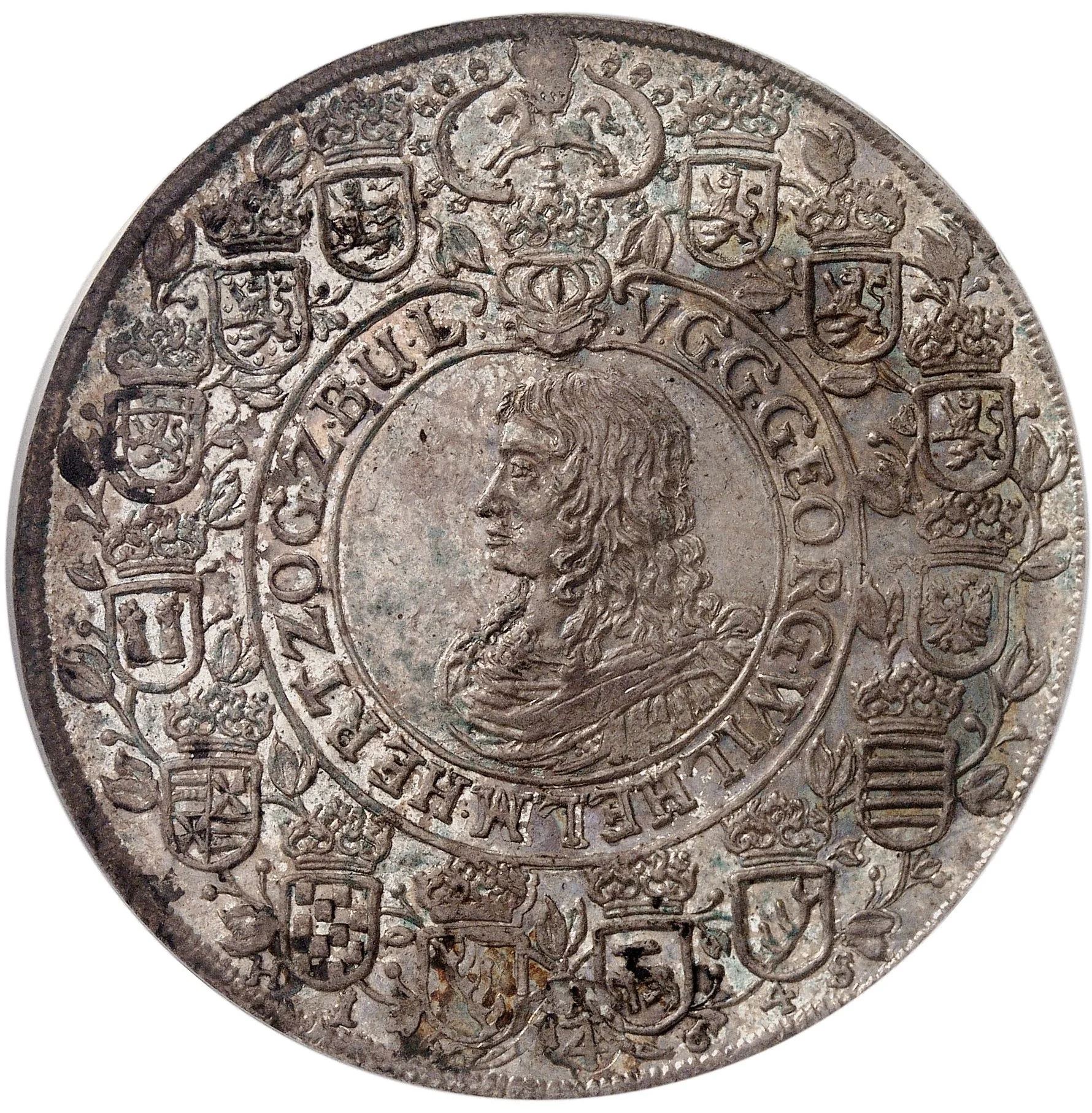
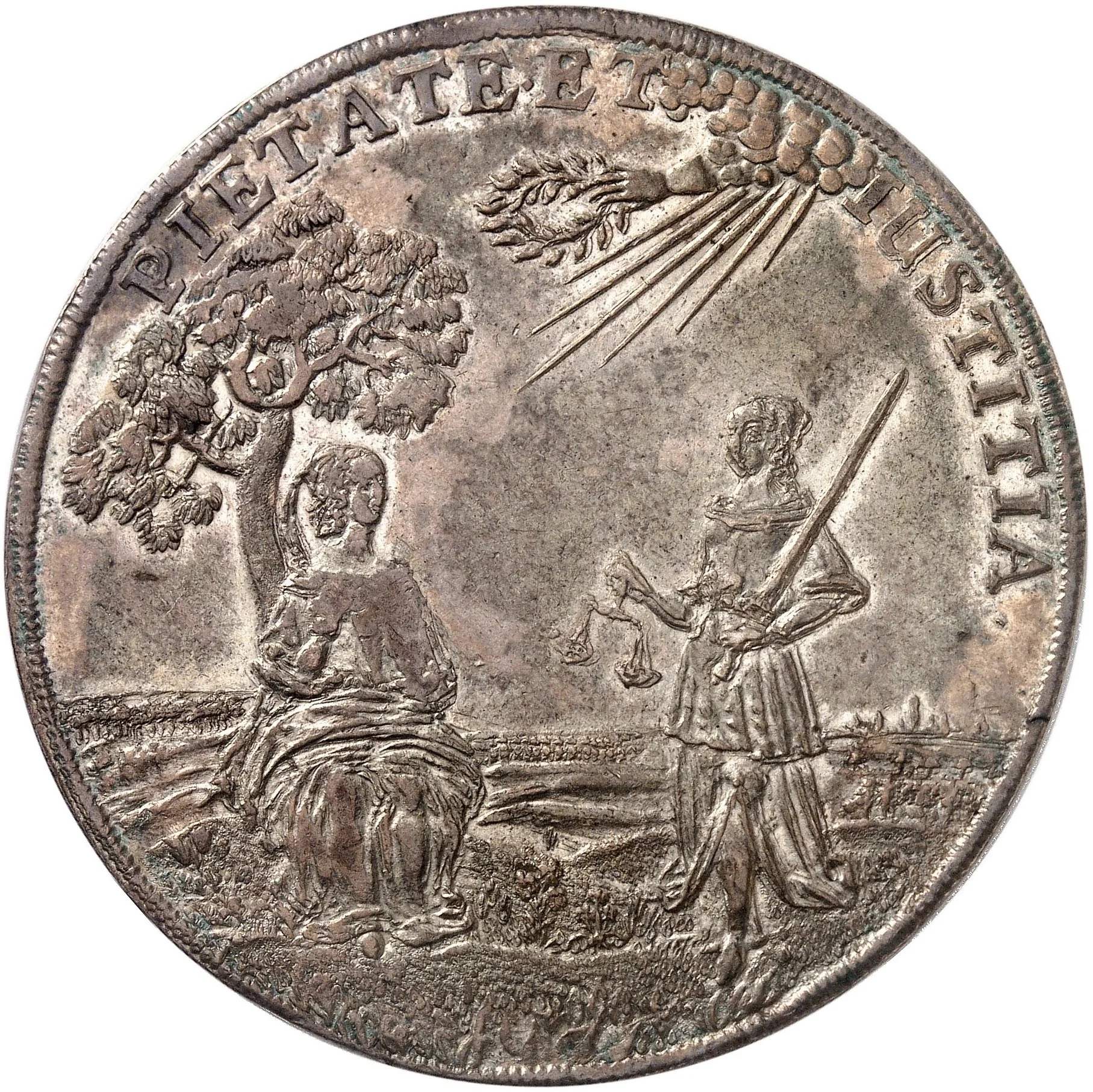
1¼ Thaler – Brunswick-Lüneburg-Calenberg
Germany
Context
Year: 1664
Country: Germany 
Issuer: Brunswick-Lüneburg-Calenberg
Ruler: George William
Currency:
Demonetized: Yes
References
KM: #Click to copy to clipboard83
Numista: #295676
Value
Bullion value: $101.77
Mints
| Name | Mark |
|---|---|
| Zellerfeld | — |
Mintings
| Year | Mint Mark | Mintage | Quality | Collection |
|---|---|---|---|---|
| 1664 | — | — |
Historical background
In 1664, the Duchy of Brunswick-Lüneburg, specifically the Principality of Calenberg under Duke John Frederick, was entangled in the complex and debased monetary landscape of the Holy Roman Empire. The region operated within the framework of the Reichstaler, a theoretical silver standard, but daily commerce relied on a plethora of circulating Scheidemünzen (small change coins) issued by various authorities. These included not only coins from the Brunswick-Lüneburg sub-principalities (like Calenberg, Grubenhagen, and Wolfenbüttel) but also coins from neighboring states and even older, worn-out pieces. This created a chaotic system where the intrinsic silver content of coins often fell below their face value, leading to frequent recoinage edicts and public mistrust.
The situation was exacerbated by the ongoing practice of Kippermünze, where rulers would periodically issue new, lighter-weight coins, demanding old coins be exchanged at a loss to the public but a profit to the mint. This was a form of seigniorage used to raise state revenue, particularly for maintaining courts and funding military needs. For Calenberg, which was relatively poorer in natural resources compared to its neighbors, control over minting rights was a crucial fiscal tool. Consequently, the monetary environment was characterized by instability, with fluctuating exchange rates between different coin types and persistent inflation that burdened the common people and complicated trade.
Efforts to create order, such as through the Zinnaische Münzfuß treaty of 1667, were just on the horizon. Therefore, in 1664, the currency situation in Calenberg was one of transition and disorder, caught between the old, exploitative systems of petty princes and the impending, though still imperfect, imperial attempts at standardization. The monetary chaos reflected the broader political fragmentation of the Empire and the constant financial pressures on its constituent states.
The situation was exacerbated by the ongoing practice of Kippermünze, where rulers would periodically issue new, lighter-weight coins, demanding old coins be exchanged at a loss to the public but a profit to the mint. This was a form of seigniorage used to raise state revenue, particularly for maintaining courts and funding military needs. For Calenberg, which was relatively poorer in natural resources compared to its neighbors, control over minting rights was a crucial fiscal tool. Consequently, the monetary environment was characterized by instability, with fluctuating exchange rates between different coin types and persistent inflation that burdened the common people and complicated trade.
Efforts to create order, such as through the Zinnaische Münzfuß treaty of 1667, were just on the horizon. Therefore, in 1664, the currency situation in Calenberg was one of transition and disorder, caught between the old, exploitative systems of petty princes and the impending, though still imperfect, imperial attempts at standardization. The monetary chaos reflected the broader political fragmentation of the Empire and the constant financial pressures on its constituent states.
✨ Legendary