

4 Thalers – Brunswick-Lüneburg-Calenberg
Germany
Context
Year: 1661
Country: Germany 
Issuer: Brunswick-Lüneburg-Calenberg
Ruler: George William
Currency:
Demonetized: Yes
References
KM: #Click to copy to clipboard77
Numista: #295265
Value
Bullion value: $326.71
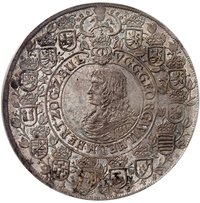
Obverse
Description:
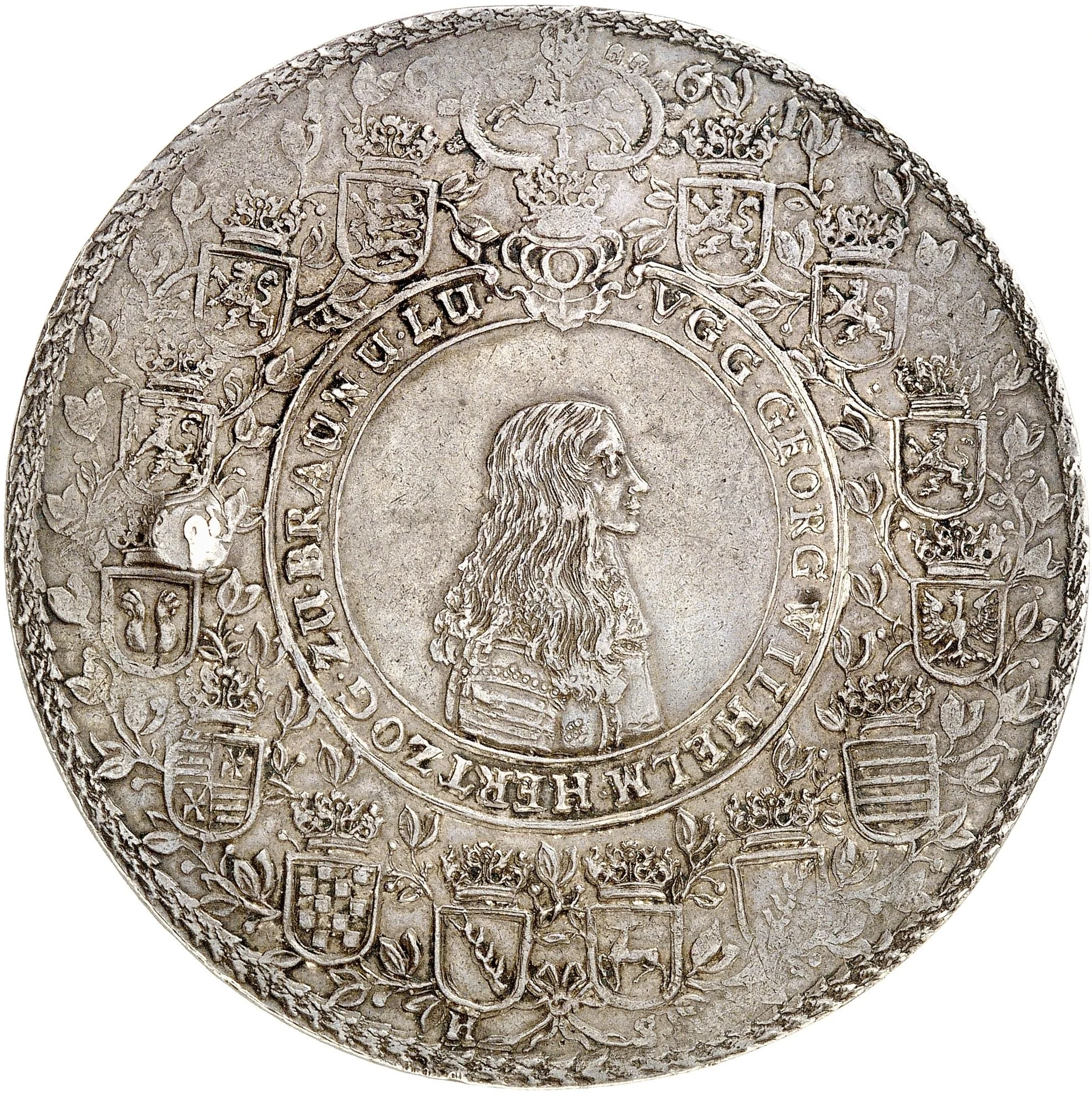
Fourteen small shields encircling a bust.
Inscription:
V G G GEORG WILHELM HERTZOG ZU BRAU U LU
H S
H S
Script: Latin
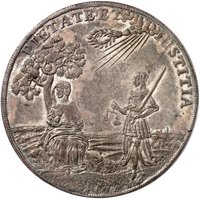
Reverse
Description:
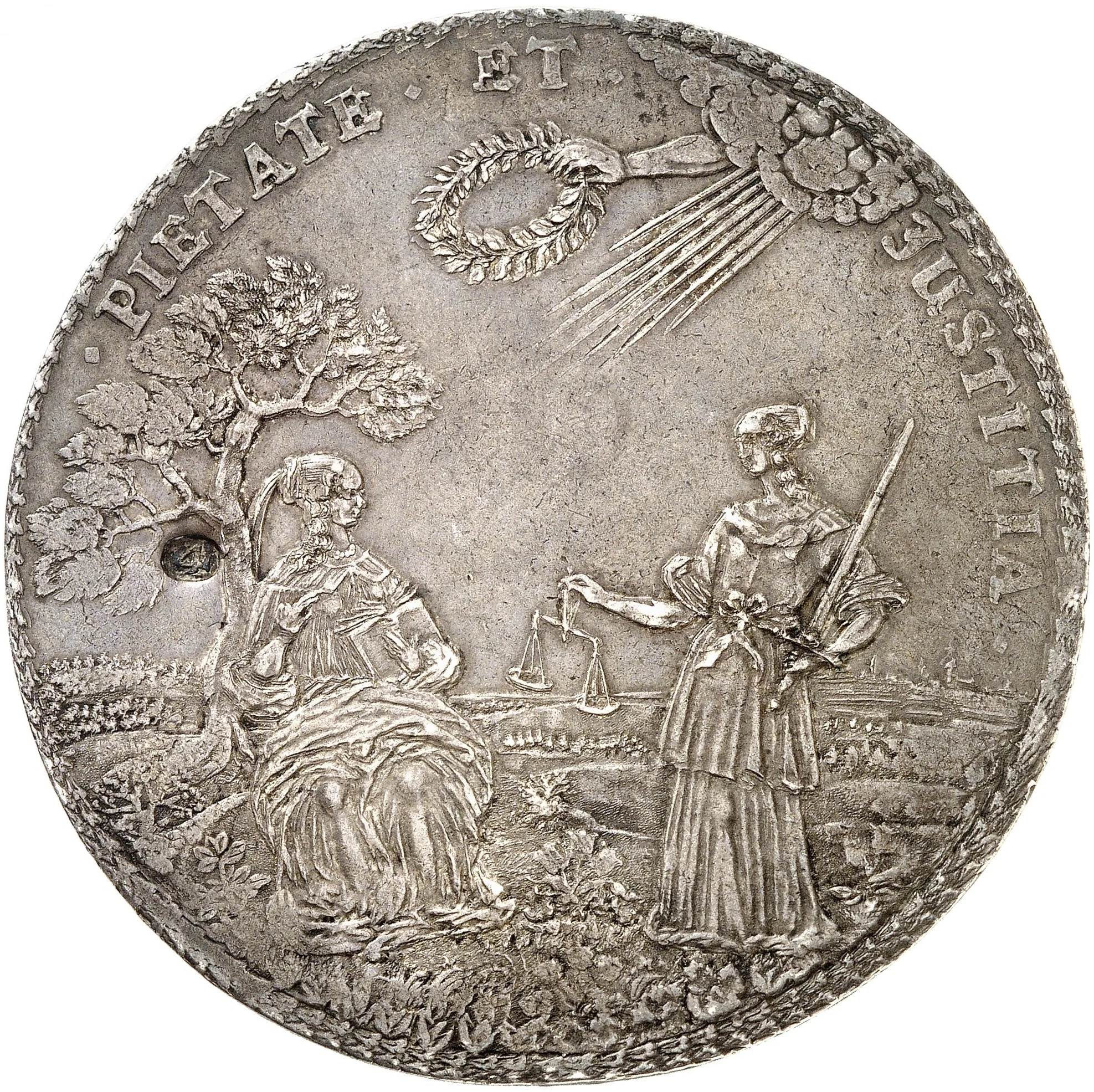
Piety and Justice under a tree, a heavenly arm offering a wreath.
Inscription:
PIETATE ET JUSTITIA
4
4
Script: Latin
Edge
Mints
| Name | Mark |
|---|---|
| Zellerfeld | — |
Mintings
| Year | Mint Mark | Mintage | Quality | Collection |
|---|---|---|---|---|
| 1661 | — | — |
Historical background
In 1661, the currency situation in the Principality of Calenberg (a branch of the larger Brunswick-Lüneburg ducal house) was characterized by severe instability and debasement, a direct legacy of the Thirty Years' War. The war had drained the treasury of Duke George William, leading to the deliberate reduction of silver content in coins to generate short-term revenue. This resulted in a proliferation of inferior, lightweight coins, known as Kippermünze, circulating alongside older, full-value Reichsthalers. The resulting monetary chaos eroded public trust, disrupted trade, and caused significant price inflation, as merchants struggled to ascertain the true value of multiple coin types.
The core of the problem was the lack of a uniform monetary standard across the German states. While the Holy Roman Empire's official currency was the Reichsthaler, divided into 24 Gutegroschen of 12 Pfennige each, individual princes routinely violated these standards. In Calenberg, the local minting of debased Mariengroschen and Gutegroschen created a dual-system where the intrinsic silver value of a coin was often far below its face value. This practice not only harmed the local economy but also provoked conflicts with neighboring territories, which suffered from the influx of poor-quality money from Calenberg, leading to trade barriers and reciprocal debasements.
Recognizing the crisis, Duke George William initiated monetary reforms in the early 1660s, with 1661 marking a critical juncture. The aim was to restore confidence by gradually withdrawing the Kippermünze and returning to the stable Reichsthaler standard. This was a difficult and expensive process, requiring the recall and reminting of circulating coinage into pieces of proper weight and fineness. Therefore, the situation in 1661 was one of transition—from the depths of post-war monetary disorder toward the beginning of a concerted, if protracted, effort to establish fiscal stability and legitimacy for the principality's currency.
The core of the problem was the lack of a uniform monetary standard across the German states. While the Holy Roman Empire's official currency was the Reichsthaler, divided into 24 Gutegroschen of 12 Pfennige each, individual princes routinely violated these standards. In Calenberg, the local minting of debased Mariengroschen and Gutegroschen created a dual-system where the intrinsic silver value of a coin was often far below its face value. This practice not only harmed the local economy but also provoked conflicts with neighboring territories, which suffered from the influx of poor-quality money from Calenberg, leading to trade barriers and reciprocal debasements.
Recognizing the crisis, Duke George William initiated monetary reforms in the early 1660s, with 1661 marking a critical juncture. The aim was to restore confidence by gradually withdrawing the Kippermünze and returning to the stable Reichsthaler standard. This was a difficult and expensive process, requiring the recall and reminting of circulating coinage into pieces of proper weight and fineness. Therefore, the situation in 1661 was one of transition—from the depths of post-war monetary disorder toward the beginning of a concerted, if protracted, effort to establish fiscal stability and legitimacy for the principality's currency.
✨ Legendary